// HACKER NEWS — CYBERSECURITY
Curvature Beziers – Improving on a timeless recipe
The bezier curve is a staple of CAD and computer graphics. Like Bic pens, the design is decades old and they're everywhere. You'll often find them as the default or only choice in various illustration and animation tools.
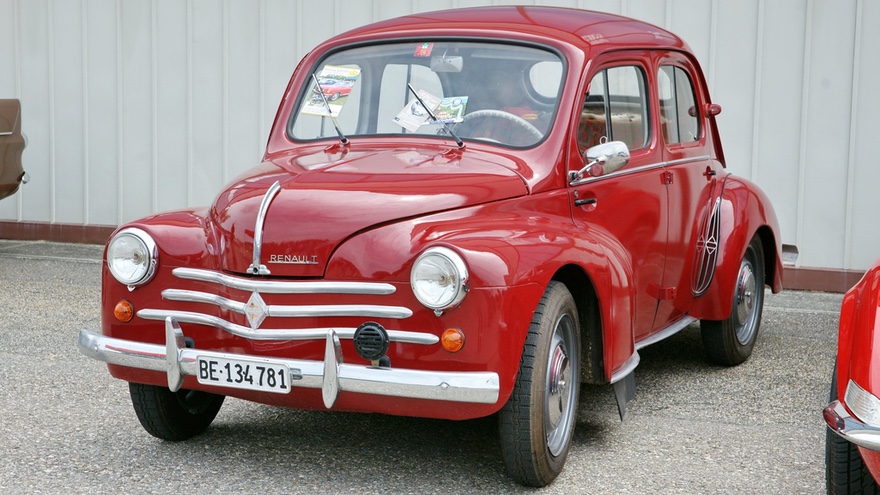
Conceived by Paul de Casteljau in 1959, and refined by Pierre Bézier in the 1960s at Renault, the enduring appeal of the bezier curve lies in its simplicity. While more sophisticated curves have been invented, and
new ones continue to be proposed, these are limited to specific domains, like high-precision CAD or road design. In general use, the bezier stubbornly refuses to be dethroned, despite its shortcomings.
Hence bezier curves are a piece of legacy tech we appear to be stuck with. As a software engineer, my question then is: can we make beziers better without invalidating all the tech built on and with them?
Drawing a bezier curve is a surprisingly simple and linear process:
Tip: All the diagrams in this post are fully interactive.
Given a series of control points, we connect them with lines. We then run along those lines simultaneously, to produce new points, which can be connected again. This process is repeated until we are left with a single point, which lies on the curve.
This construction makes beziers far more regular than they might first appear.
The linear interpolations (aka lerps) can be summarized into a single compact formula, e.g. for 4 control points $ \left(A, B, C, D\right) $:
The rule is simple: descending powers of $\left(1 - t\right)$, ascending powers of $t$, with coefficients taken from the n'th row of Pascal's triangle:
For curves in 2D and 3D, the formula is applied to the individual X, Y or Z coordinates.