// SPACE.COM — SPAZIO & SCIENZA
'Ghosts of Mars' at 25: Are we any closer to living on the Red Planet? We asked the experts
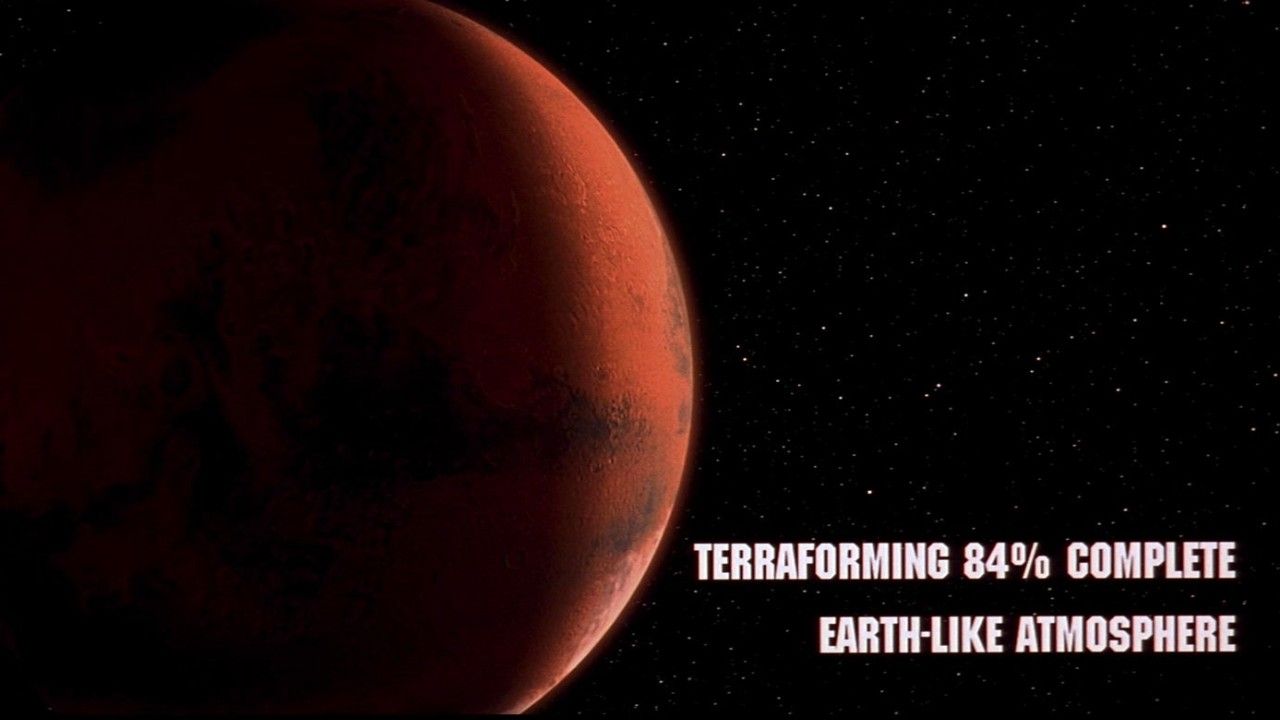
John Carpenter's 'Ghosts of Mars' explored a future where Mars is terraformed, but is it closer to becoming a reality? We spoke to the experts to find out.
When you purchase through links on our site, we may earn an affiliate commission. Here’s how it works.
In August 2001, filmmaker John Carpenter said "Boo!" and unleashed "Ghosts of Mars" on the world. While not one of Carpenter's most revered works, it's still a neat sci-fi horror movie in which Mars has been terraformed – 84% terraformed to be exact – and inhabited by humans. Plus, it has Jason Statham and Ice Cube in it, so it's automatically 99% better than all other movies ever made.
Now, the action takes place at Shining Canyon, a remote mining outpost on Mars that has a gritty wild west/Mad Max-ness vibe; it's cold, harsh, and so so so so soooooo dusty – not exactly a dream home location.
Then there's the whole "scary horde possessed by ancient extraterrestrial evil spirits trying to kill you" thing. But let's remove the spooky elements and put them aside for one second, and really consider the possibility of actually living on Mars. It's been 25 years since the movie was released, so how much closer are we to calling the Red Planet our new home?
Chief Scientist at the Planetary Society, Dr. Bruce Betts, isn't optimistic. "I don't think we're in a position to do global terraforming due to the technology and lack of resources. The papers indicate now you have only a tiny fraction of carbon dioxide, and then there's just the political and economic reality of it. Any method I've ever heard of is really outrageously expensive over time, and you would have to have multi-year, multi-generational support for programs at a high level. You'd have the whole world having opinions on whether you could or should do it. Then there's also the planetary protection agreements that many countries have agreed to. But the lack of carbon dioxide is the showstopper, really." Even in the movie, they're still 10 years away from having air like we do on Earth.
Dr. Mark Gallaway, an astronomer, science pundit, and founder of Starlight Planetarium, also mentions the cost and carbon dioxide issues as major obstacles, as well as two other challenges that may make attempts to live on Mars near impossible. "There have been enclosed habitats we've built on Earth. A number of times external teams have had to go in and break groups up, because there have been fistfights [...] so that's going to be a long-term problem." And that’s probably going to be an extra big problem when people are cooped up at a remote mining outpost.
"The other big problem is we have no idea how human physiology works at 0.38G. The only way we could do 0.38 of a G is to have some kind of spin habitat and have people live there. So, without actually knowing what that surface gravity is going to do to us, it's a bit tricky. We might find that they're on Mars for a year, and when they come back, they can't function anymore."
Recent studies about the state of Mars haven't been too promising either. Betts views Bruce Jakosky and Christopher Edwards' 2018 research paper, where it explicitly states "terraforming Mars is not possible using present-day technology," as the biggest reality check.
"The Jakosky and Edwards paper about CO₂ makes me very negative," Betts says. "There have been thoughts of using exotic technologies, such as nanorods and aerogel, but even with the aerogel, I believe they're talking about using it to create localized domes, and you'd create the interior of that and try to terraform it. It's certainly more plausible than doing the whole planet, but still seems like [there are a lot of implications]. [...] People are coming up with new, nifty technologies, but I just don't see how they can be implemented, even if they did work."