// HACKER NEWS — CYBERSECURITY
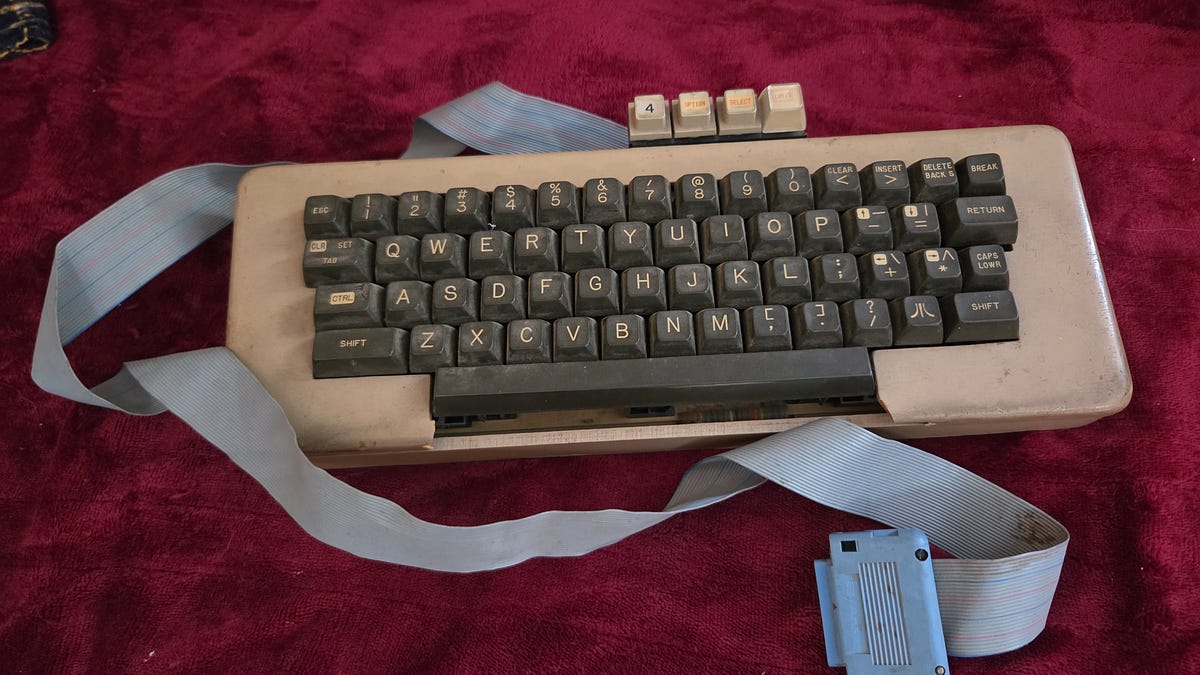
Dad's Custom Atari Peripherals – By Jim Trageser
This guest post is from Jim Trageser , a long-time Goto 10 reader. For more of Jim’s writing, be sure to check out his Substack, Lost in Cyberspace.
If you’re interested in writing for Goto 10, please get in touch.
Dad was an electrical engineer. By training, by vocation. By how he saw the world.
Working for an Air Force contractor in the 1960s and ’70s, Dad designed (and had the patent for) the first air-collision avoidance system, as well as an early transonic airspeed indicator.
And with that background, it was little surprise to us kids when Dad started building a kit computer in our basement. It was a CMOS KIM-I - and by “kit,” I mean he sent them a check, and they mailed him a large blueprint schematic of how to build this early 6502-based computer.
He ended up adding an RF output so he could hook it up to a small 11-inch RCA TV, and a serial port he connected to a surplus Teletype.
After that, he bought us a Fairchild Channel F - the first videogame system to store game software on carts.
And that led to his buying an Atari 400 when they came out shortly after we moved to California. Originally, it just had a cassette drive - with the loud beeping to let you know it was still loading the program. I remember one of our first games was a Star Trek-based game (not licensed, I don’t think) in which you had to search different sectors for the Klingons.
After he added a floppy drive, I began spending my own earnings from flipping burgers on more and more games. One favorite was “Decathlon” by Activision.
It was never as popular as Epyx’ “Summer Games,” and with good reason: The 1,500 meter race was nicknamed “The Joystick Killer.” You had to keep rocking your joystick left and right and left again, continuously, to keep your player sprinting at full speed. It took 3.5 to 4.5 minutes to finish this game, by which time your hand was bruised and your arm numb.