// NATURE NEWS — SPAZIO & SCIENZA
AI models are being used to track zoonotic diseases. Will they prevent the next pandemic?
Heather Richardson is a freelance environmental science journalist based in the United Kingdom and South Africa.
Search author on:
PubMed
Google Scholar
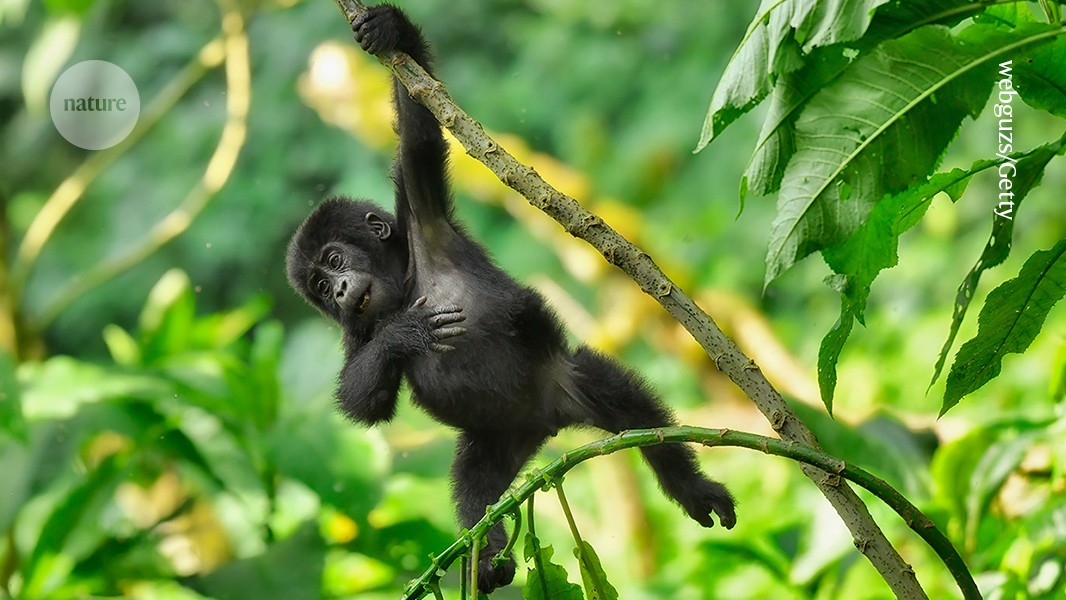
Mountain gorillas (Gorilla beringei beringei) in Uganda are vulnerable to acquiring diseases from local human populations. Credit: webguzs/Getty
Bwindi Impenetrable National Park in southwestern Uganda is famous for the endangered mountain gorillas that inhabit its lush, misty highlands. It’s also home to around 120 other species of mammal, 350 types of bird and hundreds of plant varieties — and, on its borders, people and livestock. That’s a recipe for what epidemiologists call spillover, the transfer of pathogens between species.
In 2003, the non-profit organization Conservation Through Public Health (CTPH) in Entebbe, Uganda, began work to protect the gorillas (Gorilla beringei beringei) from diseases, such as scabies, that were traced to their human neighbours. The team uses a holistic One Health approach that balances the needs of people with the health of the animals and the ecosystems that surround them. Typically, the process has been reactive: responding to outbreaks as they emerge, says Ssali Ronald Ogwal, a public-health specialist at the CTPH. But the organization is now shifting towards a more proactive, disease-prevention approach — thanks, in part, to artificial intelligence.
As part of a three-year collaboration that ended in March 2026 with public-health initiative NESTLER, a joint project between the European Union and African nations, Ogwal collected samples from cattle and poultry around Bwindi. He sent the specimens to a laboratory in Entebbe to be tested for diseases such as brucellosis and Rift Valley fever, both of which can infect people. After sharing the results with the relevant local communities, the team combined the data with the CTPH’s routine gorilla-monitoring records and passed the information on to colleagues at NESTLER. There, the data are being used to train predictive AI models, which are designed to be early-warning systems for disease outbreaks that can affect people, livestock and gorillas.
Many infectious diseases that affect humans are zoonotic — that is, they originate in other animals. This includes such scourges as SARS-CoV-2, the virus that caused the COVID-19 pandemic, and ebolaviruses, which are thought to have originated in fruit bats of the Pteropodidae family. Humans can catch ebolaviruses directly from bats’ bodily fluids, or by way of animals that have come into contact with infected bats.
Agriculture, climate shifts and land-use changes such as deforestation have increased contact between people and wildlife, making spillover events more likely to occur. At the same time, globalization and geopolitics enable diseases to be spread more quickly between humans. As the COVID-19 pandemic so powerfully demonstrated, spillover events can have profound impacts, affecting physical and mental health, livelihoods and education around the world.
For researchers such as Ogwal, AI — in combination with practical measures such as regulating wildlife trading — offers a powerful technology for managing zoonotic diseases and reducing the risk of spillover, possibly even preventing outbreaks in the first place. At least, that’s the theory: AI tools are still limited and are not yet widely used in infectious-disease epidemiology. But the continuing boom in machine-learning techniques is beginning to change that.
“Rather than just waiting for outbreaks to happen, these AI machines support a deep analysis of large volumes of data to identify patterns,” says Ogwal. Predictions can be acted on “before anything escalates”.