// SPACE.COM — SPAZIO & SCIENZA
What's next for NASA's just-launched Roman Space Telescope?
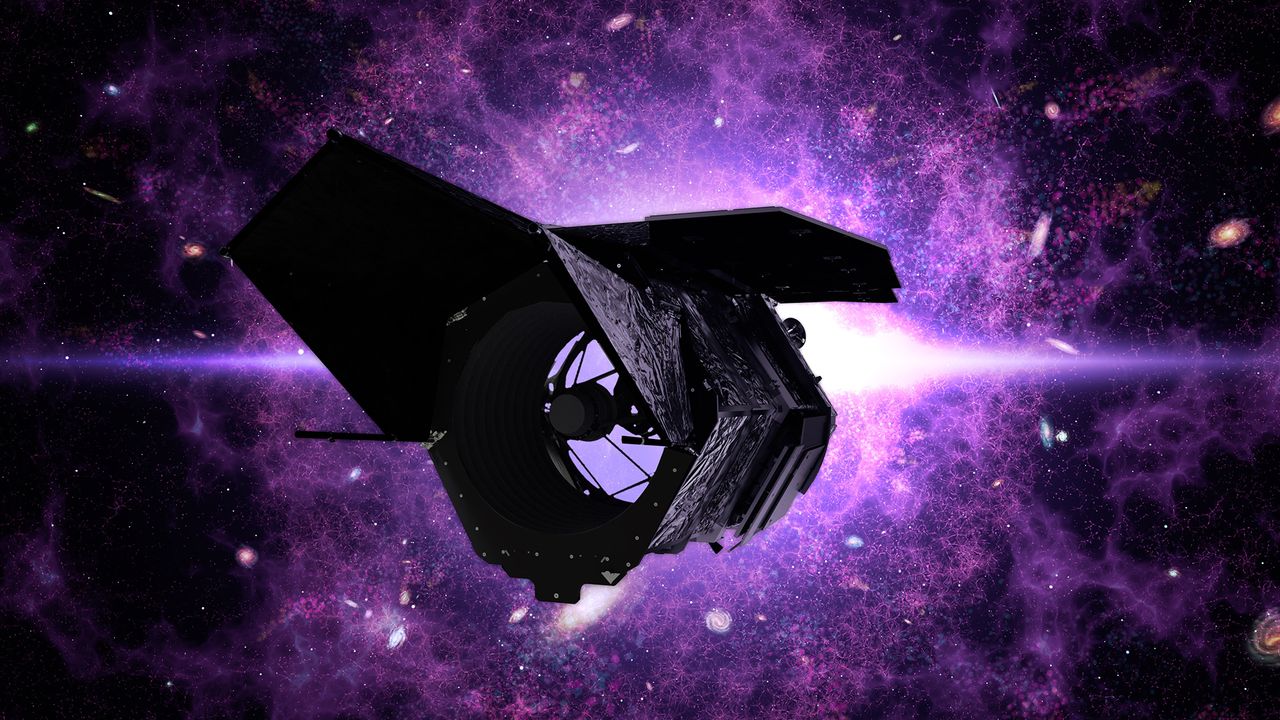
The powerful observatory has a long journey ahead of it.
When you purchase through links on our site, we may earn an affiliate commission. Here’s how it works.
NASA's next big space telescope has left Earth, but it's not ready to start observing the heavens just yet.
The Nancy Grace Roman Space Telescope launched yesterday (Aug. 30), riding a SpaceX Falcon Heavy rocket into the heavens. Astronomers are very excited about Roman, for it's expected to discover thousands of new exoplanets and shed light on mysterious dark energy and dark matter, among other accomplishments.
Such science work is a few months off, however. Here's a brief rundown of the next steps for the Roman team.
The first order of business is getting Roman to its destination. The 42-foot-long (12.7 meters) scope isn't staying in Earth orbit; it's headed to the sun-Earth Lagrange Point 2 (L2), which lies about 930,000 miles (1.5 million kilometers) from our planet in the Marsward direction.
There are multiple reasons to target L2, which also hosts NASA's James Webb Space Telescope (JWST) and Europe's Euclid probe.
"At this special place in space," NASA officials wrote in a Roman explainer, "gravitational forces balance to keep objects in steady orbits with very little assistance."
"Roman's barrel-like shape will help block out unwanted light from the sun, Earth and moon, and the spacecraft’s distant location will help keep the instruments cool," they added. "The thermal stability of an observatory at L2 will provide a ten-fold improvement beyond Hubble in much of the data Roman will gather."
And don't worry about Roman and JWST bumping heads; though their cosmic addresses will be the same, they won't actually share space.