// SPACE.COM — SPAZIO & SCIENZA
A bright space station will soar over the US this week — and it's not the ISS. Here's how to see it
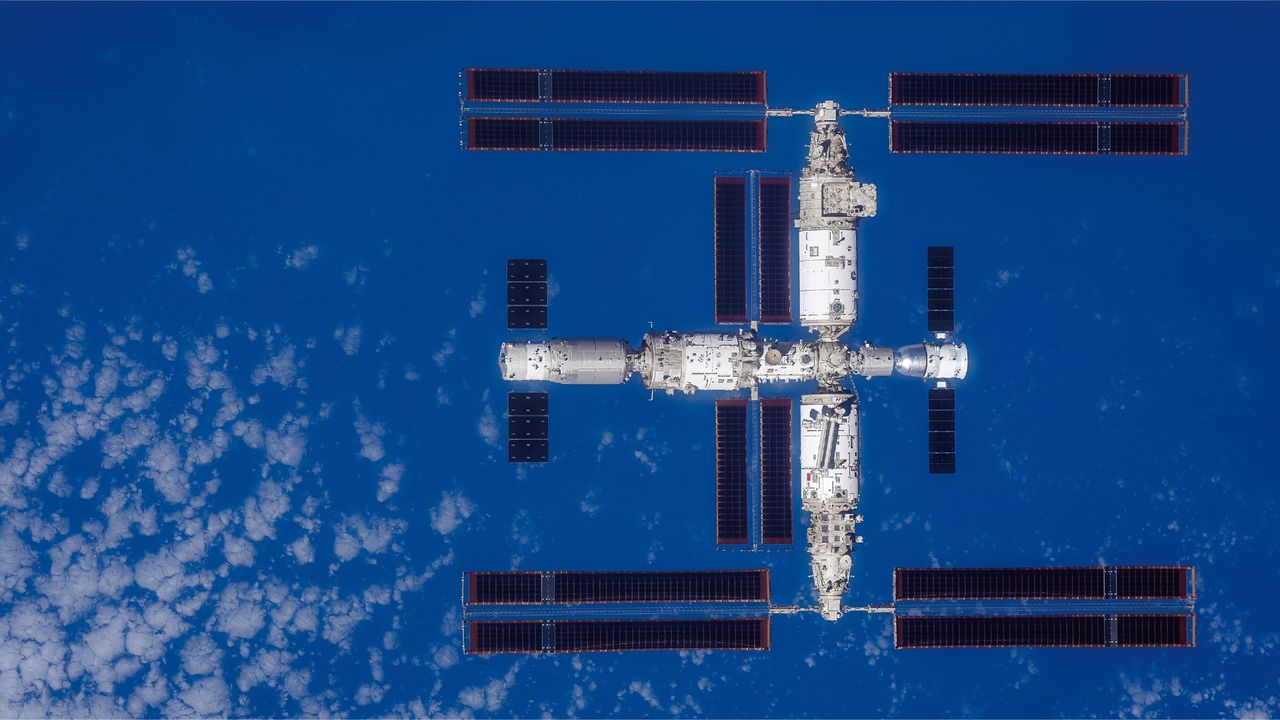
What's that bright light in the sky? Here's how to see China's Tiangong space station with the naked eye this week.
When you purchase through links on our site, we may earn an affiliate commission. Here’s how it works.
You may have seen the International Space Station whizzing across the night sky before, but have you ever seen China's Tiangong space station?
Three taikonauts are currently orbiting Earth aboard the Tiangong space station — and just days after two of them spent 5.5 hours outside the station repairing a solar array, there are particularly good opportunities to see it from parts of the eastern U.S. over the next week, including several bright, high passes visible from New York City.
On a favorable pass, Tiangong can reach up to about magnitude –2, roughly as bright as Jupiter. That's not as bright as the ISS, but this week it's easily bright enough to see — if skies are clear.
The best time to look for Tiangong is typically an hour or two after sunset or before sunrise. That's when you're standing in darkness, but the station, a few hundred miles overhead, can still catch sunlight. There are lots of opportunities to see it from the US East Coast just after dark over the next week or so.
Here are the brightest and highest passes of Tiangong, as seen from New York City, according to Heavens Above. New York sits just inside the northern limit of Tiangong's 41.5-degree-inclined orbit, which is why New Yorkers get those spectacular 84-degree and 88-degree passes.
(Celestial altitude above the horizon is listed here in degrees; remember that the width of your fist at arm's length equals about 10 degrees.)
Like the ISS, look for a bright, steady point of light moving smoothly across the sky. Unlike an aircraft, Tiangong doesn't have flashing navigation lights. A good pass typically lasts between two and six minutes, with high passes generally the brightest.
Breaking space news, the latest updates on rocket launches, skywatching events and more!