// PC GAMER — GAMING
The bizarre spirit of classic Elder Scrolls games is alive and well in little lo-fi RPG A Short Quest
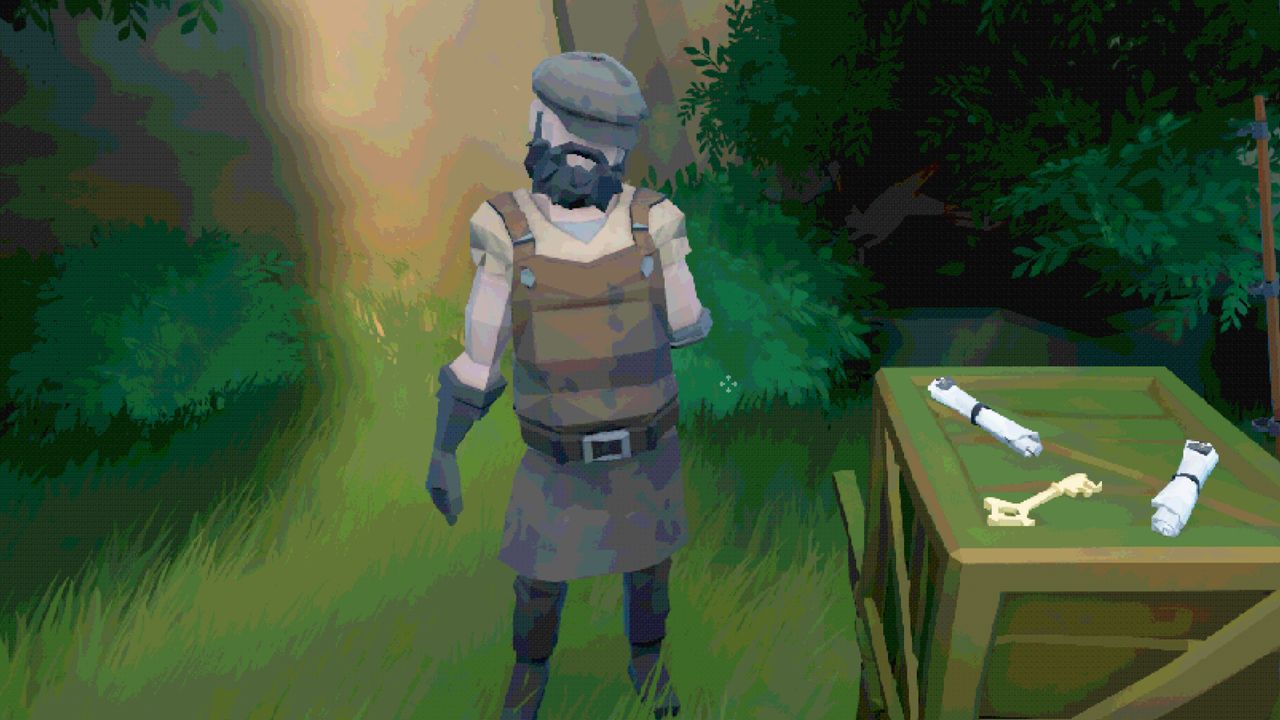
A few hours with a recent playtest has me eager to play the full thing next year.
When you purchase through links on our site, we may earn an affiliate commission. Here’s how it works.
When a big old tree talks, I listen. He said, "I have a task of great importance," as soon as I opened my eyes, and who was I to turn him down? "Take this note to the King, it should be a short quest," he instructed, and although there is no king in the playtest for A Short Quest, I am eager to fulfill the tree's wishes when the whole game is out next year.
There are actually a lot of mysterious things I found in the few hours I spent with A Short Quest that I'd like to know more about. Every time I passed by a pond it spoke and asked me to dance (jump three times) for a blueberry. I found a note in an old mine that told me how to find the "glyph cipher" on the side of a cart, but I still don't know what to do with it. And I'm still not sure why I was summoned into the underground domain of a ghost wizard who tried to kill me.
A Short Quest reminded me of when I would watch a friend from middle school play Morrowind on his Xbox or when I played Oblivion for the first time. It's a lo-fi first-person RPG that's trying to evoke that earlier, goofier era of the form; back when an elf would fall out of the sky and drop a scroll of flight as a joke.
The little pocket of A Short Quest's fantasy world in the playtest is sprinkled with weirdos and secrets. I dueled a guard on a wooden plank at the top of a mountain after he tricked me into dropping some food for his empty stomach. I also recovered a magical ember in a mine and took it to a wizard who let me make my first staff. None of this stuff is tracked in a quest log or highlighted on a map. When you find a strange item, you have to use it to figure out what it does, which can sometimes mean poisoning yourself a little or realizing you can fill up the blue squares under your health bar to cast spells.
I had a hard time letting go of any item I picked up, like the broken sword you find at the start that lets you parry attacks. I finished the playtest and its item description still says it has an undiscovered use I haven't learned yet, so you can bet I'll be keeping that thing on me for the whole game if I have to. Even the rock I stuffed into my pockets before I had a proper sword can be used to block attacks from enemies who like to go for quick stabs.
Combat works like the Elder Scrolls games but there's a slightly tighter relationship between your stamina bar and your attacks. You're forced to decide whether it's worth taking a swing at your enemy or readying a dash to dodge out of the way. There's a bit of a soulslike back-and-forth to it that can be punishing if you're impatient, but a looseness that keeps you on your toes even when you have the advantage. Enemies will sometimes completely whiff their attacks and so will you. Thankfully, you're free to quicksave before any fight and retry until things go your way—a welcome safety net that I ended up not using as often as I thought I would because "clean" fights feel anathema to A Short Quest's whole vibe.
Spells are a cheat code compared to the various melee instruments you can equip in the playtest. That's probably why they have a limited number of uses. The developers of A Short Quest don't want me trivializing the entire game with magical, heat-seeking daggers at my side, which is fair because if I could I would. I don't know how it'll be in the full game, but I kind of appreciate that magic doesn't seem to be a way to skip close-quarters combat altogether. It takes a few seconds for spells to go off, making them more effective as an opener for a fight rather than something to spam from a distance.
Keep up to date with the most important stories and the best deals, as picked by the PC Gamer team.