// HACKER NEWS — CYBERSECURITY
How an MIT research project became the Julia programming language
Images for download on the MIT News office website are made available to non-commercial entities, press and the general public under a
Creative Commons Attribution Non-Commercial No Derivatives license.
You may not alter the images provided, other than to crop them to size. A credit line must be used when reproducing images; if one is not provided
below, credit the images to "MIT."
It all started with some exasperated emails. Back in 2009, a group of researchers began venting their frustration with the programming languages designed to help scientists and other researchers perform complex mathematical operations and statistical simulations without learning how to code. These programming languages were rigid and slow. If scientists built something that really worked, they’d need to rewrite the entire program in another language just to run it more quickly.
The emails turned into a research project at MIT with the mission of building an easy-to-use, high-performance programming language called Julia, which is designed for scientific research, data analysis, and modeling complex systems such as jet engines, drugs, financial markets, and robots, to name a few examples.
That research project turned into a lab at MIT, and the lab turned into the company JuliaHub. Along the way, Julia gained a loyal following among scientists, engineers, mathematicians, and others. Today, the free and open-source language counts more than 1 million users, including people working in thousands of companies and universities around the world.
It is only a slight exaggeration to say Julia has been used to model everything under the sun, from the behavior of tiny atoms to semiconductors, neural networks, race cars, and airplanes. It has also been used to study much beyond the sun, with astronomers using Julia for imaging black holes.
Julia’s secret sauce is in the way it compiles code depending on the type of data being used. Such “just-in-time compilation” makes Julia faster and more flexible than other numerical programming languages.
“Scientists and engineers are not programmers. Building scientific applications with multidisciplinary teams of scientists, engineers, and programmers is challenging,” JuliaHub co-founder and CEO Viral Shah says. “We asked: What if you could equip the scientists and engineers with a programming language that allowed them to express their ideas at a high level and also get great software performance?”
Making programming easy for non-programmers has been a north star for JuliaHub’s founders, who include Julia co-creators Shah, MIT professor of mathematics Alan Edelman, Jeff Bezanson SM ’12, PhD ’15, and former MIT research scientist Stefan Karpinski.
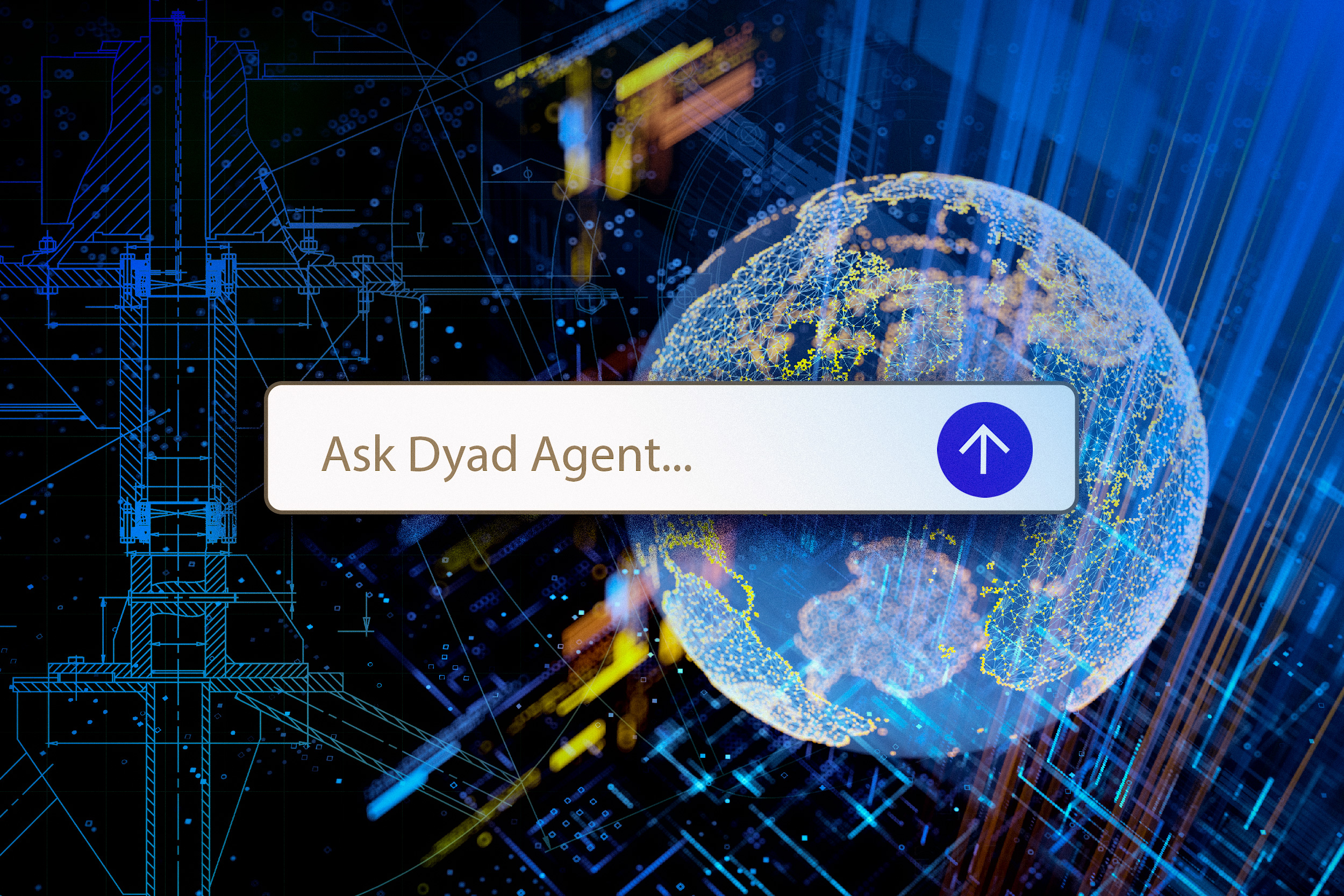
In April, JuliaHub’s team took another big step in that direction with the launch of Dyad 3.0, the latest version of its AI platform to help engineering teams accelerate the development of complex physical systems like rockets, heat pumps, and satellites. Engineers are already using Dyad to direct autonomous AI agents as they work through physics simulations, safety analyses, quality controls, and more.
“With Dyad 3.0, you can upload data and design documents and the system will design an entire aircraft for you,” Shah says. “Working with customers like Boeing, we are building agentic hardware design capabilities for engineers. Simplistically, you want to say, ‘Okay computer, build me a plane’; upload the design documents; and have the system account for all the physics, compile all the code, verify everything, and build the entire design agentically.”