// SPACE.COM — SPAZIO & SCIENZA
'Star Trek' imagined strange new worlds 60 years ago, but are real exoplanets even stranger?
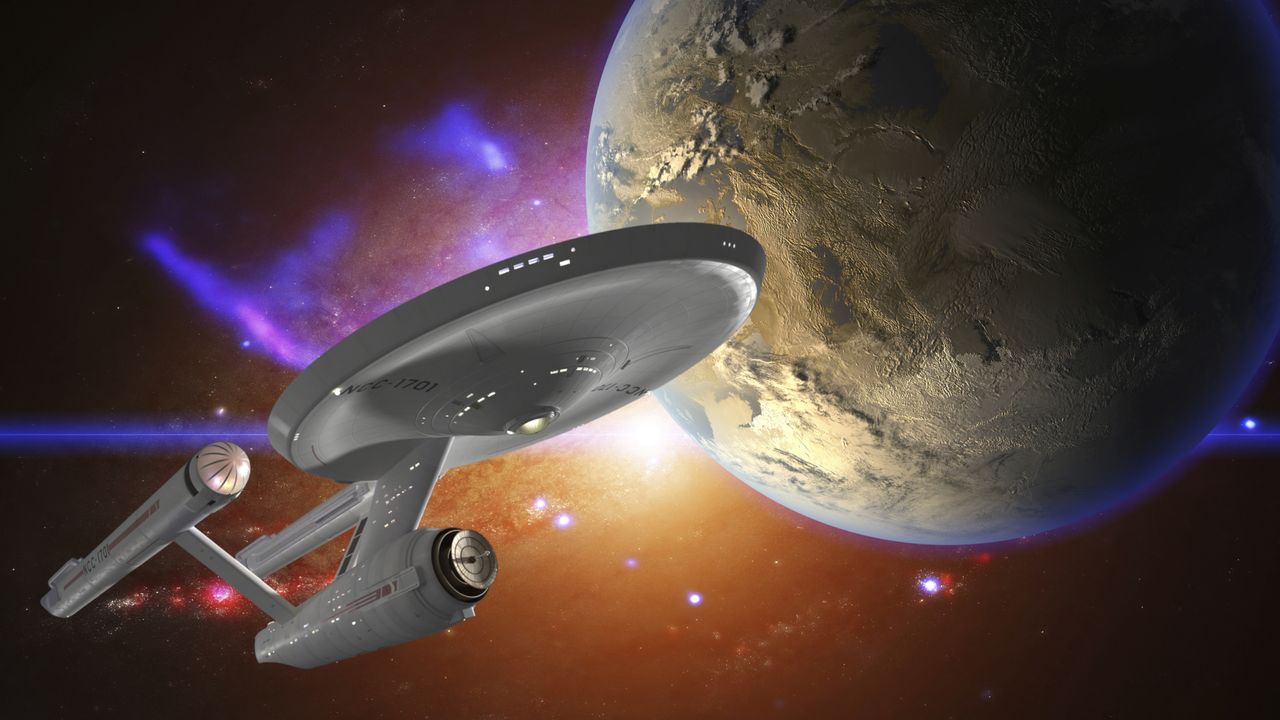
"To explore strange new worlds; to seek out new life and new civilizations; to boldly go where no one has gone before!"
When you purchase through links on our site, we may earn an affiliate commission. Here’s how it works.
September 8th, 1966 was a Thursday. Not a fresh-start-Monday or an exciting Saturday. A regular old Thursday; except that this one catalysed a cultural phenomenon. This was the Thursday that "Star Trek" was first broadcast, drawing viewers across the United States into a space-age world that revolutionised television.
The thing is, in 1966 no exoplanets (planets beyond our Solar System) had actually been discovered. Yet the franchise gave audiences a galaxy brimming with desert planets, ocean worlds, binary sunsets, and countless versions of Earth. Sixty years later, astronomers have confirmed more than 6,000 planets beyond the Solar System, known as exoplanets.
But how well do "Star Trek"’s fictional worlds compare with those astronomers have actually discovered?
When many of us think "Star Trek", the first planet that comes to mind is the dry, hot, and rocky Vulcan. Canonically, it orbits 40 Eridani A, a real star around 16 light-years from Earth. Real stars invite real observations, which led to astronomers announcing a possible planet in orbit in 2018. Of course, this was nicknamed Vulcan. However, later work has shown that this apparent signal was likely caused by stellar activity, rather than a planet in orbit.
This is, unfortunately, a common issue. Stellar activity, such as starspots, convection, and other magnetic activity, is very good at producing signals that look incredibly planetary.
Although the candidate planet was ultimately discredited, genuine hot, rocky planets do exist around other stars. Many of them orbit extremely close, completing an orbit in less than an Earth day. Some may have molten surfaces, atmospheres poisoned with vapourised rock, or even permanent day and night sides. While Vulcan itself may not be real, nature has produced rocky worlds considerably more hostile than Spock’s birthplace.
In contrast to Vulcan, "Star Trek" also gave us planets almost entirely covered with water. One particularly intriguing case is The Waters, from Voyager’s Thirty Days episode. The Waters is a sphere of water, with no solid core, kept together by a containment field. This is a little different to what an astronomer would refer to as a water world, but a planet-sized mass of water could theoretically be held together by its own gravity, without the need for a containment field.
However, the immense pressure deep inside this would transform much of the water into high-pressure ice rather than leaving it as one enormous liquid ocean. While no exoplanet has been definitively proven to have a global ocean, there are candidates like TOI-1452 b — a super-Earth orbiting a red dwarf star — that could contain a much larger proportion of water than Earth. It’s important to keep in mind, however, that a water-rich planet doesn’t necessarily make a good home. Water could exist beneath a chokingly thick atmosphere, as high-pressure ice, or sitting above an inhospitable interior.