// SPACE.COM — SPAZIO & SCIENZA
On this day in space! Sept. 8, 2004: NASA's Genesis spacecraft crashed in the Utah desert, shattering its samples of solar wind particles from the sun
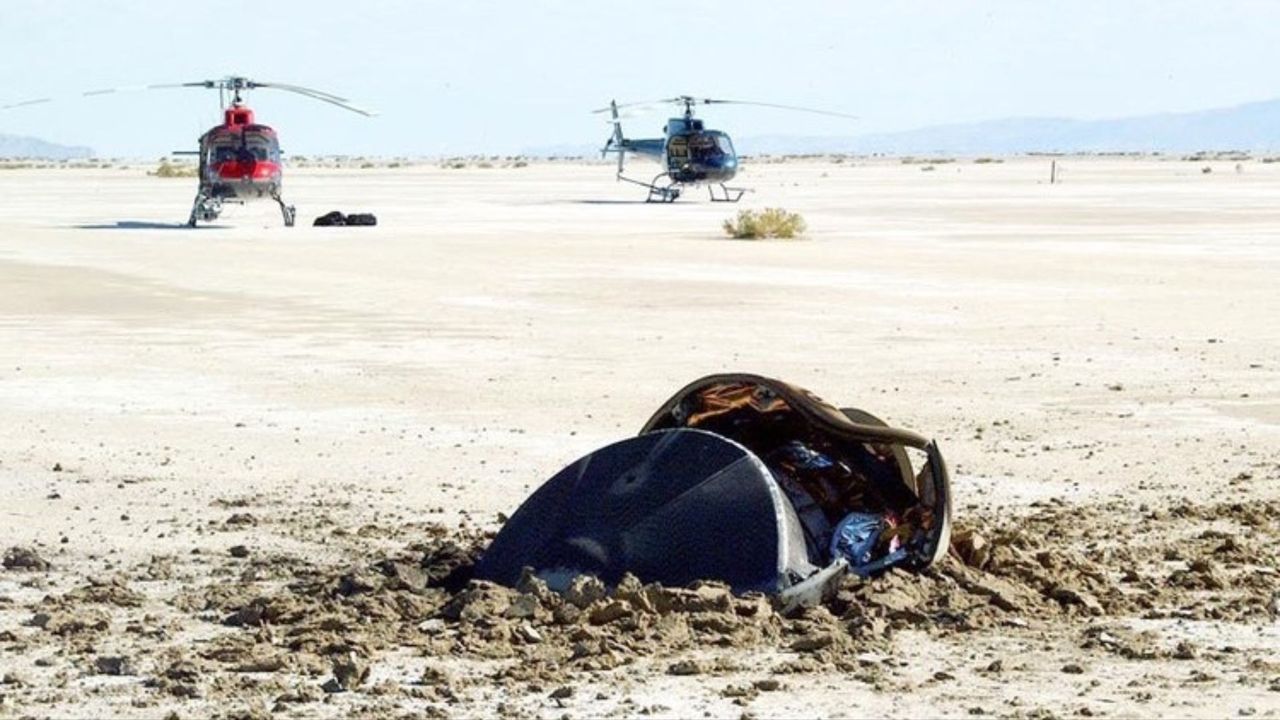
Genesis, NASA's first sample-return mission since Apollo 17 in 1972, was brought down by a basic design flaw.
When you purchase through links on our site, we may earn an affiliate commission. Here’s how it works.
On Sept. 8, 2004, NASA's Genesis spacecraft crash-landed in Utah after its parachutes failed to deploy.
Genesis was NASA's first sample-return mission since the Apollo program, and the first attempt ever to bring back samples from someplace farther than the moon. The spacecraft picked up solar wind particles while orbiting the L1 Lagrange point, which is about 1 million miles from Earth. L1 is a "sweet spot" between the Earth and the sun, where the gravitational pull from both objects balances out.
Genesis collected samples of the solar wind using arrays made of ultrathin semiconductors called "wafers." Atoms and ions floating around in space stuck to these wafers, and Genesis was supposed to bring them back safely. But that didn't happen, because its parachute didn't work.
Instead, Genesis tumbled from the sky and slammed into the Utah desert. Scientists literally had to pick up the pieces after the wafers containing the solar wind samples shattered into thousands of tiny shards. Luckily, scientists were still able to salvage some of the samples.
NASA's Genesis probe launched in August 2001 on a $264 million mission to collect samples of the solar wind. It was the first time NASA tried a sample-return mission since Apollo 17 in 1972 (which was a crewed flight), and this trip would be fully robotic.
In order to secure the Genesis solar wind samples safely, NASA opted for a tried and true approach for space retrieval: capturing a returning craft by the parachute using a helicopter. Similar techniques were used in the past to collect spy satellite film from military satellites.
But a design flaw in the parachute system, and a fairly basic one at that, doomed the Genesis spacecraft. Four gravity switches in the sample-return canister were installed backwards due to an error in the design schematics. It affected both the primary and backup parachute systems.
The switches were supposed to detect when Genesis began braking in Earth's atmosphere and trigger parachute deployment. That never happened, so the probe crashed into Earth instead.