// SPACE.COM — SPAZIO & SCIENZA
Trump is proposing a US Space Academy — if created, it could blur the lines between NASA and the military (op-ed)
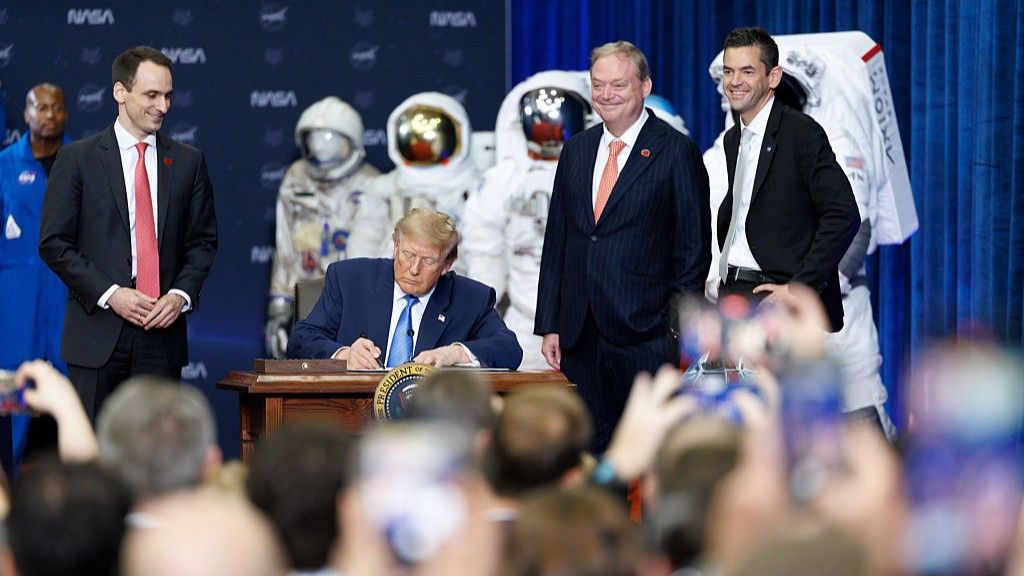
Former NASA leaders and members of Congress have expressed concerns about the relationship between a space academy and the military.
When you purchase through links on our site, we may earn an affiliate commission. Here’s how it works.
This article was originally published at The Conversation. The publication contributed the article to Space.com's Expert Voices: Op-Ed & Insights.
During a visit to NASA’s Johnson Space Center in Houston on Aug. 28, 2026, President Donald Trump signed an executive order to create a United States Space Academy
The proposal, which would establish a NASA-led institution set up along the lines of a military academy, is a new one. As a space policy expert, I see several open questions and potential problems related to the vision Trump’s executive order described.
During his first term in office, Trump undertook several actions supporting space exploration.
He established the Artemis program, to return astronauts to the Moon, in 2017. A year later, he announced his support for a new branch of the military dedicated to space. In 2019, this became reality with the establishment of the Space Force.
Given this record, it’s not surprising that Trump has continued to show interest in space during his second term.
During his remarks in Texas, Trump stated that the U.S. Space Academy will “serve both the United States Space Force as well as NASA and the civilian spaceflight industry.” Further, he said the school would be comparable to the other service academies such as West Point, the U.S. Air Force Academy and the U.S. Naval Academy.
The actual executive order doesn’t create a space academy outright. It establishes a commission that must gather information and give a report within 120 days about the feasibility of a U.S. Space Academy. The commission will be led by Jared Isaacman, the NASA administrator, and will include, among others, the secretary of defense, the national security adviser and the director of the Office of Management and Budget.