// 9TO5MAC — MOBILE & WEB
New Apple Watch features may require new legal precedent for privacy
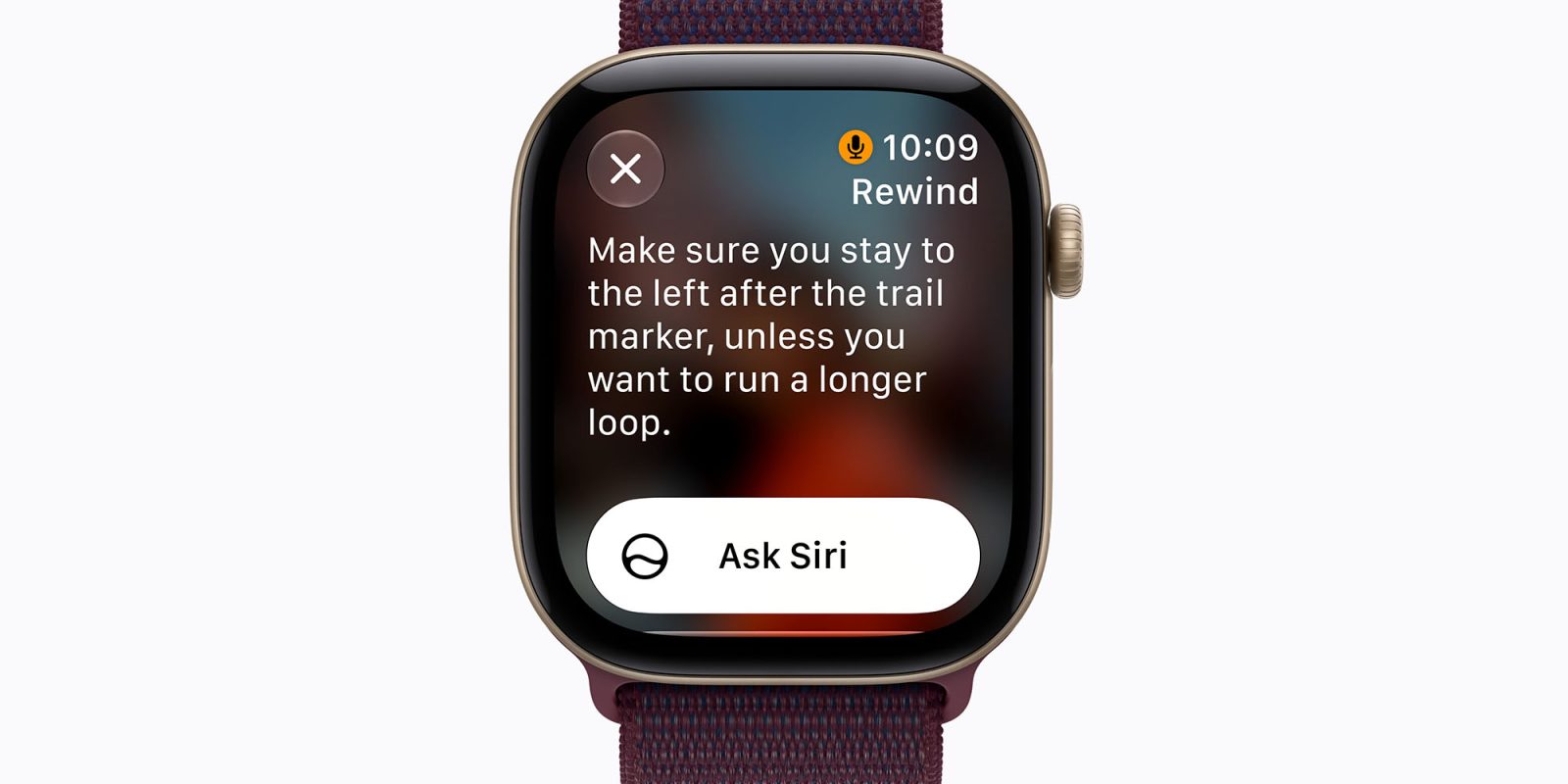
Two new Apple Watch features may see the device running up against privacy laws in multiple US states. That’s because the new Live Rewind and Siri Recap features audio-record conversations.
The devil is very much in the detail here, since neither feature makes audio recordings accessible to anyone, and it seems likely that the issue will need to be tested in the courts in order to set a new legal precedent …
Apple announced that the latest Apple Watch models support four new audio intelligence features that use the microphones built into the wearable devices:
It’s the latter two that create the potential privacy controversy, since they involve recording what both you and those around you are saying.
Whether and when it is legal to audio record conversations depends on the state or country in which you live.
Many US states have what is known as a two-party consent requirement. That is, everyone involved in the conversation needs to know that it is being recorded and to give their consent to this. In these states, it wouldn’t be legal for you to use any device to record a conversation with someone else without their awareness and agreement. (There are some exceptions for law enforcement, but these aren’t relevant here.)
In these states, if the Apple Watch were storing audio recordings and making them available for replay, then the law would be clear: consent is required. The complication here is that Apple very explicitly says that this is not the case.
Apple clearly gave a lot of thought to privacy, and we recently discussed what the company has said about each feature.
Neither feature operates in the background by default; each has to be enabled. Live Rewind has to be activated every single time you want to use it, and only operates for 15 seconds. Absolutely nobody gets any access to the audio recordings, which are stored only in a secure exclave chip.
If a conversation is detected, audio flows into a protected buffer inside the Secure Exclave on the S11 chip. It is isolated in hardware so that it is inaccessible to the user, the operating system, apps, and even Apple.