// ARS TECHNICA — INTELLIGENZA ARTIFICIALE
Agility’s new humanoid robot will stop, squat to avoid harming human coworkers
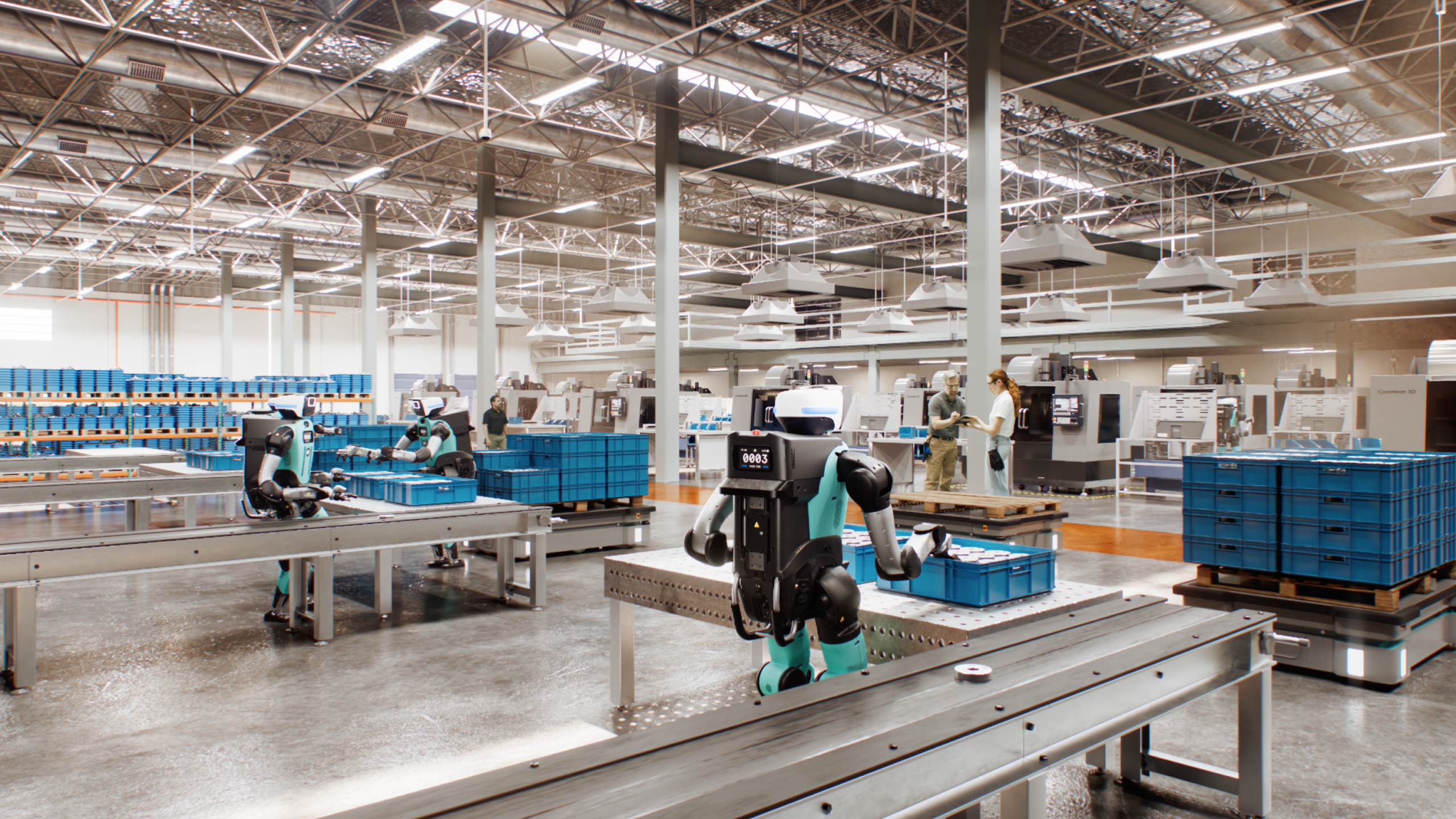
Robots can start working outside physical cages and without safety barriers.
Agility Robotics has debuted its first humanoid robot engineered to work safely near humans without risking harm to flesh-and-blood coworkers. Such safety features could unlock many more opportunities to use such robots inside warehouses and automotive factories—all without requiring isolated robot work cells and physical separation barriers.
When Agility’s new Digit 5 robot detects a person at a distance, it can autonomously take precautions, like moving to avoid the person or standing still so the person can pass by without getting closer. If a person is getting into close proximity with Digit 5, the robot can even choose to squat and assume a seated position.
“The robot was designed with a complex safe motion system that can take a variety of different mitigations depending on exactly what sort of human presence is detected,” Pras Velagapudi, chief technology officer at Agility, told Ars.
Customers can expect to gain early access to the Digit 5 within the first half of 2027, with the robot becoming generally available by the end of that year, according to Agility’s announcement today. Agility has been retooling its RoboFab facility in Salem, Oregon, to produce its newest humanoid robot.
Agility’s leadership has consistently talked about safety as a crucial constraining factor in putting humanoid robots to work, despite being one of the humanoid robotics industry’s early movers. The robotics company, headquartered in Salem, became the first to deploy humanoid robots in full-time commercial operations at a GXO warehouse in Atlanta in 2024.
Since that time, earlier versions of the Digit robot have accumulated more than 65,000 hours working at warehouses and factories across North America. Clients that have piloted or deployed the Digit robots include GXO, Schaeffler, Amazon, and Toyota Motor Manufacturing Canada.
The competition to deploy humanoid robots has only intensified in recent years, with US and Chinese companies racing to scale up production and put the robots to work in a growing array of workplaces. But the safety issue has been a “blocker for everybody,” said Jonathan Hurst, cofounder of Agility Robotics and a robotics researcher at Oregon State University, in a previous interview with Ars.
The expected availability of the Digit 5 robot in 2027 provides a more “granular” approach to robotic safety around humans as opposed to simply turning the robot completely off and on again, Velagapudi told Ars. He also described Agility’s robot fleet management system as being able to interface with customers’ external workplace safety systems.
Digit 5 uses AI algorithms along with an onboard set of multimodal sensors to detect people in its proximity, Velagapudi said. Although he declined to reveal exactly what types of sensors the robot uses to monitor nearby humans, he described the array as consisting of “a few different types of vision-based sensors.”