// TOM'S HARDWARE US — HARDWARE & GADGET
We tested 13 power banks to help you choose the best one
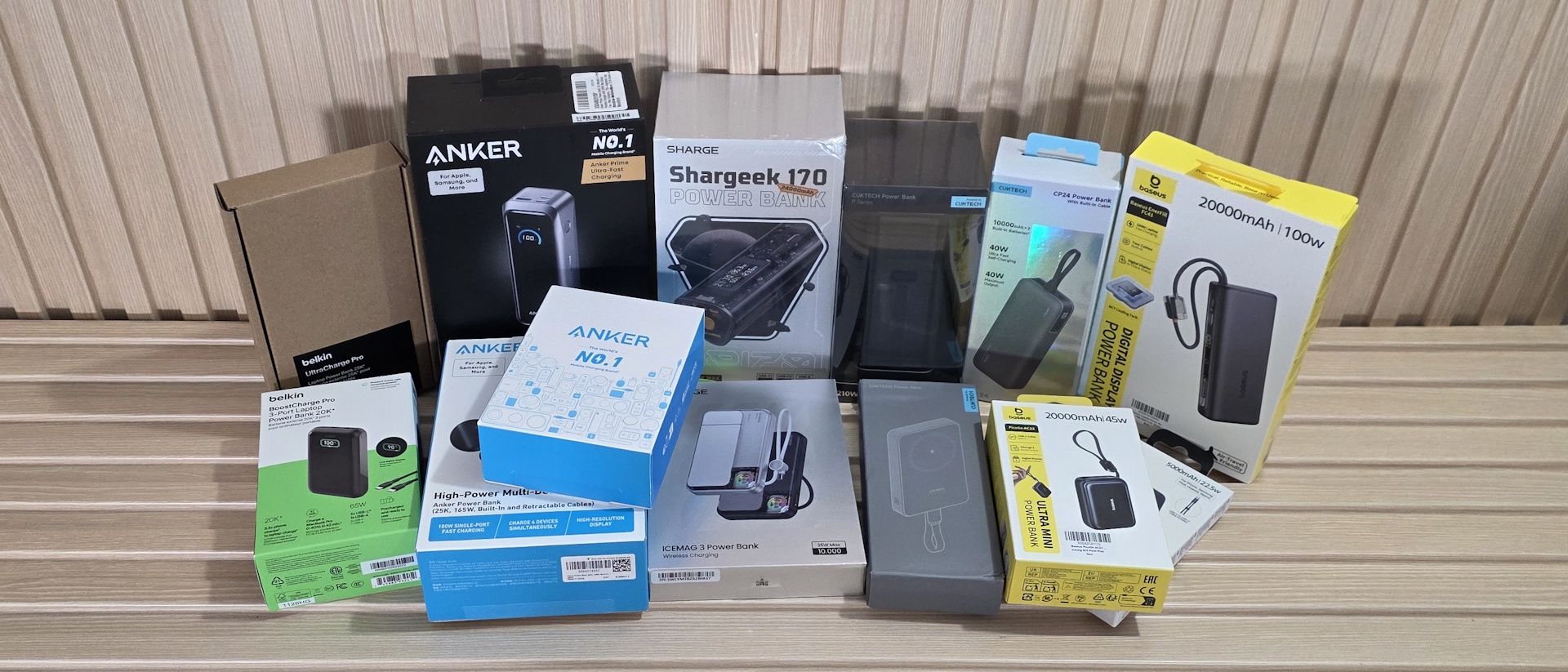
Portable power that (mostly) fits in the palm of your hand
When you purchase through links on our site, we may earn an affiliate commission. Here’s how it works.
For many of us, the tech we carry to keep our other devices powered while on the go doesn’t get much consideration. Buy a power bank with enough ports, capacity, and output, and you’re good to go, right? And generally, that is right, though a few small things can make a big difference. Of the dozen-plus chargers we've tested so far, a couple take four to six hours to charge, which may be fine for some, but could be a deal breaker for anyone who needs a quicker turnaround on a fully charged power bank.
We’ve compiled 13 power banks, ranging from slim, single-port 5,000 mAh units outputting 22W to monster multi-port 25,000 mAh bricks capable of delivering 220W across multiple ports. Prices range from around $24.99 for the Cuktech CP12 (10K/20W) to $129.99 for the most powerful unit we’re testing, the high-end Anker Prime (A110B) 20K/220W. Some include integrated USB-C cables; some include a removable USB-C cable; and some include nothing else in the box.
Others have fancy displays that show charging and temperature information, while some use simple LEDs that flash or change color to show charging status. Looks and size matter, too. The designs of the banks we tested range from simple grey boxes barely thicker than a deck of playing cards to larger stand-up units, and even see-through chassis.
What’s right for you depends on your needs, budget, and to some degree taste. In general, the higher the output and capacity, the more the device costs. How many ports do you want or need? Do you need to fly with it? Capacity and output are, of course, key deciding factors. But price, size, and safety features also matter. So there’s a lot to consider if you want the best power bank for you, and there are plenty of feature, design, and performance differences between our tested devices that we’ll share below to help with your buying decision.
The answer depends on who's buying the device and how they plan to use it. For example, if you need more than one charging port or an integrated cable, certain models just won’t work for you. Make sure it supports modern charging standards like USB-PD (Power Delivery) and/or Qualcomm Quick Charge so it can fast-charge your device (all tested devices below have PD3.0 or above).
Having the proper output to fast-charge your device is another important consideration. Buying a 10K, 25W charger for your Asus Zenbook Duo, for example, isn’t the best idea, since the device can use around 90W (@ 20V) to fast-charge and run. For that, you’d want something with more listed capacity and more wattage output. If you’re only buying a bank for your phone, that same 10K/25W charger can easily give your phone or a small tablet lots of extra run time away from a wall charger.
Rated capacity versus actual capacity is another issue, but marketing materials don’t clearly state it. The main thing to know is that the rating you see on the box is based on the battery's 3.7V rating. So the actual capacity varies depending on the voltage your device needs. The higher the voltage and output used for charging, the lower the actual capacity is. With 20V laptop charging, usable capacity can drop to around 20% of listed capacity, whereas with simple 5V charging it’s closer to 60% or more.
Get Tom's Hardware's best news and in-depth reviews, straight to your inbox.