// ARS TECHNICA — HARDWARE & GADGET
A local network of implants uses your body as the wiring
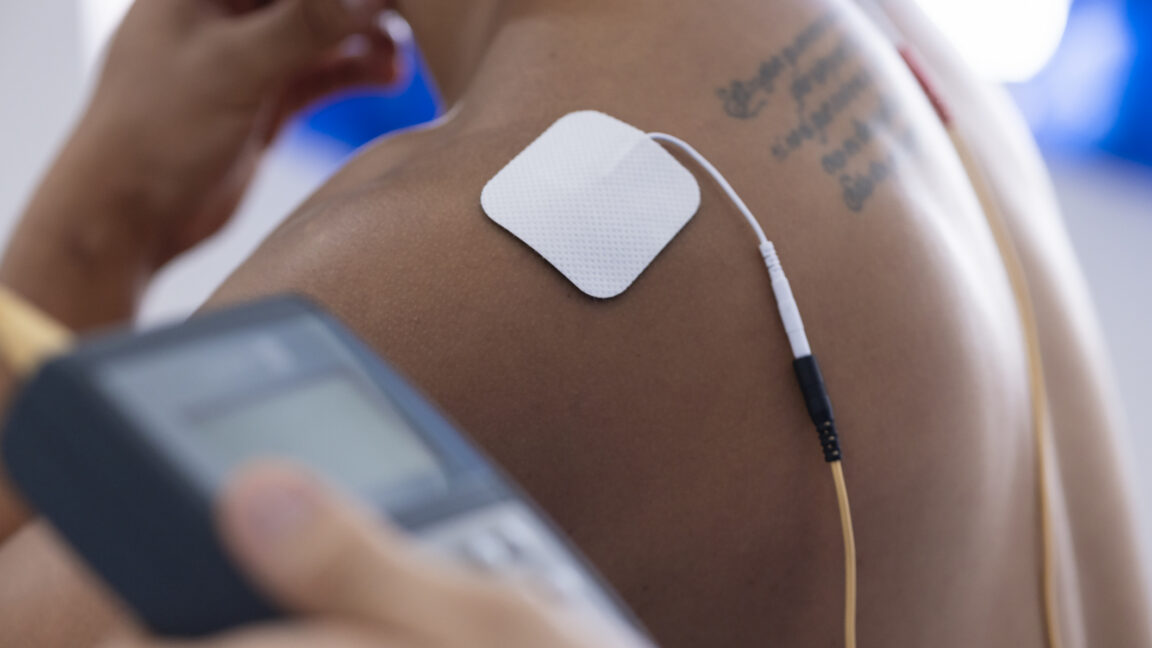
It’s possible to send electrical signals right through human tissues.
Most implants like pacemakers and insulin pumps work in isolation. To help them coordinate with each other, a team of Georgia Tech researchers built a networking system that sends signals through body tissue instead of antennas and radio waves.
Implants that communicate today mostly rely on radio protocols like Bluetooth Low Energy or near-field communication (NFC). Both are a poor fit for in-body data transfer, says Alex Abramson, a Georgia Tech engineer and co-author of the new study.
The first problem is power. “If you want an implant to remain in an active state such that it can respond within milliseconds, it’s very difficult to do that with the Bluetooth system,” Abramson said. According to the paper, Bluetooth components, when they’re activated, can cut an implant’s battery life by up to 90 percent.
The second problem is that radio waves don’t travel well through the body. “Bluetooth and near-field communication are attenuated quite a lot in the tissue,” Abramson said. He said that implant-to-implant radio communication systems run into attenuation issues if the signal has to travel more than one centimeter through the tissue. Then there’s size. Radio needs antennas, and commercial Bluetooth components require a device at least five millimeters wide. Implants thinner than three millimeters can be injected with a syringe at an outpatient clinic; bigger ones usually need surgery.
The fix Abramson’s team came up is called SWANS (Smart Wireless Autonomous Networking System) and was inspired by the way body’s own internal communication networks. “The nervous system can take a lot of inputs from all over the body, harvest all that data, and make a specific decision. And our system mimics that,” Abramson said. SWANS relies on ionic conduction just like neurons, which communicate by shuttling sodium and potassium ions through their membranes, creating voltage differences. “But instead of using nerves, we use normal body tissue to send those signals,” Abramson said.
The idea isn’t entirely new. A Food and Drug Administration-cleared pill called Abilify MyCite uses ionic conduction to tell a skin patch it was swallowed. But such systems typically link just two devices, while Abramson’s team wanted SWANS to connect many.
The first SWANS component is a wearable hub. It’s a flexible circuit board that reads sensor data, runs decision-making algorithms, and emits voltage pulses of up to 12 volts. The second is a patch of stainless-steel microneedles that delivers those pulses into the body, bypassing the skin’s outermost, poorly conductive layer. The third is a network of syringe-injectable implants, each packing two receiving pads, a transistor switch, a battery, and either a sensor or an actuator such as a nerve stimulator.
“We created all of the smarts in the wearable hub,” Abramson said. The wearable has more room and more battery power, so the implants could be kept small and simple. When the hub fires a pulse, it creates a brief electric field that spreads through the tissue in all directions. Every implant within range picks it up, but only the right one(s) react, a bit like people in a crowded room who turn around only when they hear their own name.
The team achieved that by making each implant’s transistor switch on only when the incoming pulse crosses a specific threshold. Adding a resistor in front of the transistor raises the voltage needed to flip the switch. Adding a capacitor means the pulse must last long enough to charge it first. By mixing and matching these components, the team made implants that respond only to specific combinations of pulse strength and length. This, the authors admit in the paper, means that voltage thresholds need to be tuned for each body and implant placement.