// SPACE.COM — SPAZIO & SCIENZA
What did the night sky look like on the 1st Independence Day 250 years ago?
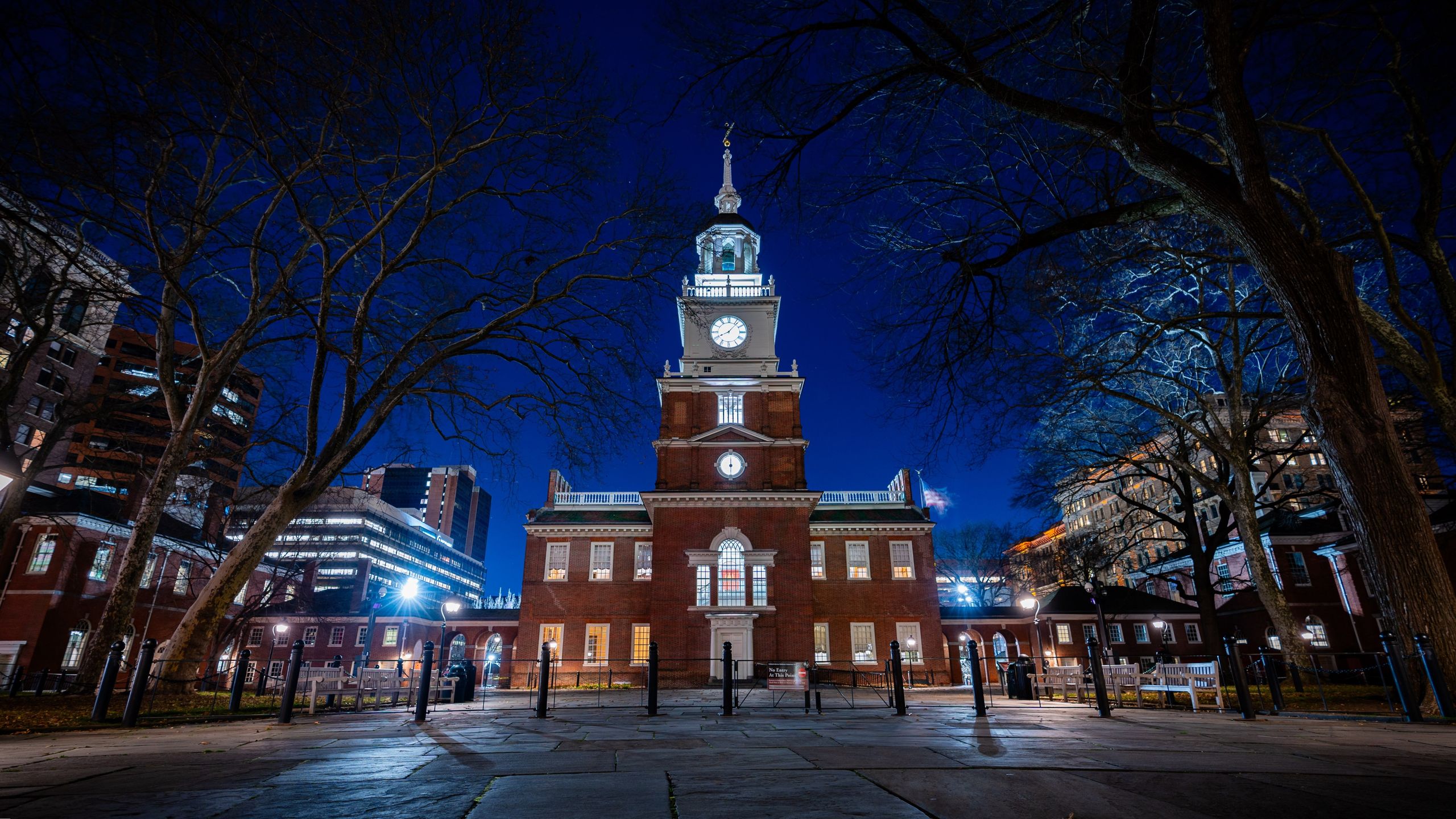
As the U.S. celebrates its 250th birthday, here's what Benjamin Franklin and other colonists would have seen when they looked up on July 4, 1776.
When you purchase through links on our site, we may earn an affiliate commission. Here’s how it works.
What did the evening sky look like for Benjamin Franklin, Thomas Jefferson, and their contemporaries on July 4, 1776?
As the United States marks its 250th birthday, many astronomy enthusiasts may be asking exactly that. If you stepped outside around 9 p.m. local time on July 5, 1776, the sky would look much as it does today. Only careful measurements would show that the stars were not in quite the same positions they occupy in 2026.
To understand the sky more fully, it helps to look at how people in 1776 tracked celestial events and what they would have expected to see overhead.
But first, how did people in 1776 keep track of astronomical phenomena? People studied astronomy for practical reasons both in and out of the classroom. It was essential for navigation, surveying, timekeeping, and charting unfamiliar lands. In an age before light pollution, ordinary people were also likely far more familiar with the stars and constellations than most people are today.
In the American colonies of the 17th and 18th centuries, an almanac ranked just behind the Bible in everyday importance. It listed sunrise and sunset, moonrise and moonset, the times when bright stars reached their highest points in the sky, lunar phases, planetary positions, some astrological lore, and practical information such as road conditions, husbandry tips, and weather forecasts.
By the early 18th century, numerous almanacs were in print. Many survived only a few years, but a bestseller could support its printer well into the following year. Among the most successful was Benjamin Franklin's "Poor Richard's Almanack", published in Philadelphia under the pseudonym Richard Saunders from 1732 to 1758. It became immensely popular, selling more than 10,000 copies annually. Franklin has often been called America's first true Renaissance man — an author, printer, politician, diplomat, inventor, and scientist who counted astronomy among his interests.
Later, yearly "prospectuses of the sundry celestial events" could be derived from the extensive calculations appearing in "The Nautical Almanac", established in 1766 by Dr. Nevil Maskelyne, the fifth Astronomer Royal of England.
For anyone consulting an almanac for the year 1776, they would find that only one planet could be readily viewed after sundown. Saturn, in the constellation Virgo, passed opposition to the sun on April 7 and during July would be evident in the southwest sky at dusk, shining with a yellowish-white glow and appearing slightly brighter than the bluish first magnitude star Spica, about 7 degrees to its lower left. On the evening of July 22, a waxing crescent moon would appear to form a broad triangle with Saturn and Spica. Of course, Saturn's most notable telescopic feature is its ring system, which at that time was tilted 10 degrees from edge-on with its north face in view.