// NATURE NEWS — SPAZIO & SCIENZA
Overcoming key challenges in the evolutionary transition to multicellularity
Nature
volume 658, pages 327–336 (2026) Cite this article
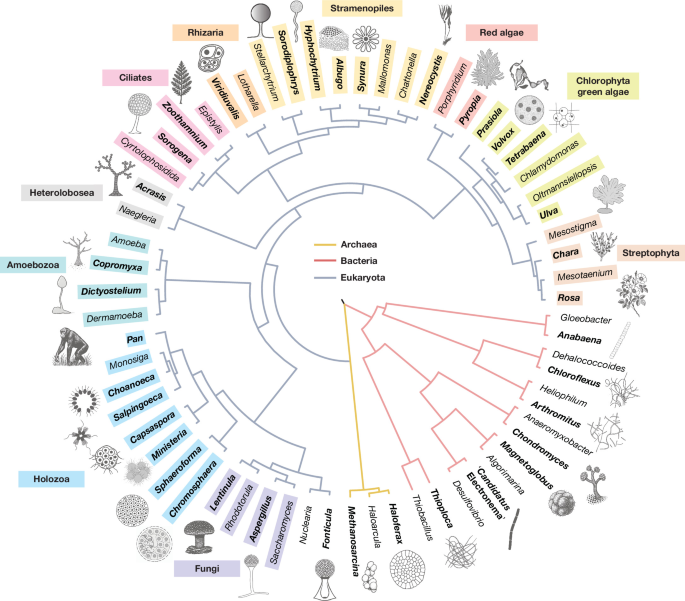
Dozens of independent origins of multicellularity have profoundly shaped Earth’s evolutionary and ecological history. These transitions have given rise to massive radiations encompassing thousands to millions of species and the evolution of increasingly complex bodies. Multicellular taxa now constitute the majority of Earth’s biomass and have fundamentally transformed global ecosystems, underpinning diverse biomes from forests and grasslands to coral reefs. While these macroevolutionary patterns have long been recognized, the microevolutionary processes driving the transition to multicellularity have remained unclear. Questions remain on how solitary cells form cohesive groups, how these groups become evolutionary units capable of adaptation at the multicellular level, and how novel cell types and developmental patterns emerge. Recent discoveries of previously unknown multicellular species and the development of experimental models have provided important insights into these questions. This work reveals that seemingly insurmountable evolutionary hurdles are often readily overcome either through the repurposing of ancestral unicellular traits or through emergent properties of multicellular collectives that arise spontaneously. Here we review key breakthroughs in our understanding of the microevolutionary processes that underpin the evolution of increasingly complex multicellularity, focusing on mechanisms through which single cells can evolve into functionally integrated multicellular organisms.
This is a preview of subscription content, access via your institution
Access Nature and 54 other Nature Portfolio journals
Get Nature+, our best-value online-access subscription
Prices may be subject to local taxes which are calculated during checkout
Lamża, Ł. Diversity of ‘simple’ multicellular eukaryotes: 45 independent cases and six types of multicellularity. Biol. Rev. Camb. Philos. Soc. 98, 2188–2209 (2023).The most comprehensive phylogenetic analysis of eukaryotic multicellularity to date, cataloguing 45 independent origins and 6 structural types.
Article
PubMed
Google Scholar
Du, Q., Kawabe, Y., Schilde, C., Chen, Z.-H. & Schaap, P. The evolution of aggregative multicellularity and cell-cell communication in the Dictyostelia. J. Mol. Biol. 427, 3722–3733 (2015).
Article
CAS
PubMed
PubMed Central
Google Scholar