// PC GAMER — GAMING
The developer of an AI-powered driving instruction simulator is spending $1,000 per month just to keep its demo running
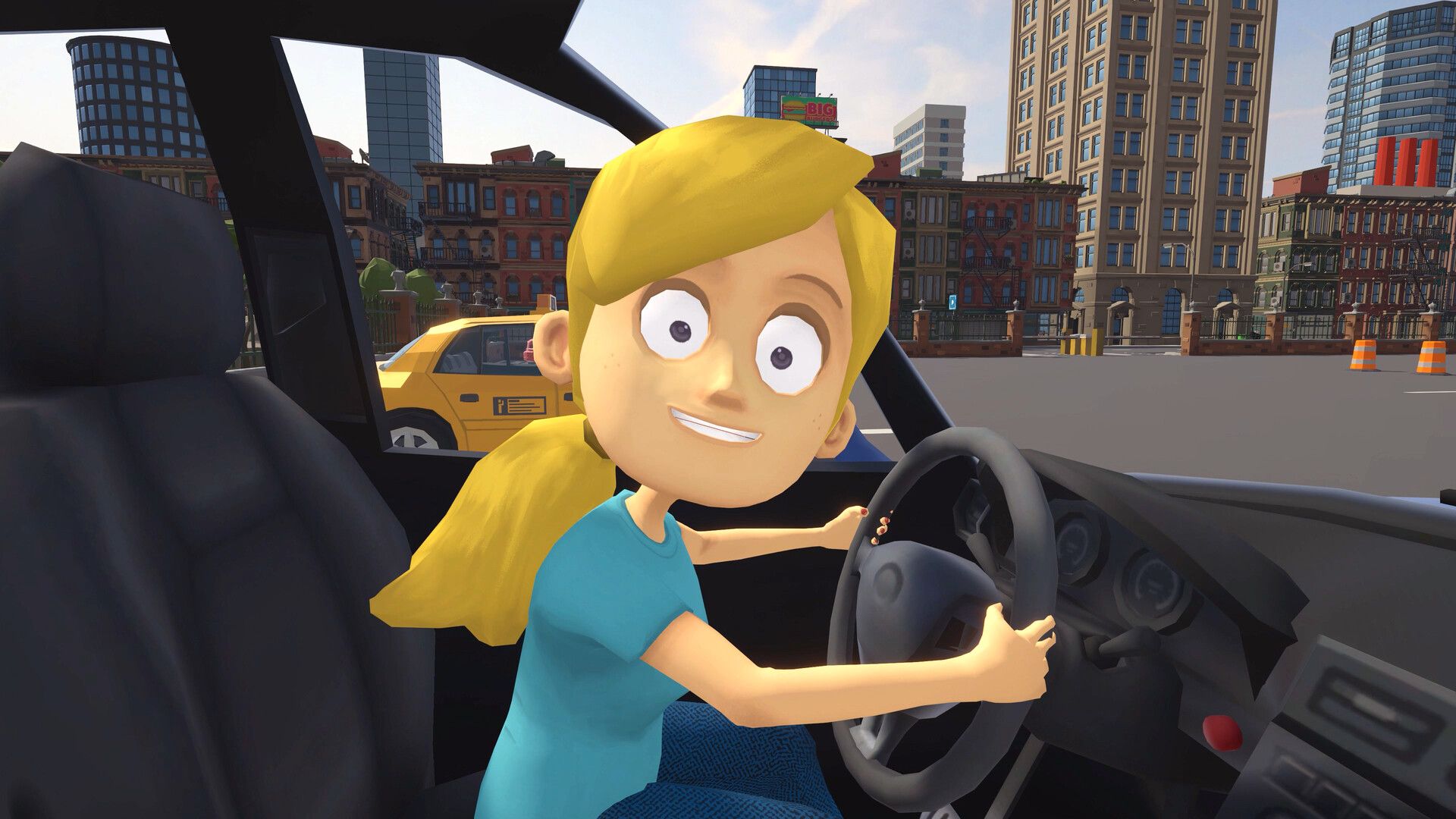
Teach My Little Sister How to Drive centres around a costly chatbot.
When you purchase through links on our site, we may earn an affiliate commission. Here’s how it works.
One of the many ways AI will (supposedly) revolutionise the games industry in facilitating highly reactive NPCs via LLM-powered chatbots. Yet so far, only a handful of games like Where Winds Meet have attempted to implement the tech, and the results have been less than spectacular. But there might also be another reason why relatively few games feature LLM-powered NPCs, which is that powering such chatbots can be costly, as recently demonstrated by the developers of an upcoming driving instructor simulator
As reported by FRVR (via Kotaku) Teach My Little Sister How To Drive is a comic simulation game in which you coach your virtual sibling on driving technique from the comfort of the passenger seat. The twist is that behind your sister's dinner-plate eyes is an LLM chatbot (currently powered by an OpenAI model, though the developers intend to use Gemini for the final release) In the role of instructor, players can both converse with the chatbot and issue vocal instructions such as "turn left here", to which the bot will respond accordingly. At least, that's the theory.
Developer Easy Fox released a demo for Teach My Little Sister How To Drive back in February, but in the past month the game has seen a surge in players, which has had an interesting knock-on effect for the demo. "The number of demo players has grown more than twentyfold," Easy Fox explained in a Steam post, adding. "This growth has also increased our operating costs considerably."
Easy Fox goes on to explain that it is "spending over $1,000 per day on AI services for the demo", as players burn through tokens prompting the LLM by proxy. Easy Fox claims that figure "isn't because each player is particularly expensive to support", but rather that "so many people are playing."
As a result of this, Easy Fox has "taken out a bank loan to help keep the demo running". Yet even this may not be sufficient to support the demo long term. "Financial pressure may mean we have to close the demo earlier than expected before the full release," Easy Fox says, though the studio stresses it has "not made that decision at this time".
According to FRVR, that twentyfold increase in players amounts to 450 concurrent. While the overall player numbers will be higher than that, it isn't an enormous figure, and it makes me wonder how financially viable the game will be when it is released. Easy Fox says it will "account for expected AI usage in the game's price". But it also says that players "will not be charged separately for their individual AI token usage after purchasing the game".
That might work in the short term, but surely those token costs are going to pile up over time. It's also worth noting that AI token costs are highly unpredictable, with even large companies like Microsoft and Uber struggling to accurately predict the cost and burn rate of their own internal token use. In its Steam post, Easy Fox says it's looking into options like introducing local AI models for players with "sufficiently capable GPUs". But that's only going to be a fraction of the player-base.
Keep up to date with the most important stories and the best deals, as picked by the PC Gamer team.