// SPACE.COM — SPAZIO & SCIENZA
On this day in space! Oct. 9, 1992: Peekskill meteorite hits car in New York after streaking through the atmosphere
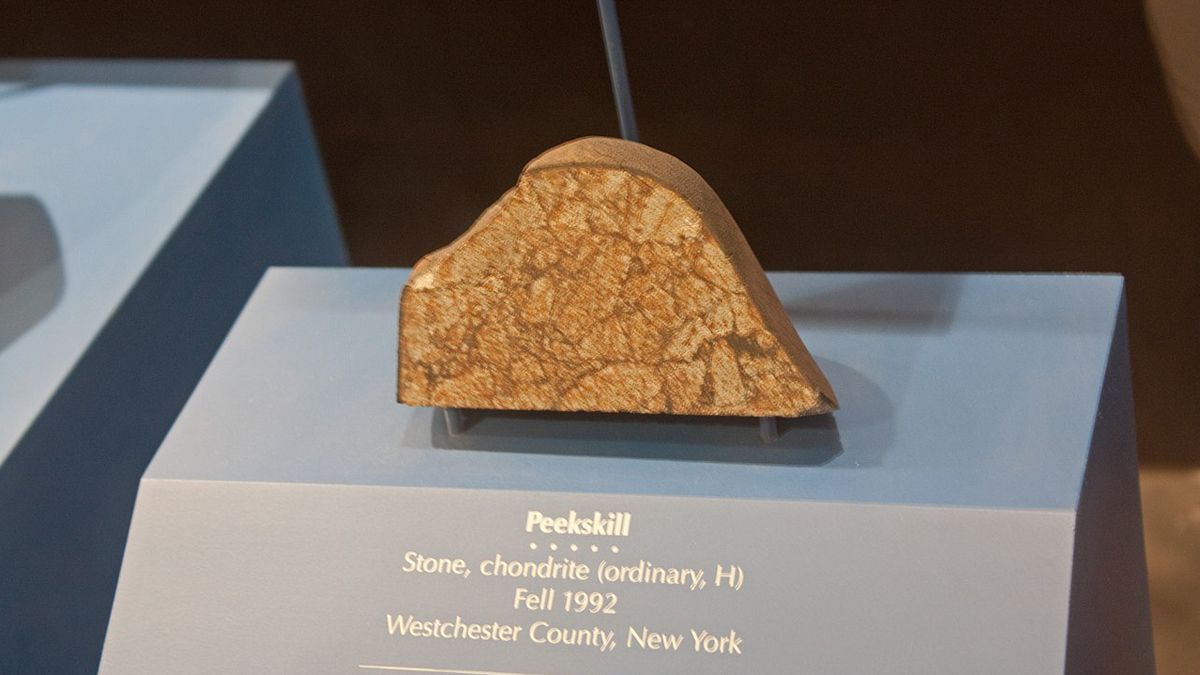
She had just bought the car for $300, and after it was damaged, she sold it for $10,000.
When you purchase through links on our site, we may earn an affiliate commission. Here’s how it works.
On Oct. 9, 1992, a space rock the size of a bowling ball fell out of space and crash landed on a woman's Chevy Malibu in Peekskill, New York.
Thousands of people along the U.S. East Coast witnessed the Peekskill meteorite blazing through the skies over Kentucky, West Virginia and Pennsylvania before it hit the parked car. Eighteen-year-old Michelle Knapp was sitting at home when she thought she heard a car crash outside.
When Knapp went to look, she found a hole in the trunk of her car and a smoking-hot meteorite beneath it. She had just bought the car for $300, and after it was damaged, she sold it for $10,000.
Earth is no stranger to space rock impacts (farewell, dinosaurs), but it is pretty rare to see a meteorite fall as strange as the Peekskill meteorite car crash.
The meteor that ultimately led to the Peekskill meteorite was visible from Kentucky to New York, appearing as a "fragmenting fireball" at about 7:50 p.m EDT, according to the University of Alaska Fairbanks Geophysical Institute. The meteorite, which weighed 12.37 kilograms, crashed through the right rear edge of the trunk of Knapp's 1980 Chevrolet Malibu and left a dent in the driveway below.
#OTD in 1992, the Peekskill meteorite fell just a short distance from NYC. A rock the size of a bowling ball fell from the sky onto a parked Chevy Malibu, piercing the trunk & denting the driveway beneath it. Soon after, it was found near the car, still warm & smelling of sulfur. https://t.co/SzxaBER9omOctober 9, 2019
The Peekskill meteorite fall captivated scientists and the public alike due to the high amount of film and photo coverage of its meteor descent.
"Video cameras trained on Friday night high-school football games turned skyward to capture the rocketing fireball. As a result, several scientific investigations were able to track the meteorite's flight path to Earth — including its orbit around the Sun," University of Alaska Fairbanks officials wrote.