// ARS TECHNICA — MODA & SOCIETÀ
Software development and rules stability: Prototype racing in 2030
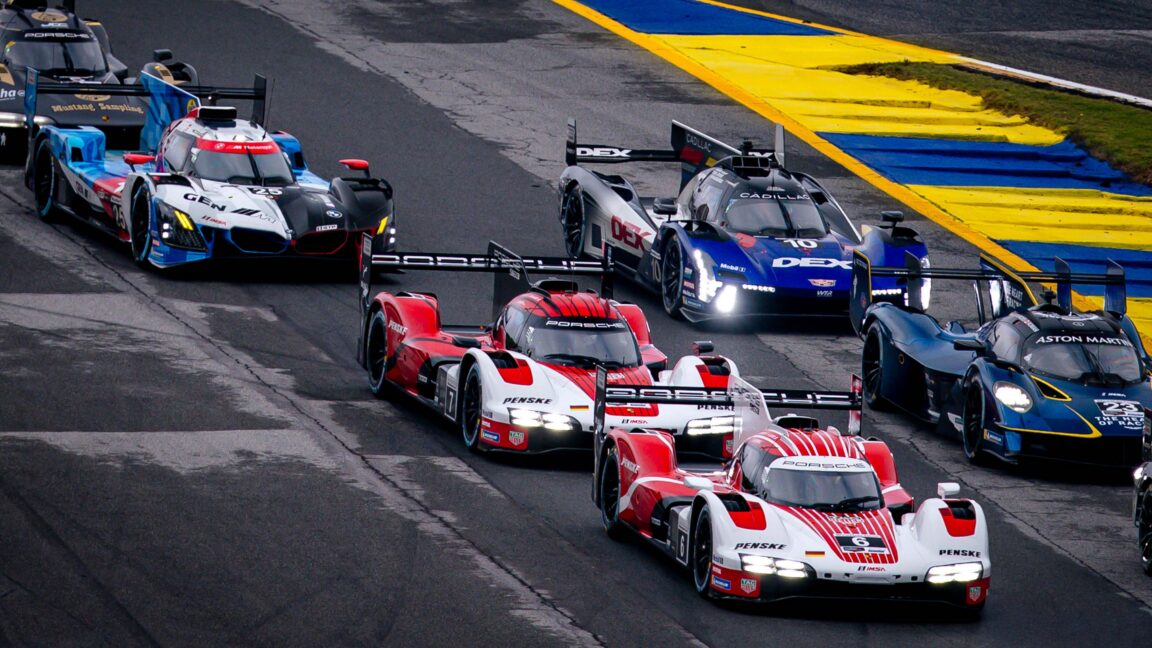
With the end of IMSA’s 2026 season, we have thoughts about the future of the sport.
The rising tide that has been the Drive to Survive effect has lifted more boats in motorsport than simply Formula 1’s. Sportscar racing is enjoying its own surge in popularity internationally at races like Le Mans in France, but also in North America in IMSA’s WeatherTech Sportscar Championship. For one thing, multi-hour, multi-class racing lends itself better to the age of streaming and second screens than it did linear broadcast TV, and fans are taking advantage of that: IMSA’s audience grew by more than a third domestically and almost a quarter internationally last year.
Having some of the coolest-looking cars racing today certainly helps, whether that’s the (mostly) hybrid prototypes or the GTs, racing versions of road-going cars from Porsche, Ferrari, and others. And it definitely helps that fan access at the races is virtually unmatched, with open paddocks and grid walks that now see huge crowds get up close to the cars just before the start of each race.
“I think we’re just scratching the surface,” said IMSA President John Doonan. “I think besides the people that are here on the ground, the people watching, people engaging with us on social media, I’m seeing the passion come out more. Just on the grid walk, these fans coming up and being so excited to be here.” The series has certainly been making an effort, among other things getting local high school students exposed to the industry and starting a partnership to train more mechanics with ASE.
IMSA’s 2026 season wrapped up at the start of the month at Road Atlanta in Georgia. Although the 10-hour Petit Le Mans is now the regular finale, the race predates the WeatherTech series as well as its predecessor, the American Le Mans Series, first being held in 1998 after Elan Pharmaceuticals founder Don Panoz got a bright idea to invite the cars that raced at the French enduro to come here to the US. It worked and led to some classic races; no one who watched it could forget Allan McNish’s recovery drive in 2008, clawing back two laps after crashing on the way to the grid to hunt down and beat the Peugeots. (Don’t take my word for it, watch it for yourself.)
2026’s running was perhaps not quite an all-time classic. As often happens, weather played its part, suppressing the crowd size and making life complicated for the teams and drivers on track. Nearly four hours were spent neutralized behind the safety car, with 16 cautions that prevented this year’s race from ever really developing a rhythm. The first half of the race was dominated by the Acuras, and the BMWs were also strong, but in the end victory went to one of the two Porsche 963s—believe it or not, the marque’s first prototype Petit Le Mans win (although in 2015 a slower GTLM Porsche 911 RSR managed to take overall victory).
This being the real world, things in sportscarland aren’t entirely easy. The war in the Middle East has disrupted both the World Endurance Championship—the series built around the 24 Hours of Le Mans—and a new Asian Le Mans series. And as always, at the top level, the sport is dependent upon manufacturer largesse, something that usually vanishes in the face of worsening economic outlooks. Porsche cut its factory prototype program in half last year, parking the two cars it had campaigned in WEC and leaving just the two cars running in IMSA. Betting heavily on an EV transition that hasn’t come to pass, plus the effect of Trump’s tariffs on US-generated profits, are mostly to blame for the decision to pull back.
But Porsche is not the only one; Alpine announced earlier this year that it was retiring from the WEC at the end of this year. There were hopes that the program might be saved by Geely, the Chinese automaker that owns Lotus and Volvo. Sadly, just today it emerged that it’s unlikely to happen, and two more cars will fall off the grid at the end of the year. Acura is also calling time on its GTP program in