// ARS TECHNICA — GAMING
Why BioWare's Neverwinter Nights still has thousands of active players
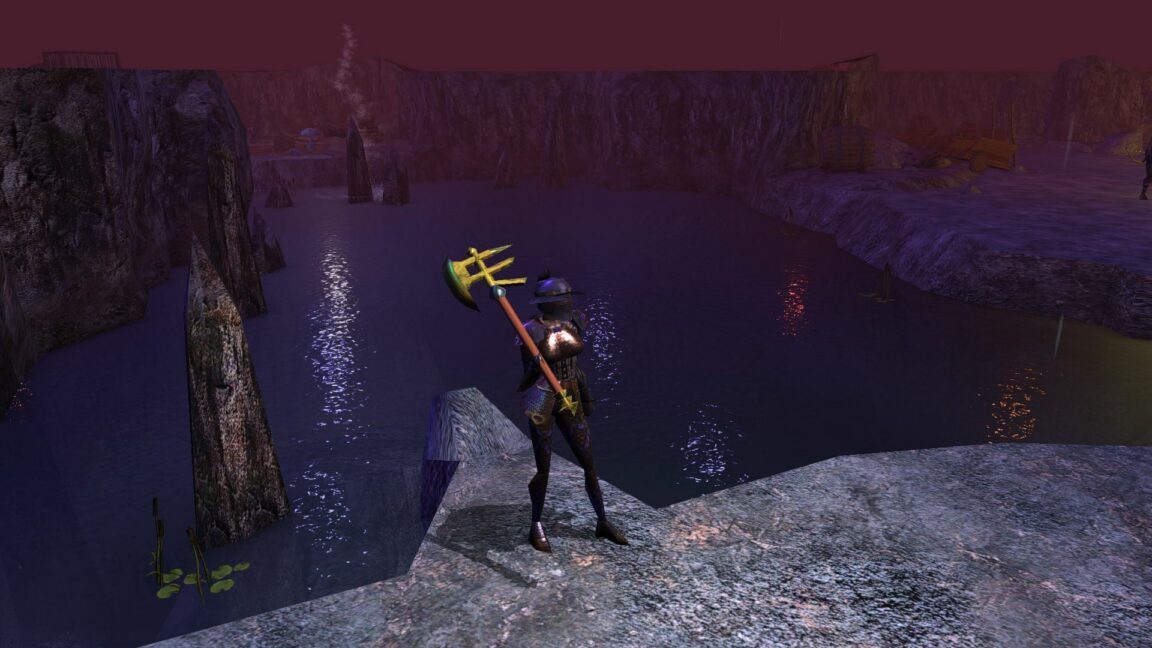
The single-player is just OK, but according to the players, that doesn’t matter.
Usually at least once a month, we’ll publish a personal retrospective like this one, where we’ll feature one of the games from the list—perhaps a retro game you’ve heard of, perhaps a modern title you missed. Regardless, GOG will have a DRM-free version of the game ready to go. Be sure to check out the earlier pieces in the series!
Neverwinter Nights was made by the studio that produced seminal RPGs Baldur’s Gate, Star Wars: Knights of the Old Republic, Mass Effect, and Dragon Age. It sold well and was critically acclaimed at launch. Yet, somehow, it has not been canonized in most gamers’ minds over the decades the same way the games that came before and after it were.
Nonetheless, more than two decades later, it still has a tight-knit and surprisingly active community that none of those other games can rival. I think that’s partly because it was a completely different beast.
BioWare is known for making multi-character, story-driven role-playing games that focused primarily on single-player story campaigns, though some supported co-op play in those campaigns. With Neverwinter Nights, BioWare instead made a game that was as focused on a modding toolset for content creation as it was on giving players a pre-packaged story, and that emphasized multiplayer at least as much as solo play.
Today you would expect this to be a calculated attempt to bring more long-term, always-on, multiplayer-as-a-service to an RPG franchise that has mostly appealed to solo players. You might imagine it would be about selling cosmetics, a subscription, or a battle pass, or maybe you would think it was about nabbing appealing engagement numbers.
But it’s clear from playing it today that Neverwinter Nights wasn’t primarily made for those reasons. Instead, it came from a passion for tabletop role-playing and a desire to get closer to that in video game form than ever before.
Yes, the BioWare team noted in some interviews that they saw this as a trial run for exploring the idea of making a massively multiplayer game (MMO)—something that, in the year 2000, was seen by many as the hot new business opportunity in gaming, and which was in many ways the precursor to the games-as-a-service we see today. They then indicated they realized that an MMO was harder to make than they had assumed and abandoned that ambition well before Neverwinter Nights shipped.
Neverwinter Nights is not exactly an MMO. Instead, it’s designed for small communities of people to inhabit and create with, and it features a powerful toolset for virtual dungeon masters to use to subject regular players to challenges in an improvisational way on a live server.
“We always envisioned it as a table with four legs—the single player, the multiplayer, the DMing tools and the toolset (the module making tools),” BioWare’s Ray Muzyka told IGN around the time the game was released. “They all appeal to different groups, and we’ve tried to make them all equivalently high quality.”