// ARS TECHNICA — FINANZA
Ukraine’s drone rescue of wounded soldier puts much touted idea into practice
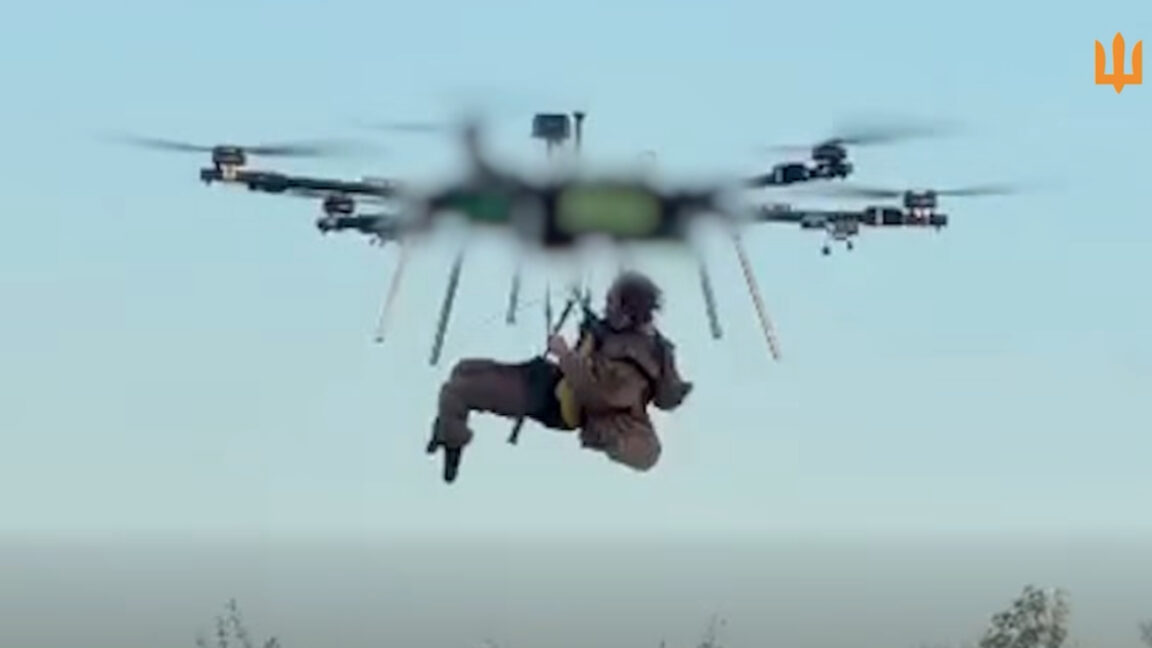
Ukraine’s latest drone innovation may boost bleak odds of evacuating casualties.
Ukraine’s unprecedented drone rescue of a wounded soldier from the battlefield has shown once again how battlefield necessity can spur innovation. The operation was revealed just days after separate Ukrainian drones designed for casualty evacuation were deployed for frontline testing—taking a step beyond the US military’s decades of experimentation with similar concepts.
The drone evacuation of the injured soldier took place at an undisclosed time and place on the frontline where the presence of Russian drones and landmines made it impractical to send in a wheeled ground robot, according to The Kyiv Independent. On October 19, Ukraine’s Army shared a video of the drone evacuation, showing the wounded soldier securing himself in a harness suspended beneath a heavy hexacopter drone with six rotors before being flown to safety.
“This is a historic event, the next stage of evacuating the wounded, which we will all come to,” said Napalm, a programmer of the 92nd separate assault brigade’s unmanned ground systems company, who went by his callsign per Ukrainian military practice, in a statement. “Now the serious systematic work begins, so that such missions are carried out constantly.”
To perform the improvised aerial evacuation, the 92nd brigade prepared and tested a heavy hexacopter drone—the Heavy Shot AYUDAG 6 model—provided for free by the Ukrainian manufacturer Gurzuf Defence. Special carabiners were first delivered to the wounded soldier so he could attach himself to the drone that was equipped with a winch, according to a blog post by Gurzuf Defence.
The wounded soldier, who serves with Ukraine’s 30th separate mechanized brigade, had already spent nearly 500 days at a frontline position while under threat of Russian fire, according to Gurzuf Defence. Like many soldiers at frontline positions, he had been relying on friendly drone deliveries for ammunition and other supplies.
The drone evacuation flight took 1 hour and 14 minutes from start to finish while covering a distance of nearly 39 miles (62 kilometers). This particular hexacopter can reportedly carry up to 200 pounds (90 kilograms).
Heavy drones offer the advantages of speedy evacuation and potentially greater survivability for wounded soldiers, along with likely representing the only realistic option for extracting soldiers from dangerous frontline positions. Such drones also reduce the risk to physical rescue operations by relying on drone pilots who remotely control them from positions farther back.
But Pavlo Feldblium, cofounder of Gurzuf Defence, told The Kyiv Independent that such drone evacuations were also risky for wounded soldiers and should only be used as a last resort.
This first-time evacuation of a battlefield casualty by drone comes just a week after a separate Ukrainian drone manufacturer, SkyFall, had unveiled its own StarGate hexacopter drone specially designed with a stretcher-based container for carrying wounded soldiers. The SkyFall drone was sent to a Ukrainian brigade for frontline testing starting in October, according to The Associated Press.