// TOM'S HARDWARE US — HARDWARE & GADGET
17 Russian trawlers logged mapping undersea cables connecting the US and Europe
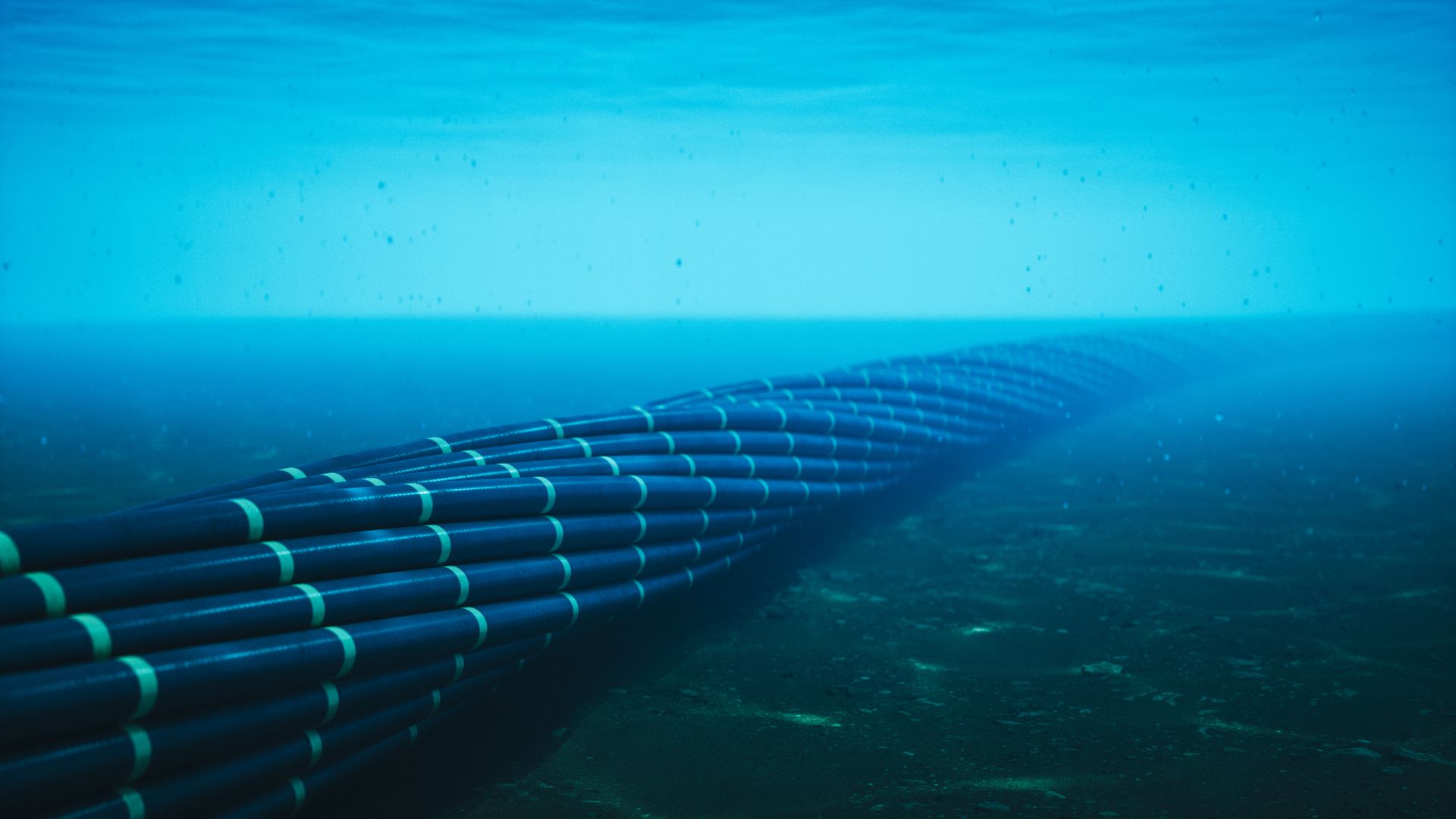
The Russians are apparently scouting the exact locations of this critical infrastructure.
When you purchase through links on our site, we may earn an affiliate commission. Here’s how it works.
Moscow is apparently using commercial fishing trawlers to map undersea cables connecting the U.S. and Europe. According to The Telegraph, it has uncovered over 500 incidents where Russian fishing boats loitered above critical communications cables over a span of four and a half years. All the data came from Global Fishing Watch, which uses satellite data to track vessels over the open ocean. The satellite tracks of these suspicious Russian ships are then cross-referenced over nautical charts that marked the locations of undersea cables.
While the general location of most undersea cables is clearly marked on nautical charts so ships can avoid them, any operation involving undersea cables requires more accurate positioning data. The Telegraph gave three examples of Russian trawlers seemingly surveying critical infrastructure. One ship followed the track of nine separate cables under the Atlantic, including the Atlantic Crossing 1 telecommunications cable and the decommissioned TAT-14 undersea cable owned by Sprint Corporation. Another ship loitered near the trans-Atlantic Hibernia Express cable and then followed the route of the Shefa-2 cable that connects Shetland to the Faroe Islands, while a third partially followed the tracks of the Amitie and Grace Hopper undersea cables, which connects the UK, France, and Spain to the U.S.
These ships have slowed multiple times, sometimes traveling at speeds between two and three knots. A senior naval officer said that the ships suspected of conducting these intelligence activities are large enough to house an uncrewed surface vehicle (USV) or remotely operated vehicle (ROV), and that they could deploy tethered units at very low speeds. “If you put a sonar-equipped ROV 100 meters above a feature of interest, you can map it with millimeter precision,” one naval officer said. A NATO representative also told the publication, “We’re absolutely aware of what Russian civilian fishing ships are up to and where ... Some of these ships have never seen a single fish on their deck.”
Undersea cables are the backbone of the modern interconnected world, and they carry economic activity worth billions, if not trillions of dollars. It’s estimated that around $87 billion worth of economic activity passes through this undersea infrastructure, and that they would be one of the first targets if ever a conflict between NATO and Russia erupts. These trawlers are part of Russia’s “gray-zone” warfare, where the actions of these commercial vessels cannot easily be traced back to the Kremlin.
There have already been multiple incidents of undersea cables getting disrupted across the world. Two undersea cables, one connecting Finland to Germany, and the other to Estonia, were disrupted one after the other in a span of a couple of months in 2024. Taiwan has also detained a Chinese freighter after it was suspected of severing an undersea cable connecting its Penghu Islands to the nation’s main islands, while another Chinese ship has been suspected of cutting an undersea cable connecting it to the U.S. More recently, NATO uncovered a Russian plot to sabotage the two largest undersea cables on Earth, while a cable connecting Australia and New Zealand to Indonesia and Singapore have also been damaged. Iran even threatened to sever undersea cables going through the Strait of Hormuz.
Even though undersea cables are considered critical infrastructure, the distances that they cover make it quite difficult, if not impossible, for nations to conduct constant patrols to protect them. The majority of their length also often sits in international waters, meaning vessels should be able to freely pass over and map undersea cables. While navies shadow these questionable vessels, their suspicious operation is generally not grounds for boa