// 9TO5MAC — MOBILE & WEB
iPhone Duo reviews: The absolute best foldable phone, but not without compromise
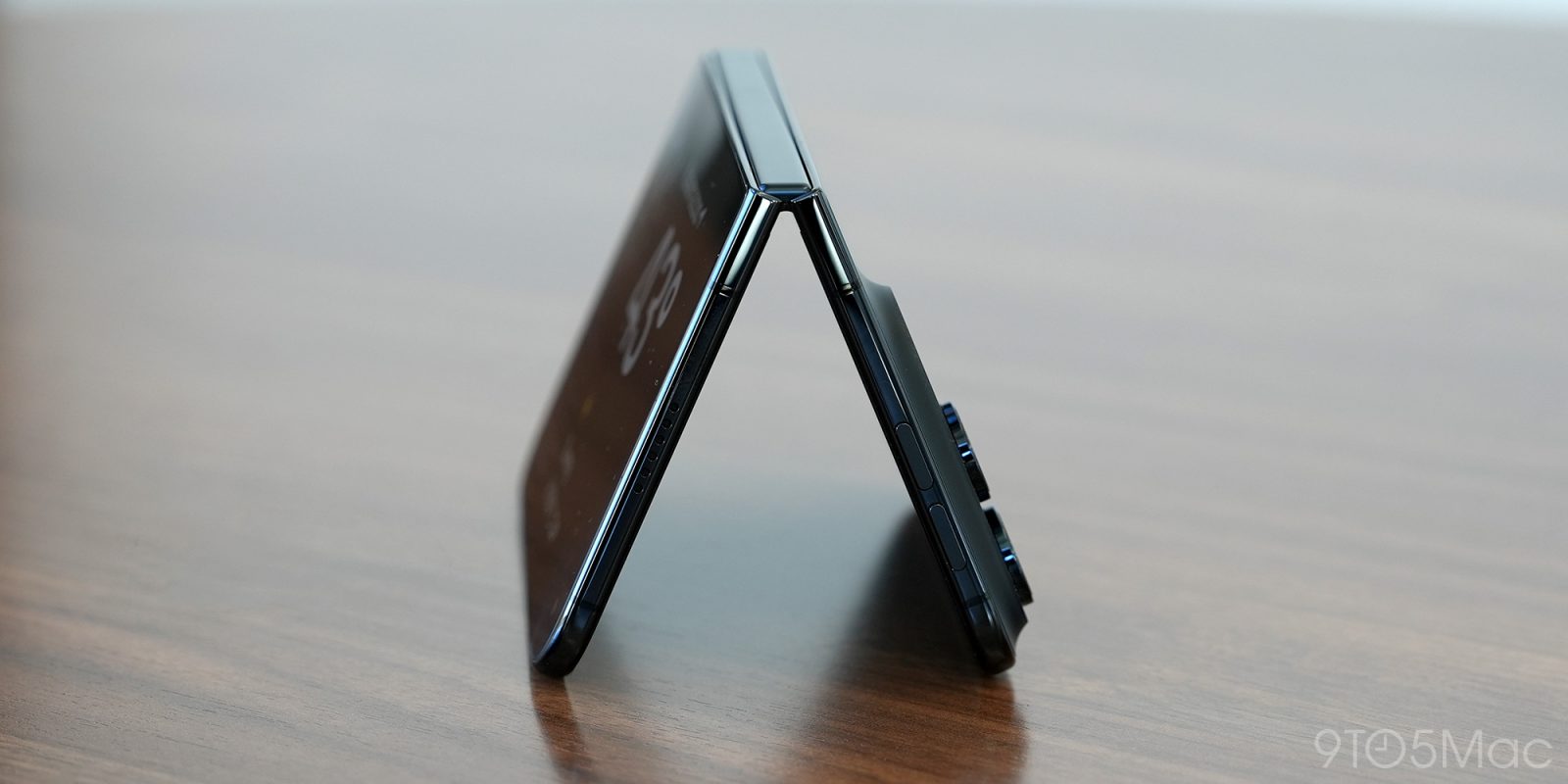
We posted our own review of the iPhone Duo yesterday, and Chance Miller was left convinced that “this form factor represents the future of the iPhone,” while acknowledging that the first-gen iPhone Duo comes with trade-offs.
I think what surprised me most is the degree of consensus found across the reviews, given the generally polarized appeal of foldable phones. That’s not to say reviewers think everyone should buy one, but there is widespread agreement on the pros and cons – starting with five key takeouts …
First, all the reviews I’ve read and watched say that the iPhone Duo is hands-down the best foldable phone on the market. Apple waited a very long time before joining the foldable party, and it seems clear that it was absolutely right to do so.
Second, this phone is absolutely not for everyone. Even leaving aside the high purchase cost, the form factor currently involves compromises that would rule it out for some. If you expect to use the outer screen most of the time and only unfold it a few times a day, then the trade-offs of the heavy weight when held in one hand and the unusual display shape are just too big a drawback. This phone really only makes sense if you expect to make frequent use of the larger unfolded screen in your day-to-day use.
Third, Apple hasn’t made the crease invisible, and indeed has made no claims to do so. You can see it in certain lights at certain angles, and you can feel it when running your finger across the screen. But everyone agrees that this is the least intrusive crease ever seen on a foldable, and that it’s simply not an issue in real life use. More on this in a moment.
Fourth, a great many apps haven’t yet been updated, and in the worst case that means seeing an iPhone screen layout stranded in the middle of a mostly black inner display. The optimistic view is that this will rapidly change, but be prepared for some disappointments with third-party apps in early usage.
Finally, going back to Touch ID is a significant compromise after being used to Face ID. We do have to bear in mind that reviewers have only had a chance to use the device for a week, but certainly in that time most say they didn’t really get used to it and would absolutely prefer Face ID.
A couple of reviewers used machines to subject the iPhone Duo to thousands of folds and unfolds to test two things. Does the crease become significantly more visible over time, and how does the hinge hold up?
In both cases, there is a measurable impact. Joanna Stern’s tests found that the hinge is affected across tens of thousands of folds, but interestingly becomes stiffer rather than looser – the opposite of what we would expect. However, while this change was measurable using a strain gauge after 32,000 folds, she said she couldn’t feel it in normal use.
HTX Studio did the most scientific testing of the impact of thousands of folds on the crease. The depth of the crease when new was measured at just 48 microns, about half the thickness of a sheet of paper, while the slope of the crease measured at less than 0.1 degrees – both markedly better than competing foldables. After 3,000 folds, the depth of the crease increased to 167 microns and the slope increased to 1.24 degrees. That brings it more in line with the measurements of other foldables after the same number of tests.