// SPACE.COM — SPAZIO & SCIENZA
Astronomers discover the secrets of 'string of pearls' supernova relic and the zombie star at its heart
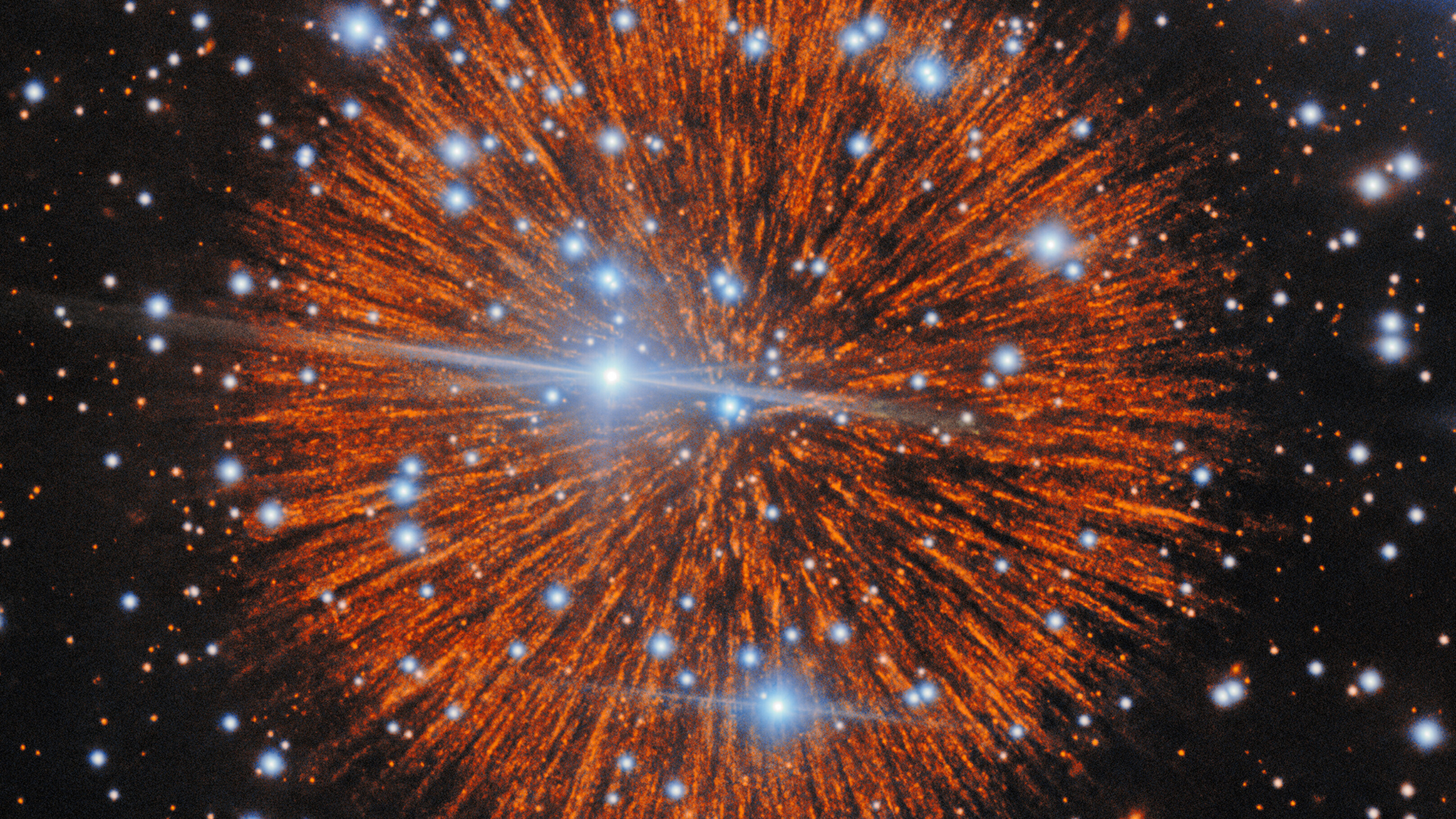
"The planetary region of our solar system could fit in each knot about ten times with room to spare."
When you purchase through links on our site, we may earn an affiliate commission. Here’s how it works.
Scientists are still learning about a cosmic "string of pearls," a unique celestial relic left by a supernova explosion that humanity witnessed around 850 years ago.
That is thanks to the most detailed observation of the dandelion-shaped chains of gas and supernova debris that comprise Pa 30, the only supernova remnant of its type observed in the Milky Way. What makes Pa 30 even more unique is that it has a rare "zombie star" at its heart.
Supernovas like the one that created Pa 30 are called Type Ia supernovas; they happen when a dead star called a white dwarf overfeeds on a companion star like a cosmic vampire. This overfeeding triggers a runaway nuclear explosion that usually destroys the white dwarf. But on rare occasions, the supernova doesn't completely destroy the star, and a shattered stellar body remains, called a zombie star. These events are called Type Iax supernovas.
Pa 30 was first identified in 2013 by a citizen scientist in 2013, but scientists soon linked it to a cosmic explosion recorded independently in the year 1181 in Japanese, Chinese, and Arabic historical documentation. That makes this one of only five supernovas seen before the invention of the telescope.
"Reliable historical records of stellar explosions extend back only about a thousand years. For all we know, there might well be similar remnants still lurking in the dark in our own galaxy," team member Ilaria Caiazzo, assistant professor at the Institute of Science and Technology Austria (ISTA), said in a statement.
"Today, we are lucky to study an intriguing object we know was observed by astronomers who made three independent historical records of the event centuries before the invention of the telescope."
Pa 30 is a good laboratory to study supernovas because, at around 7,500 light-years away, it is relatively close to Earth on cosmic scales. For instance, the heart of our galaxy is around 26,000 light-years away. "We can see this much detail because of Pa 30's proximity to Earth," said Caiazzo. "This proximity makes Pa 30 uniquely valuable for study."
It is also an important subject of study because it is the only supernova remnant in which we can see a zombie star.