// NATURE NEWS — SPAZIO & SCIENZA
Why did ancient humans avoid this lush paradise
Search author on:
PubMed
Google Scholar
Stone and water governed early human settlement of the desert
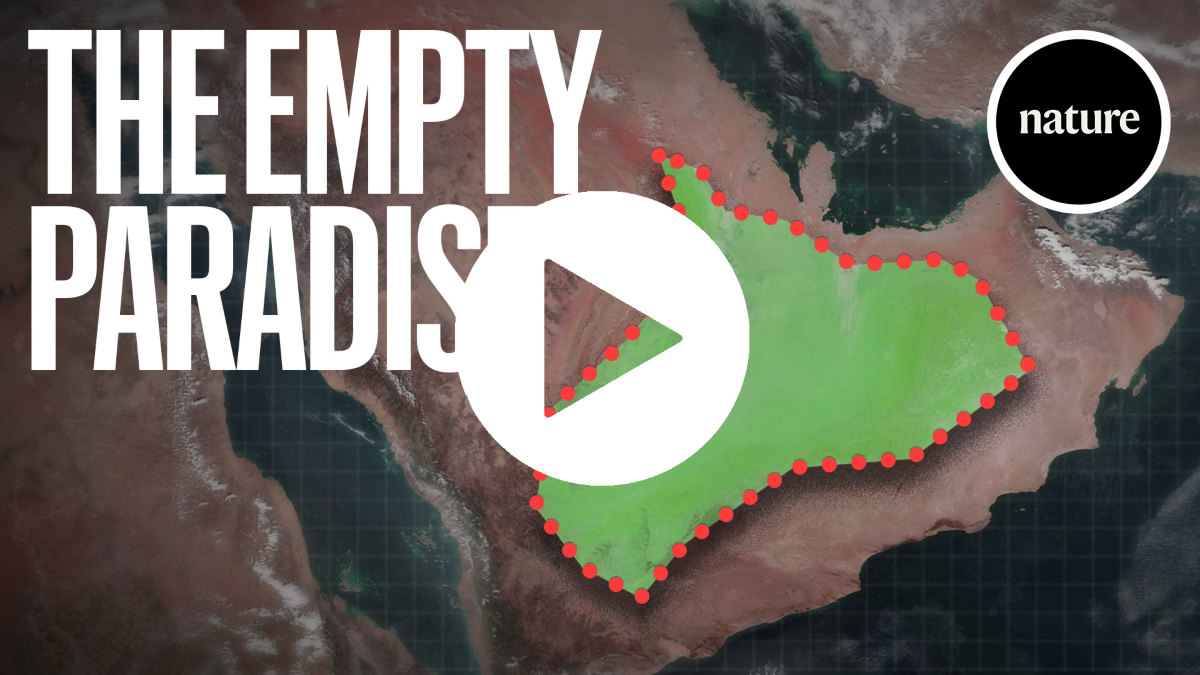
The Rub’ al Khali is the world’s largest sand sea, covering almost a third of the Arabian peninsula.
The desert, whose name translates to The Empty Quarter, was once part of the lush savannah known as ‘Green Arabia’ – the periodic blooming of the region as ice age climatic shifts brought more rainfall.
Evidence of ancient humans abounds in the regions around the desert, but an expedition into the interior has returned empty handed. The surprising absence of stone tools and other signs of human occupation has led archaeologists to a new theory of the factors governing human migration, that ancient peoples needed not just water to settle, but stone as well.
Tethered to stone: how rock and water availability shaped early desert occupation
Stone and water governed early human settlement of the desert
Evolutionary ‘game-changer’: weird armoured amphibian lived in ancient seas
The proteome of Middle Pleistocene Xujiayao and common Denisovan morphology
Job Title: Associate or Senior Editor, Communications AI & Computing Locations: Shanghai, Beijing, Pune, New Delhi, Berlin or Madrid (hybrid) Appli...