// NATURE NEWS — SPAZIO & SCIENZA
Meta-study sparks questions about what it means to be good at regulating emotions
Hedy Kober is in the Department of Psychology and the Helen Wills Neuroscience Institute, University of California, Berkeley, Berkeley, California 94720, USA.
Search author on:
PubMed
Google Scholar
Kevin Ochsner is at the Center for Brain, Mind and Society, Columbia University, New York City, New York 10027, USA.
Search author on:
PubMed
Google Scholar
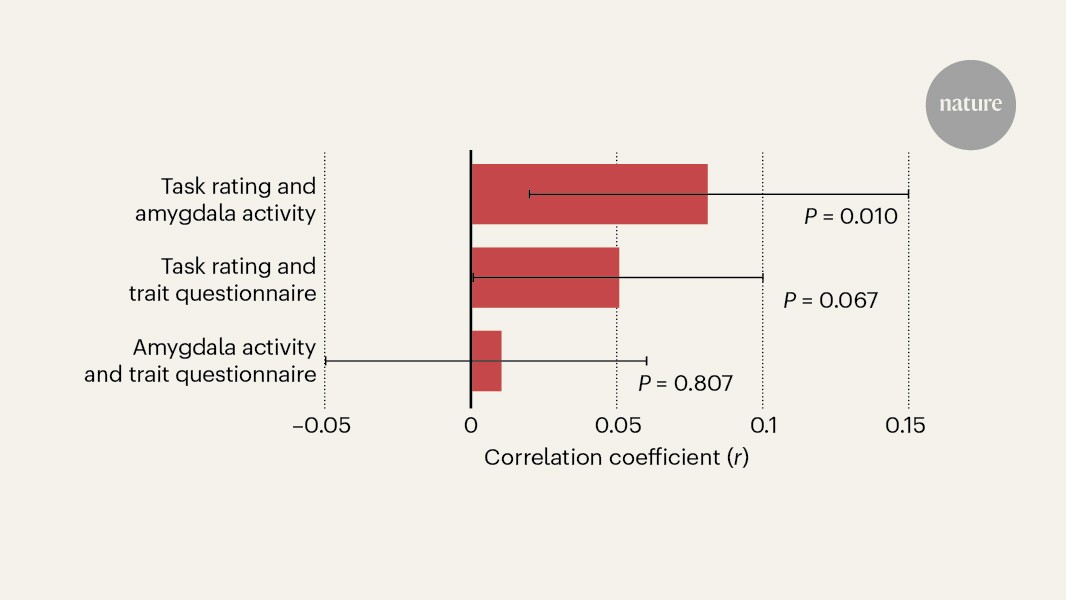
The ability to manage difficult feelings is so essential to everyday life that failures to regulate emotion effectively are associated with detrimental social, occupational and physical-health outcomes. One of the most well-studied regulation strategies is cognitive reappraisal, in which a person changes how they think about an event to alter its emotional impact — for example, finding the ‘silver lining’. Writing in Nature, Sicorello et al.1 investigate an assumption that researchers have held about measuring reappraisal.
Access Nature and 54 other Nature Portfolio journals
Get Nature+, our best-value online-access subscription
Prices may be subject to local taxes which are calculated during checkout
Sicorello, M. et al. Nature https://doi.org/10.1038/s41586-026-11203-1 (2026).
Mauss, I. B., Zerwas, F. K., Wilhelm, F. H. & John, O. P. in Advances in Experimental Social Psychology Vol. 69 (ed Gawronski, B.) Ch. 2 (Academic, 2024).