// TOM'S HARDWARE US — HARDWARE & GADGET
Intel’s woes wipe out $1 trillion of semiconductor market cap in one day — PC market bloodbath leaves few chip stocks unscathed
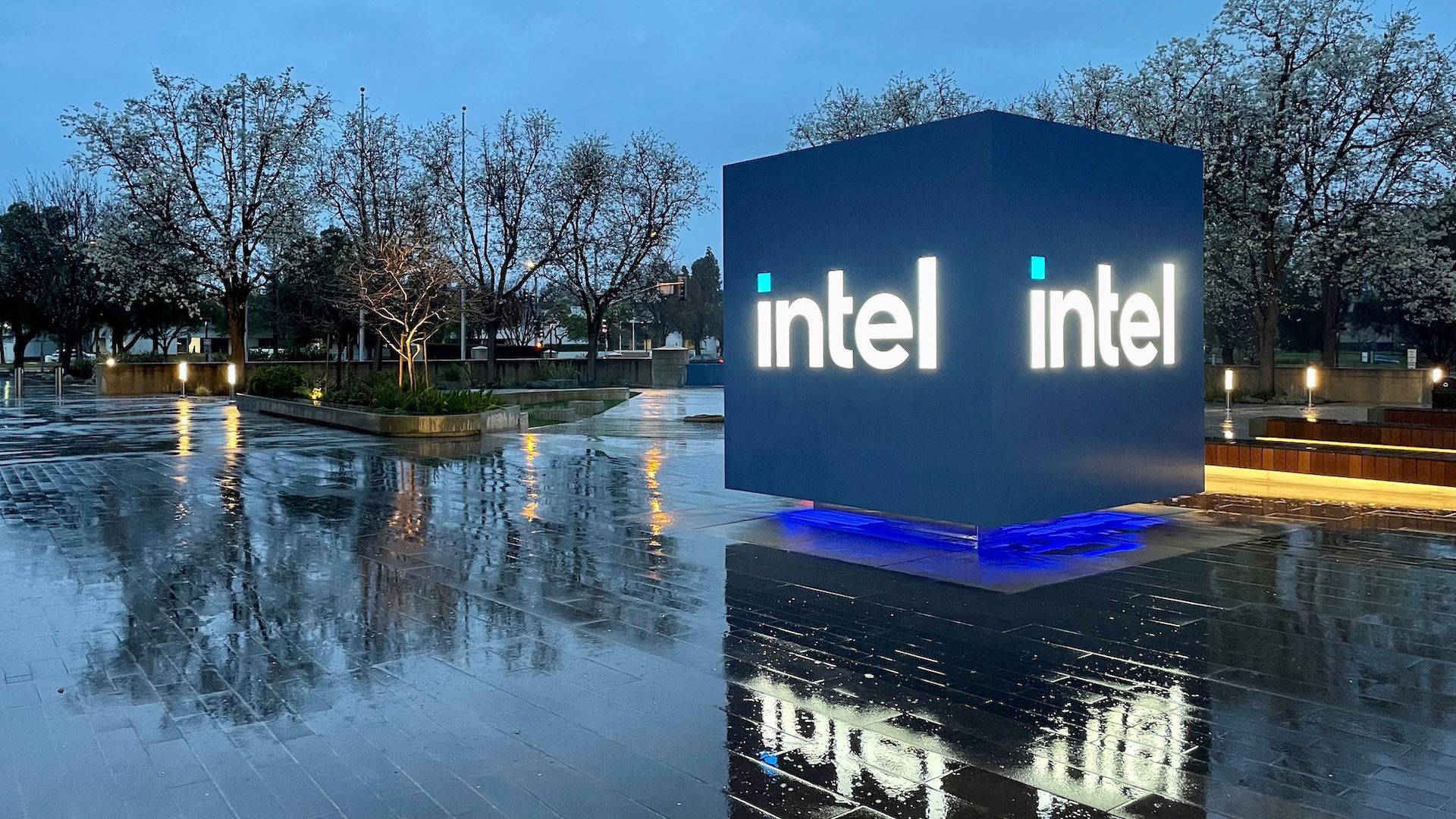
$1 trillion in semiconductor market capitalization wiped out.
When you purchase through links on our site, we may earn an affiliate commission. Here’s how it works.
Intel's shares plunged 30% on Friday, wiping out nearly $150 billion in market capitalization in a single day, the largest single-day loss in the company's history. The decline followed a disappointing financial outlook, largely driven by an anticipated drop of more than 20% in sales at Intel's client computing group (CCPG), the company's main cash cow. The declines quickly spread across the semiconductor industry. Although losses elsewhere were nowhere near as severe as Intel's, approximately $1 trillion in semiconductor market capitalization was wiped out on Friday, according to intraday estimates by Benzinga.
The PHLX Semiconductor Sector Index (SOX), which tracks the stock performance of 30 major semiconductor companies, is one of the key indicators of the industry's financial health. On Friday, the index plunged 9.14%, or 1,052.82 points, to 10,465.38 points as of 2:31 PM ET, as Intel's disappointing outlook triggered a massive selloff across the semiconductor industry.
Intel was by far the biggest loser, as other chip-related stocks, while Arm (-12.68%), AMD (-12.48%), Qualcomm (-12.14%), Applied Materials (-8.73%), ASML (-8.13%), Lam Research (-8%), Micron (-7.28%), and Broadcom (-7.1%) suffered considerably less. Then again, while Nvidia lost 5.66% of its market cap, this translates to around $270 billion, which is a massive amount of money. Paradoxically, Nvidia lost more market capitalization in absolute dollar terms than Intel.
In an unexpected turn of events, the downturn extended to server manufacturers and cloud giants too, as Dell (-12.67%), HPE (-8.10%), Supermicro (-6.96%), and Oracle (-6.88%) lost nearly 7% to 13% of their value. Reuters noted that investors increasingly question the scale of capital investments required to expand AI infrastructure as well as the sustainability of that spending.
Intel’s client computing and physical AI group (CCPG) generated $8.1 billion in revenue during Q3 2026, down 5% year-over-year and 9% sequentially. Weaker demand and increased competition reduced client processor shipments by 14% year-over-year, which was partially offset by a 9% increase in average selling prices. CCPG accounted for nearly half of Intel's revenue of around $16.5 billion and the company's main source of cash. As strong demand for server processors only partially offsets declining client sales, Intel guided its Q4 revenue to be between $15 billion and $16 billion.
Intel expects the client market to deteriorate further in Q4 2026 and into 2027 as elevated memory prices and shortages of other components impact PC prices and demand. In general, Intel expects the client PC market to decline 10% in 2027 compared to 2026, which will inevitably have an effect on CCPG performance. While Intel expects its data center business to continue growing in 2027, industry-wide supply constraints will limit its ability to fully capitalize on demand.
2026 has been a mixed bag for Intel so far. On the one hand, the company achieved its highest market capitalization ever — $673.43 billion in mid-June — on growing sales of data center CPUs, strong sales of client products, and a return to profitability (if the $12.5 billion non-cash accounting charge associated with shares issued to the U.S. government is excluded). On the other hand, the company's capitalization has dropped by nearly 50% to $338.91 billion since mid-June (with $148.68 billion in just one day), as investors began to realize that the performance of Intel's CCPG heavily depends on memory prices, as customers and businesses tend not to like overpriced systems. Yet on the other hand, now that Intel sells fewer client processors, it can sell more expensive data center CPUs.
Get Tom's Hardware's best news and in-depth reviews, straight to your inbox.