// ARS TECHNICA — MODA & SOCIETÀ
Beyond screens: Mercedes-Benz's new holographic heads-up display
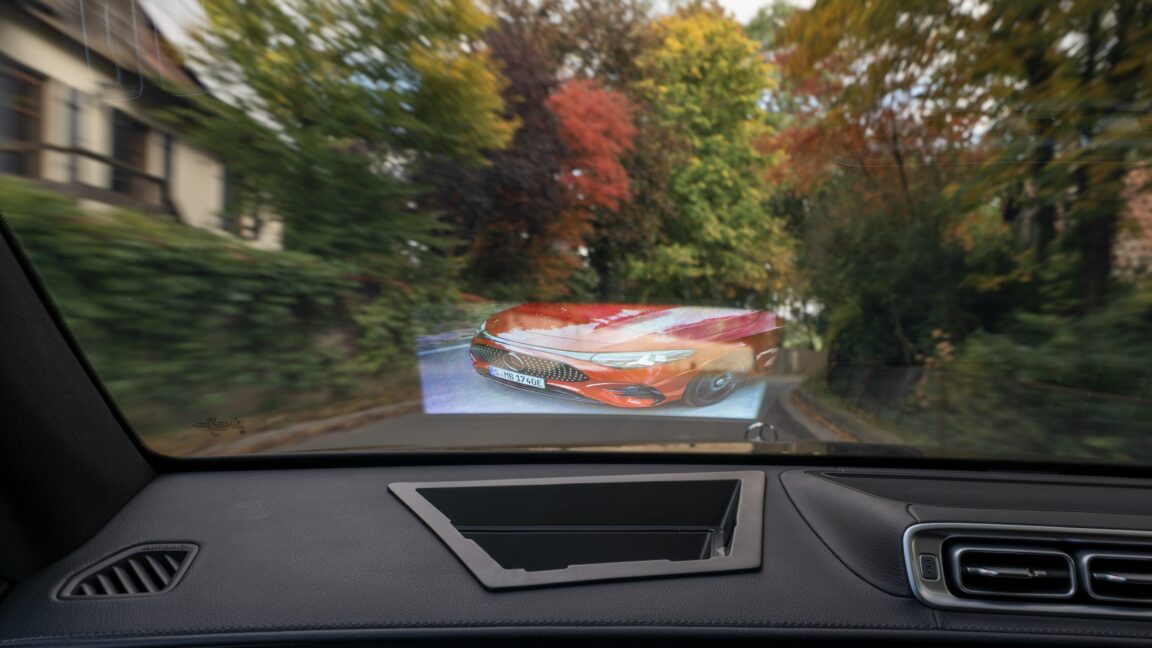
After pioneering the passenger screen, Mercedes has designs on the windshield.
Do screens in cars represent luxury? Judging by the latest car interiors, the answer would seem to be an emphatic “yes.” Screens aren’t just getting larger; they are multiplying across the dashboard and morphing into different forms and concepts. Indeed, an interior’s screens are a pretty good indicator of what brand made the car—or at least how much the owner paid for it.
But is this actually what customers want? Are more screens really better? And even if they are, luxury car features inevitably trickle down to cheaper, more mainstream offerings, and screens can only get so big. That leaves luxury automakers with another question to answer: “What’s next?”
Mercedes-Benz is working on a new display alternative that could provide an answer. For now, it’s known as the holographic display. Forget the images from Star Trek and Star Wars that just popped into your head, though. It’s effectively a more advanced form of heads-up display, or HUD.
Whereas a traditional HUD projects images onto the windshield glass, the holographic display has two main components. It still uses a projector, but its key element is a special transparent film laminated into the glass. The film uses holographic optical elements, or “super-small mirrors,” as Mercedes development engineer Lena Hees described them, that selectively reflect the light emitted by the projector, keeping the image visible even in direct sunlight while hiding it from the driver’s view.
Today, the passenger-side touchscreens in Mercedes and other luxury vehicles rely on driver-monitoring cameras or screen polarization to keep the driver from seeing what is playing on the passenger side.
Speaking of passenger screens, the holographic display is clearly being considered as a future alternative or replacement for this technology. Although screens in cars are increasingly ubiquitous, a recent JD Power study indicated that car owners classify passenger screens as “not necessary” and have generally negative opinions about them. Mercedes has clearly observed similar opinions but for slightly different reasons.
“We have customers who like the Hyperscreen,” said development engineer Maximilian Hilger of the pillar-to-pillar screen found in an increasing number of Mercedes models. “But there are others who want to maintain luxury materials.”
In other words, the massive screen design doesn’t seem as luxurious as the pillar-to-pillar bands of wood or other materials found in previous-generation models. And that’s not an opinion isolated to Mercedes’ customers.
New Mercedes chief design officer Bastian Baudy recently told German magazine Auto Motor Sport that “Materiality and haptics must remain tangible—with switches, buttons, and intuitive controls. Real materials are at the heart of Mercedes: metal, wood.”