// SPACE.COM — SPAZIO & SCIENZA
NASA's Swift space telescope crashes back to Earth after failed rescue attempt
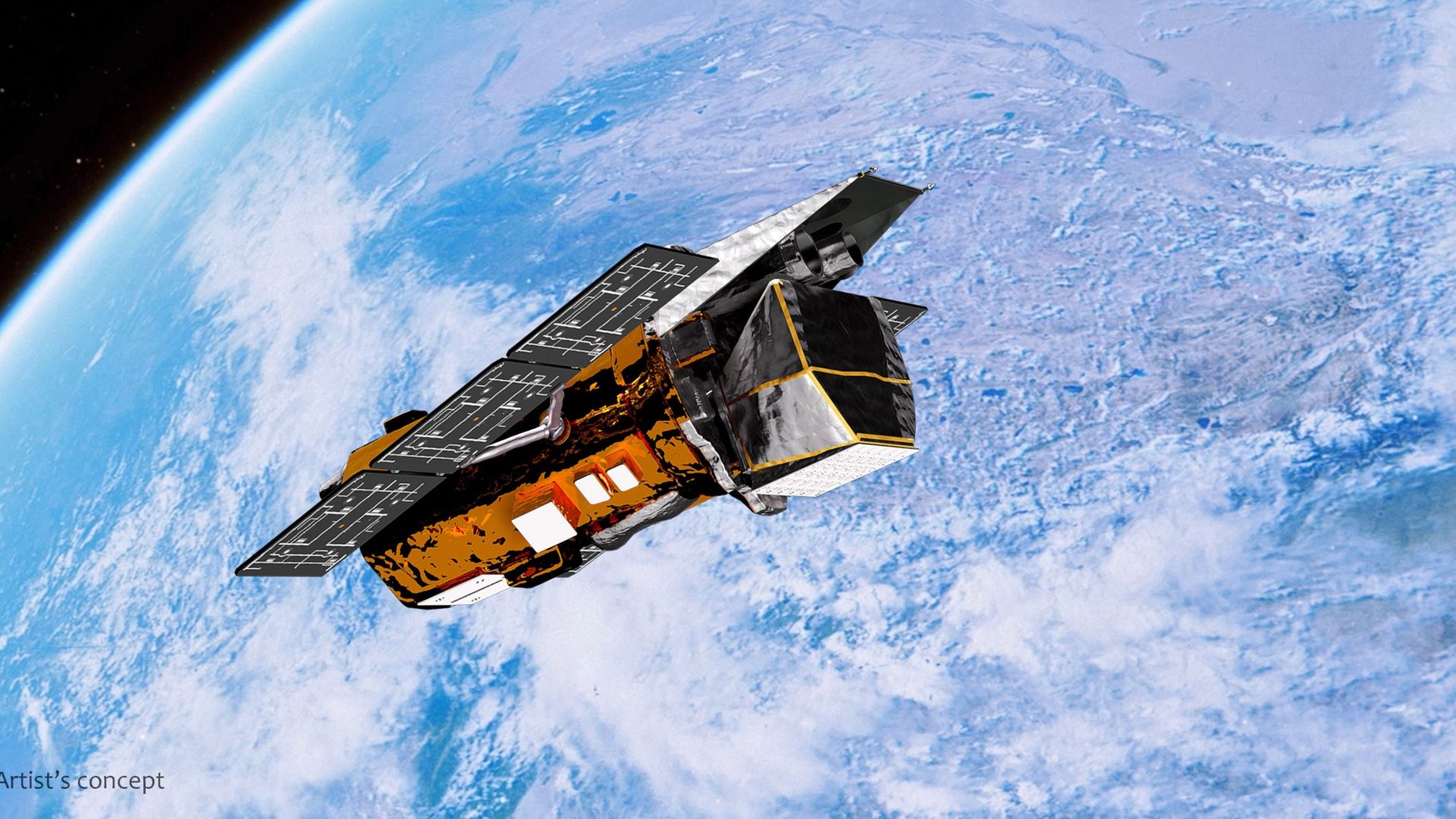
Swift had a pretty good 22-year run, but NASA wanted the scope to keep going even longer.
When you purchase through links on our site, we may earn an affiliate commission. Here’s how it works.
NASA's Swift space telescope has reached the end of its long and winding road.
Swift fell uncontrolled to Earth today (Nov. 4), 22 years after it launched but just three months after a private spacecraft was supposed to boost it to a higher, life-extending orbit.
The 3,200-pound (1,450 kilograms) observatory reentered Earth's atmosphere at 7:39 a.m. EST (1239 GMT) today over northern Sumatra, according to satellite tracker Jonathan McDowell, who cited U.S. Space Force data. The fall likely didn't make much of an impact; NASA officials predicted beforehand that most of the minibus-sized Swift would burn up as it fell, and they put the odds of any of the surviving pieces hurting anyone on Earth at just 1 in 2,100.
Swift — officially known as the Swift Gamma-Ray Burst Explorer — launched to Earth orbit in November 2004 on a two-year mission to study gamma-ray bursts (GRBs), the most powerful explosions in the universe. "Swift" was not an acronym but rather referred to the spacecraft's observational agility.
"Swift needed to detect and locate gamma-ray bursts, communicate their position to other observatories, and then swing its telescopes around to image the burst locations before their afterglows faded out," S. Bradley Cenko, Swift's principal investigator (PI) at NASA's Goddard Space Flight Center in Maryland, said in an Oct. 23 statement. "This typically took Swift about a minute to do."
Swift didn't just observe GRBs. It also studied a variety of other cosmic bodies and phenomena, from faraway supernova explosions and feeding black holes to asteroids and comets in our own solar system.
And it kept doing this long after its warranty expired — for about 20 years after, in fact. The space telescope didn't conduct its final science observation until this past Oct. 20. (Swift underwent a name change during this stretch: In 2018, it was rechristened the Neil Gehrels Swift Observatory after its first PI, who died the previous year.)
"Swift delivered an incredible, lasting return on investment for the nation, designed for a two-year primary mission but productive for more than 10 times as long," Shawn Domagal-Goldman, director of NASA's Astrophysics Division, said in the same Oct. 23 statement.