// ARS TECHNICA — HARDWARE & GADGET
Nintendo's biggest ROM chip supplier is bowing out of the business
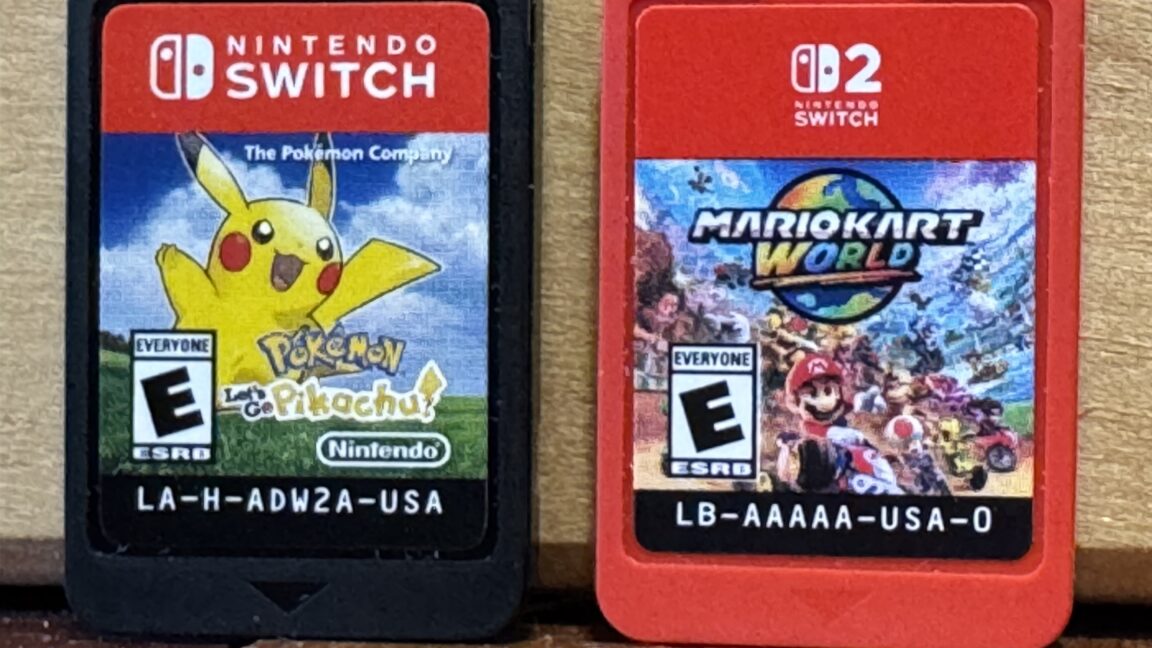
And what that could mean for physical Switch game costs.
For years, the AI industry’s insatiable demand for memory and storage has had plenty of knock-on effects on the price and availability of PC components like RAM, SSDs, and GPUs. Now those shortages are also squeezing the supply of ROM chips that power physical Nintendo Switch and Switch 2 game cartridges.
Chip manufacturer Macronix announced in its third-quarter earnings report that the company’s production of ROM chips “has reached its end” and that it will begin “gradually decoupling from the game industry,” as reported by Taiwanese news site BigGo Finance. That could be an issue for Nintendo, which analyst David Gibson notes uses Macronix as its “main memory chip maker” for physical game cartridges.
That ROM production—which has shrunk 39 percent in the last year and now represents just 5 percent of Macronix’s business—is being crowded out by production of more lucrative, in-demand chips like NOR- and NAND-based memory and eMMCs, the company said. With Macronix’s production capacity stuck at 25,000 12-inch wafers a month—and $1.2 billion in planned new capacity taking a year or more to spin up—less profitable ROM chips are taking up wafer space that can earn more through other types of chips.
This doesn’t mean Nintendo will follow Sony into a world without physical game production. On the contrary, the Switch maker said last month that it had no plans to give up on the game cartridges in the near future. But those cartridges could get more expensive to produce as Nintendo is forced to rely on suppliers like Rohm and Lapis Semiconductor for its remaining ROM chips.
That could have a knock-on effect on the prices publishers charge for physical Switch cartridges, too. Earlier this year, Nintendo started charging more for some physical games than for the equivalent digital download. And last year, Japanese publisher Inin only committed to a full Switch cartridge release for R-Type Dimensions III after it said “two new smaller cartridge [storage capacity] sizes for Nintendo Switch 2” lowered the cost of producing those carts.
On the other hand, Gibson notes that digital software sales represented 61.5 percent of Nintendo’s business in the second calendar quarter of 2026, up slightly from the year before. If that number keeps increasing, lower demand for ROM-based Nintendo cartridges could end up balancing out the costs involved in due time.