// ARS TECHNICA — MOBILE & WEB
MAHA lost bigly in the midterms—is it at death's door?
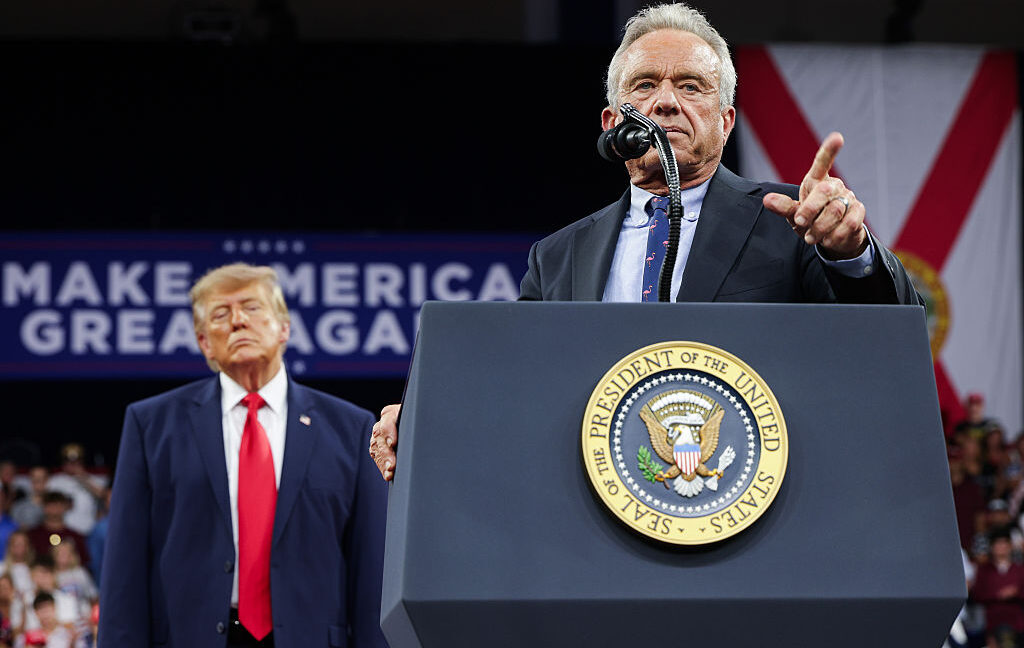
RFK Jr.’s Make America Healthy Again movement was in trouble before voting began.
As Democrats blew away their Republican rivals in an unprecedented midterm sweep Tuesday, the Make America Health Again movement also got bowled over, raising questions about the fate of the motley movement.
MAHA—which has centered around anti-vaccine activist and current Health Secretary Robert F. Kennedy Jr.—saw many of its favored candidates and allies lose, while vocal adversaries of Kennedy won. And the coalition was splintering under stress even before the voting started; in recent months, supporters have accused Kennedy and the Trump administration of inaction and betrayals in their two years in power.
Now hobbled in Washington, shedding supporters, and showing little to no influence in voting booths, is MAHA on its deathbed? Or will it be reborn—possibly into a new group? Could it be assimilated into a blue platform—after sloughing off the more repulsive, conspiratorial aspects of Kennedy’s ideology? These are the questions circling in the aftermath of Tuesday’s bloodbath.
In a social media poll Wednesday afternoon, Mary Talley Bowden—a dejected MAHA activist, anti-vaccine advocate, and doctor reprimanded for prescribing ivermectin to treat COVID-19—polled her followers about what should come next. She offered three options: Start a third party, join the Democrats, or overthrow the GOP. As of publication time, joining Democrats trailed at just 3 percent of the votes. The remaining votes were roughly split between overthrowing the GOP—whatever that means—and forming a third party, which had a small lead at 49 percent.
That MAHA could fade out entirely or fracture into negligible shards seems like a very real possibility. Its collection of disparate groups and varied agenda items has always made its cohesiveness seem tenuous. A Politico poll in June revealed that people who identified as MAHA had different ideas of what the movement’s priorities are (or should be), as well as different political leanings, and sometimes opposing ideologies.
Some within the movement embrace (or at least accept) Kennedy’s fringe beliefs, such as his zealous anti-vaccine views, his rejection of germ theory, and his false claim that 5G is damaging our brains and causing cancer. Some also believe, like Kennedy, in chemtrails and want all mRNA vaccines banned. There are members who support his plan to ban water fluoridation and also seem fine with his false claim that Lyme disease was created by the US military as a military weapon.
Others, meanwhile, have been attracted to MAHA by the more reasonable, non-absurd issues Kennedy touts. Those include improving the quality of Americans’ food and diets, reducing their exposure to environmental contaminants, and limiting the influence of industry and corporate interests on Americans’ health, particularly limiting the sway of pharmaceutical and chemical companies.
With various priorities, Kennedy and MAHA leaders have spent the past two years finding ways to disappoint their members. Some like Bowdon are angered that Kennedy has yet to ban mRNA vaccines. In February, Kennedy sparked particularly intense backlash among supporters for embracing Trump’s decision to increase domestic production of the pesticide glyphosate—a pesticide many in the MAHA movement wanted banned. Kennedy further fueled feelings of betrayal in September by appearing at a MAHA-branded summit that had hefty corporate sponsorships, including from behemoths such as Walmart, Anthropic, OpenAI, Grail, and UnitedHealth.
“MAHA was supposed to expose the revolving door between money, industry and government, not build its own,” Robert Malone, a fringe scientist and previous Kennedy ally, wrote in a scathing response to the summit.