// ARS TECHNICA — MODA & SOCIETÀ
You know the launch market is tough when satellite companies start building rockets
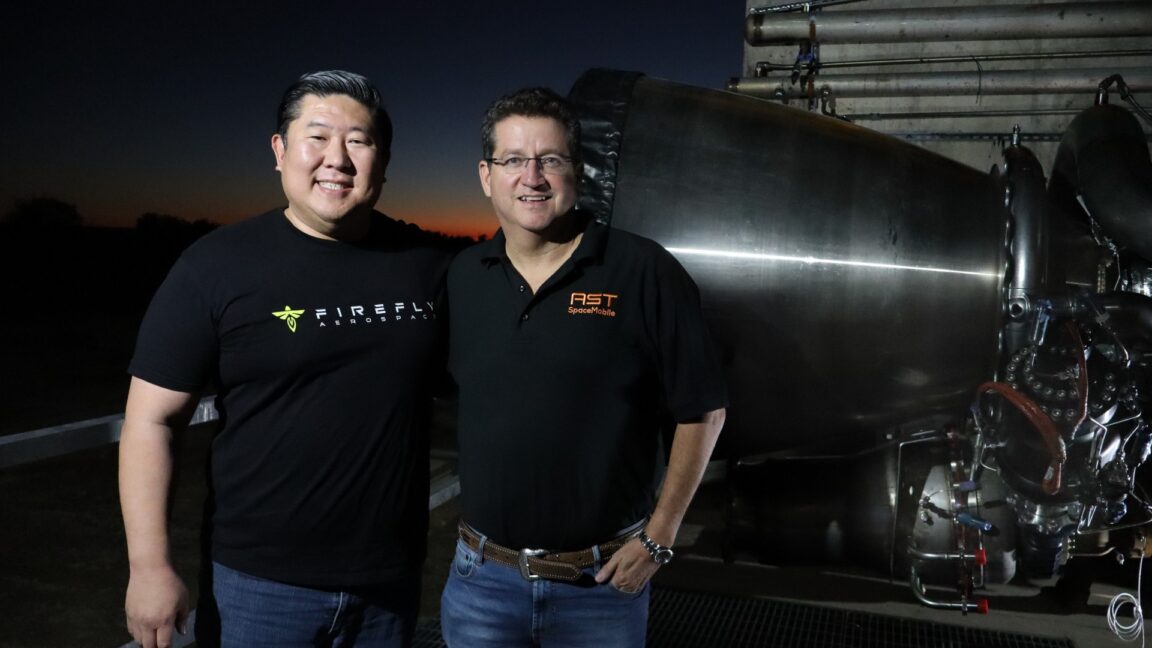
“The Blacklift rocket is the springboard to significantly expand our total addressable market.”
There are optimistic plans for spaceflight, and then there are optimistic plans.
AST SpaceMobile is a Texas-based, publicly traded company building very large satellites to provide direct-to-cell communications on Earth. But it has been having trouble finding rides to space. So on Friday, AST announced that it is developing a medium-lift rocket, named Blacklift, which will have the capacity to lift 20 metric tons to low-Earth orbit. Oh, and the company said it would start launching commercially in late 2028.
“The Blacklift rocket is the springboard to significantly expand our total addressable market, providing AST SpaceMobile with regular unconstrained access to orbit and providing for most favorable owner’s economics in the industry,” said Abel Avellan, founder, chairman, and CEO of AST SpaceMobile, in a news release.
To anyone with even a basic understanding of rockets, that timeline is wildly, fantastically, and stupidly optimistic. Still, the announcement is worth examining because it underscores two important trends in today’s launch industry.
First, it’s becoming increasingly apparent that satellite operators planning to deploy large constellations need to secure launch capacity years in advance, as Amazon did nearly half a decade ago. And if they can’t secure that capacity on favorable terms, they are now considering taking the extraordinary step of developing their own rockets.
And secondly, since investors are now recognizing the worsening launch crisis that Ars has been writing about for months, there is apparently capital to be raised for new entrants into the medium-lift launch market. AST is not the only company making fantastical claims of late. A firm called Cowboy Space said in October it was building a large rocket named Big Iron (full credit—that’s an excellent name) to launch orbital data centers. It also claimed its large rocket would make its first flight in 2028.
Let’s start with a little history. SpaceX became the first purely commercial launch startup to announce plans to build a new medium-lift rocket about two decades ago, in 2005. The company holds the record for the fastest time to orbit with the Falcon 9 vehicle, with a development time of 4.7 years.
But SpaceX had some significant advantages. By then, the company had been operating for more than three years, had extensive experience with the Merlin engine, and was less than a year away from its first launch of the smaller Falcon 1 rocket. In retrospect, it’s also clear that the company had an insanely talented team of engineers. Finally, the Falcon 9 was quite a bit smaller than the recently announced vehicles, Blacklift and Big Iron. In its initial form, Falcon 9 had a lift capacity of about 10 tons.
What about other companies? Since 2015, a number of other US companies—United Launch Alliance (Vulcan), Rocket Lab (Neutron), Relativity Space (Terran R), Firefly/Northrop Grumman (Eclipse), and Stoke Space (Nova) have announced medium to heavy lift vehicles, ranging in payload capacity from about 7 to 27 metric tons (Blue Origin’s New Glenn is much larger than any of these).