// ARS TECHNICA — HARDWARE & GADGET
A Sam Altman parody offers an amusing lesson in memory management
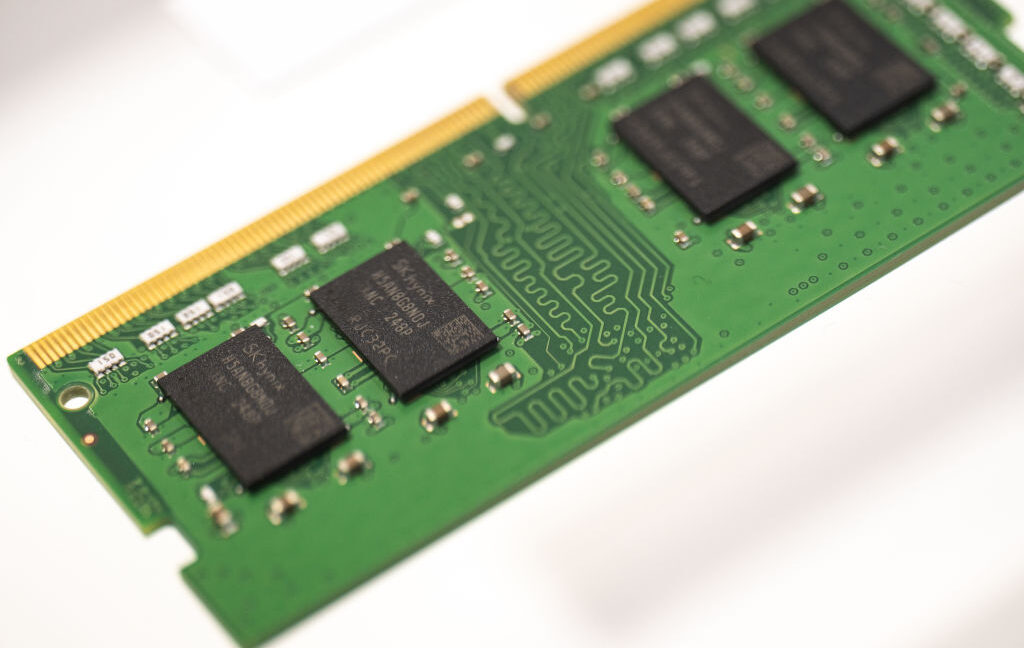
We verified the RAM numbers are real without sending any emails to OpenAI.
Sam Altman’s recent comments on the Cheeky Pint podcast inspired developer Iain Kay to create a satirical script that allows users to email the OpenAI CEO once per day if more than 10 percent of their system RAM is reported as available. Ram-Altman is described by its creator as a “parody project” launched in response to Altman’s viral remarks about RAM in your personal PC.
As reported by The Verge, on the October 29 episode recorded with Stripe President John Collison, Altman said, “A lot of people want local inference. And somehow, they assume that the problem is solved now because we are going to have open source models, we’re going to be able to run them on our computers, and so we’re not going to need all the stuff in the data center. But from a global allocation perspective, actually, it’s quite terrible to have everybody have a bunch of the world’s limited supply of DRAM sitting in their own computer and being used 5 percent of the time.”
Altman has since explained that his comments were taken out of context and briefly changed his display name to “RAM Altman” on X, which Kay calls on the project GitHub, “objectively excellent and where the project gets its name.”
In an email to Ars, Kay said, “Ram-Altman is a bash script that takes MemTotal minus MemAvailable from /proc/meminfo, so the figure includes page cache and reclaimable slab but leaves out tmpfs and shared memory.”
If the script only showed what Linux reports as “free” RAM, it would paint an incomplete picture. Linux often reports a surprisingly small amount of “free” RAM, as it doesn’t count memory that is currently claimable for use. Linux will fill available RAM caches with file data for quick access, but the kernel can reclaim that usage at a moment’s notice when needed. The MemAvailable figure is the kernel’s own estimate of how much memory it could hand over without swapping.
Users can schedule the script to ask the kernel for a status update every five minutes, and if more than 10 percent of RAM is available, it triggers a joke email from one of several joke templates. The script limits outgoing emails to one per day.
The GitHub page for the RAM-Altman project includes a dry-run option that any Linux user with a Bash terminal should be able to paste and run without the need for email trolling. When the threshold is exceeded, each dry run output features one generated joke email, so repeated runs produce different amusing examples.
A test run of the script on my Fedora 44 KDE machine confirmed the author’s measurements. Inside the System – Info Center of my Fedora desktop, the system reports 14.9 GiB of total usable system RAM after the kernel and firmware take their needed slices of the 16 GiB of physical memory. This reflects the total amount of capacity the system has to work with, not the amount available at any given time. The Ram-Altman script shows that of that 14.9 GiB total pool, 10 GiB is used, with 4.9 GiB available (33.1 percent). That figure isn’t the simple sum of the “free” and “cache” lines that the script displays, but a kernel-calculated figure that accounts for the full amount of memory that can be reclaimed.
The project concedes the nuance that Altman was referring to how much time memory spends being utilized, while the script measures how much capacity is free at the time of measurement. While the script might tell Altman that 33 percent of your system RAM is available, it doesn’t outline how often that’s the case. The concession steps on the joke slightly, but it keeps everyone honest.