// TOM'S HARDWARE US — HARDWARE & GADGET
AMD Zen 6 EPYC ‘Venice’ deep dive and benchmarking
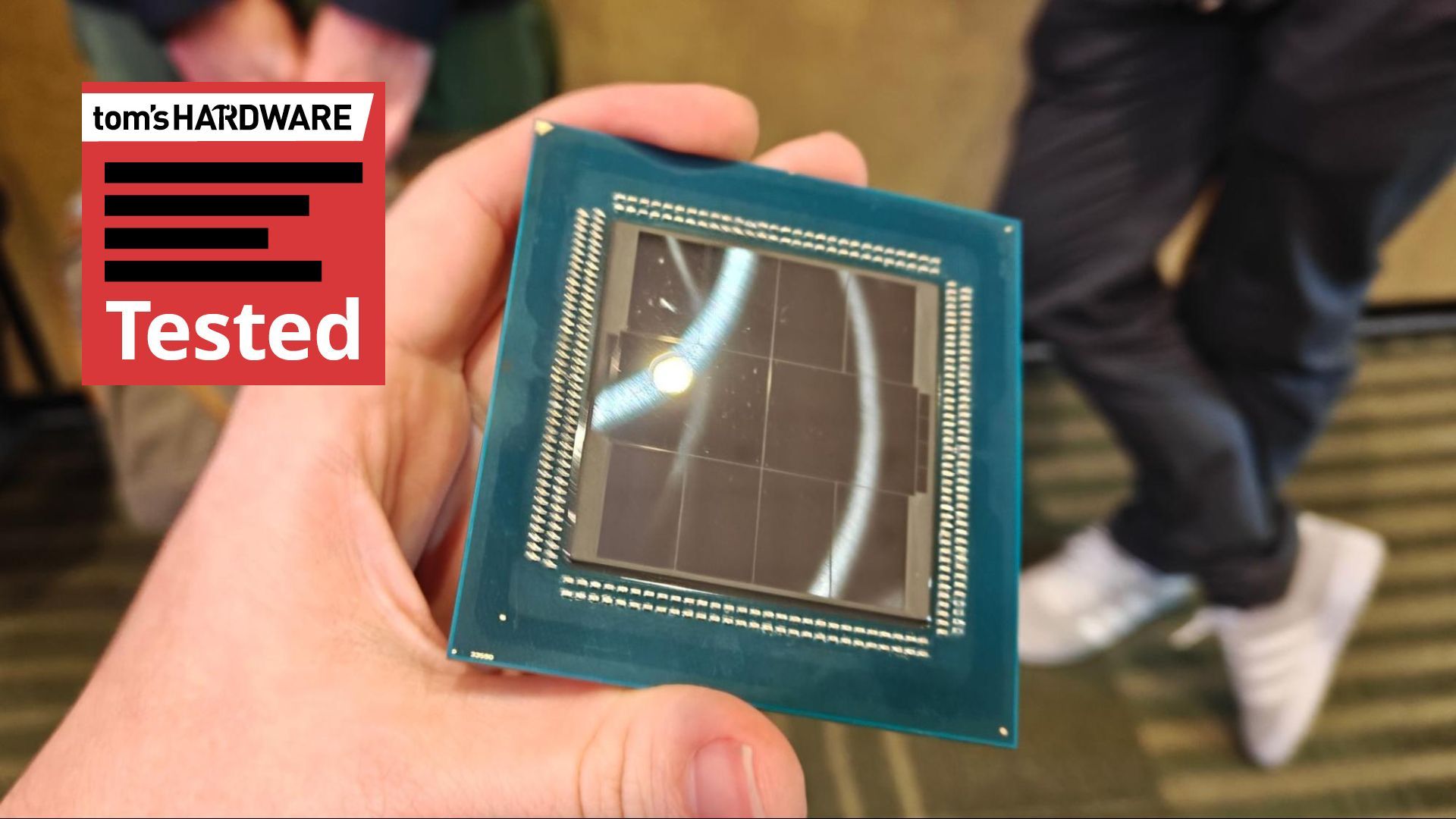
Our first look at Zen 6, both under the hood and in real-world applications.
When you purchase through links on our site, we may earn an affiliate commission. Here’s how it works.
AMD’s EPYC ‘Venice’ CPUs are the first to debut the new Zen 6 architecture, and we’ve been testing two chips from the range over the past several weeks to see how they compare to Nvidia’s Vera, and more broadly, how the Zen 6 architecture departs from Zen 5 ahead of the expected consumer-focused Olympic Ridge launch next year. Zen 5 was a ground-up redesign of AMD’s storied Zen core, and Zen 6 takes that foundation and expands it in just about every regard.
Zen 6 uses TSMC’s N2P node, but it also comes with significant architectural changes under the hood. Within the core, a redesigned vector engine pushes AMD’s SIMD performance even higher, and it now natively supports half-precision FP16 instructions alongside full, 32-bit precision. It also splits integer schedulers within the execution engine, allowing for more instructions in flight through the core.
Across the die, AMD made other significant changes. The single IOD of previous generations is now split across two IODs, giving the SP7 platform access to 16 memory channels (though at the cost of PCIe 6.0 lanes compared to the previous generation and SP8 platform).
The CCDs have been upgraded, too, for the first time since Zen 3. A standard Zen 6 CCD can now scale up to 12 cores, while a Zen 6c packs 32 cores. With Zen 5 and 5c, CCDs topped out at eight cores and 16 cores, respectively. For the Zen 6c CCD, AMD also doubled the amount of shared L3 per core, which effectively quadruples the L3 compared to Zen 5c, since the CCD packs twice the number of cores.
Interestingly, Zen 6 is neither a marginal optimization to Zen 5, nor a complete architecture redesign. Stepping back, it looks like AMD pushes as many dials as it has access to to their highest level, and that holds up looking at performance.
The 256-core EPYC 9996 delivers 1,024 threads in a 2P configuration, which came out 93% ahead of the 768-thread 2P EPYC 9965 server we tested in SPEC CPU 2026’s intrate throughput test. The frequency-optimized EPYC 9686F excels elsewhere, notably in scientific computing and HPC workloads, and it serves as AMD’s competitor to Vera, at least before the LPDDR-based Verano platform arrives from AMD next year.
AMD says it believes Venice is fundamentally a generation ahead of the competition, which would be a worthless line if it wasn’t backed up by data. Intel’s Granite Rapids-AP is rarely in the conversation, and although Vera maintains some competitive positions, Venice is often ahead — sometimes orders of magnitude ahead.
Get Tom's Hardware's best news and in-depth reviews, straight to your inbox.