// SPACE.COM — SPAZIO & SCIENZA
Why I recommend the Seestar S30 Plus smart telescope for beginners — full review
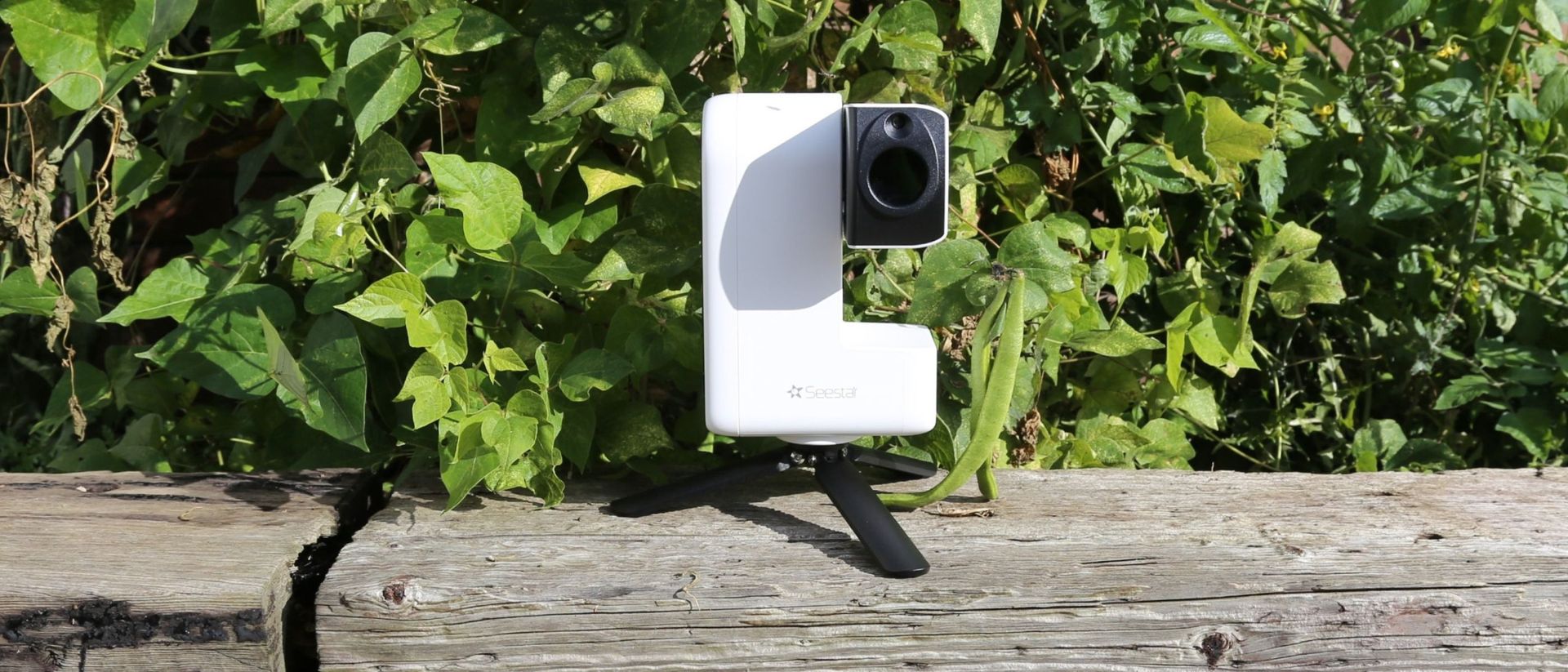
The Seestar S30 Plus is a great beginner smart telescope for deep-sky imaging, along with a reasonable price tag and enough features to develop your astro skills without buying another instrument.
Excellent deep-sky imaging, even with light pollution
Lower resolution than more expensive smart telescopes
Why you can trust Space.com
Our expert reviewers spend hours testing and comparing products and services so you can choose the best for you. Find out more about how we test and review products.
I’ve used several smart telescopes over the last few years, but I'd recommend the ZWO Seestar S30 Plus to almost anyone wanting to get started in astrophotography. At $499/€499, it’s a complete imaging system that can photograph galaxies, nebulae and star clusters automatically, even from a light-polluted city. Better still, it’s so small that it can live on a bookshelf.
I recently captured images of the Dumbbell Nebula (M27), the North America Nebula (NGC 7000), the Andromeda Galaxy (M31) and the Pleiades (M45) with the S30 Plus. All were remarkably easy to capture, and none of the images accompanying this review required external processing. It’s basically point-and-shoot astrophotography — if you live under light-polluted skies, that’s a game-changer.
I also think the S30 Plus makes an ideal companion to a conventional optical telescope. I can set it to photograph a nebula I have no hope of seeing under light pollution while I try to find brighter objects through the eyepiece of another telescope. It will then get on with collecting photons while I enjoy observing.
For anyone who already owns a telescope but doesn’t want the expense and complexity of conventional astrophotography, that’s a compelling proposition.
One problem with buying a cheap optical telescope is that deep-sky objects rarely resemble the colorful photographs you see online. The moon, planets and bright star clusters can look wonderful through an eyepiece, but faint galaxies and nebulas are much harder to appreciate, particularly from a town or city.
Like all smart telescopes, the S30 Plus gets around that problem by photographing objects rather than showing them directly. Its camera takes repeated exposures, which the telescope automatically stacks to reduce noise and gradually reveal faint detail. The longer you leave it working, the better the resulting image tends to become.