// SPACE.COM — SPAZIO & SCIENZA
Andy Weir's 'Exoplanet' just landed on Audible, but what actually makes an exoplanet habitable?
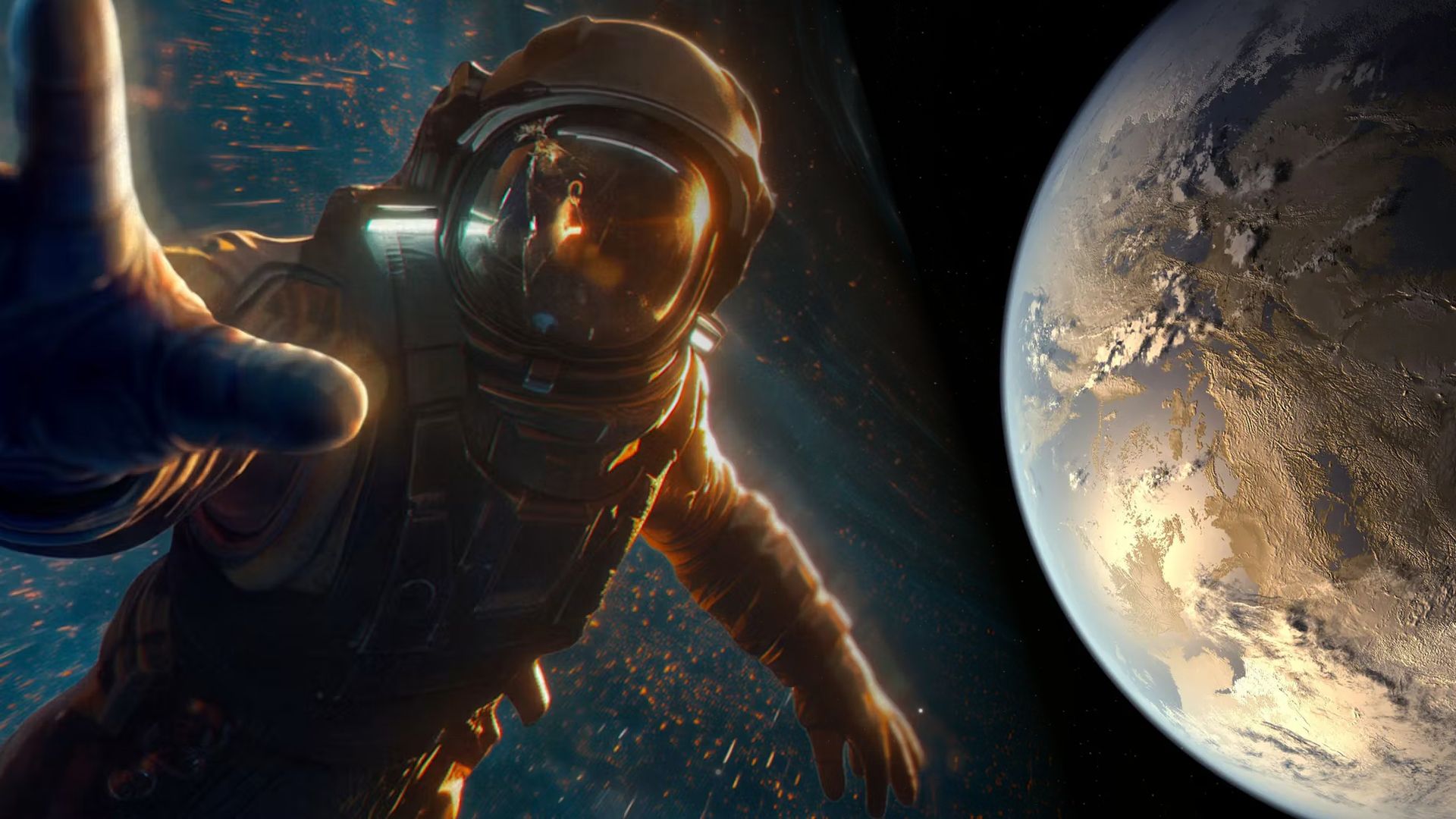
How would the crew of the Wild Blue Yonder fare on a real exoplanet?
When you purchase through links on our site, we may earn an affiliate commission. Here’s how it works.
Imagine you’ve crash-landed on an alien planet. Your ship is destroyed, your oxygen supply is dangerously low, and the landscape around you is completely unknown. Where would you begin looking for clues to your survival? Surprisingly, the best place to start could be the star overhead.
This is the predicament that three crew members of the Wild Blue Yonder face in Audible’s new sci-fi thriller, "Exoplanet." This sci-fi thriller is written by acclaimed comic writer Benjamin Percy, executive produced by Andy Weir (Project Hail Mary, The Martian), and features an all-star voice cast including Anthony Mackie, Ariana DeBose, and John Leguizamo.
Stranded on an unfamiliar planet, they encounter volcanic wastelands, unknown skies, and environments that seem to defy reason. But behind the extraordinary events of this audio drama is a very real scientific question: what makes a planet habitable?
In “Exoplanet”, the crew view skies that are not only unfamiliar but also seemingly different from one another. One character sees a sun as so dim that he can look directly at it, while another suffers under a blazing heat, surrounded by stretches of sun-scorched red rock.
For astronomers, the light emitted by a star is one of the most crucial tools for understanding planets orbiting it.
Using a technique called spectroscopy, astronomers split starlight into its constituent wavelengths, producing a spectrum much like a rainbow. By studying this spectrum, they can investigate the temperature, composition, and other physical properties of the star.
However, stellar temperature is only part of the picture. The amount of energy a planet receives depends on both the luminosity of the star and its orbital distance.
Astronomers use these measurements to determine whether a world lies in the habitable zone of a star, where temperatures could allow liquid water to exist on the surface given a suitable atmosphere.