// SPACE.COM — SPAZIO & SCIENZA
SpaceX says Starship Flight 15 booster aborted 'chopsticks' landing catch after launch due to guidance issue (video)
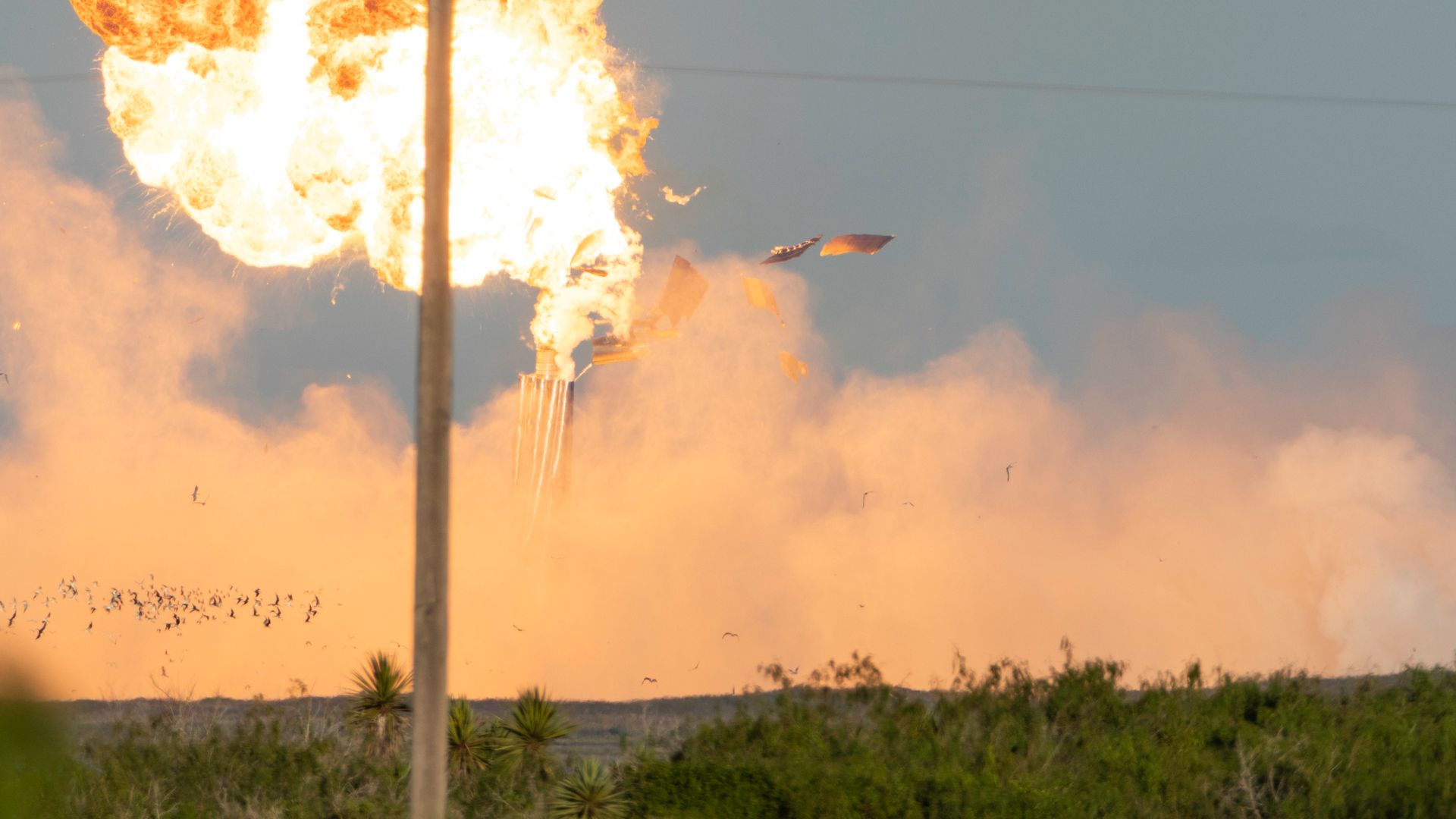
SpaceX had hoped for a historic double-catch landing for the Starship Flight 15 booster and Ship. The booster didn't make it.
When you purchase through links on our site, we may earn an affiliate commission. Here’s how it works.
SpaceX has an idea why its latest Starship megarocket test flight missed the first of two planned landings on Friday (Nov. 13), triggering an automatic abort that destroyed the booster.
The giant Starship rocket, a massive two-stage vehicle that's the largest launcher on Earth, soared into orbit from SpaceX's Starbase in South Texas on Friday on the company's ambitious Flight 15 test flight. The goal: To land both the Super Heavy first stage and the Ship upper stage, for the first full Starship recovery — and the first complete recovery of an orbital launch system in history.
The Super Heavy stage, called Booster 22, came back to Earth mere minutes after liftoff as planned. Instead of returning to its launch tower to be caught mid-air by the tower's metal "chopstick" arms, however, the rocket veered off shore and detonated its flight termination system. A guidance issue appears to be the reason, SpaceX now says. Follow our Starship Flight 15 live updates for the latest on the mission.
Starship Die Cast Rocket Model Was $47.99 Now $39.99 on Amazon.
Even if you can't see SpaceX's Starship in person, you can score a model of your own. Standing at 13.77 inches (35 cm), this is a 1:375 ratio of SpaceX's Starship as a desktop model. The materials here are alloy steel and it weighs just 225g.
"We were initially 'go' for a catch," SpaceX spokesperson Dan Huot said during live commentary about seven hours into the mission. "But in the later stages of the coast, the booster aborted itself for a GNC issue that it detected, and that put it into its contingency landing offshore." Super Heavy exploded a few feet above the waves of the Gulf of Mexico about 6.5 minutes after liftoff.
GNC is short for Guidance and Navigation Control, a criticial system used by rockets to control their flight and ensure they remain on their planned course. Such a system is vital for any landing attempt by a Starship Super Heavy or Ship upper stage to ensure the vehicle returns to its landing site safely and doesn't veer off course to damage SpaceX's Starbase or surrounding populated areas.
Super Heavy is powered by a cluster of 33 Raptor rocket engines that fire simultaneously during liftoff to send the 41-story Starship megarocket into orbit. During Friday's launch, all 33 engines fired as planned for the ascent, Huot said.