// SPACE.COM — SPAZIO & SCIENZA
Space in Macy’s 100 Thanksgiving Day parades
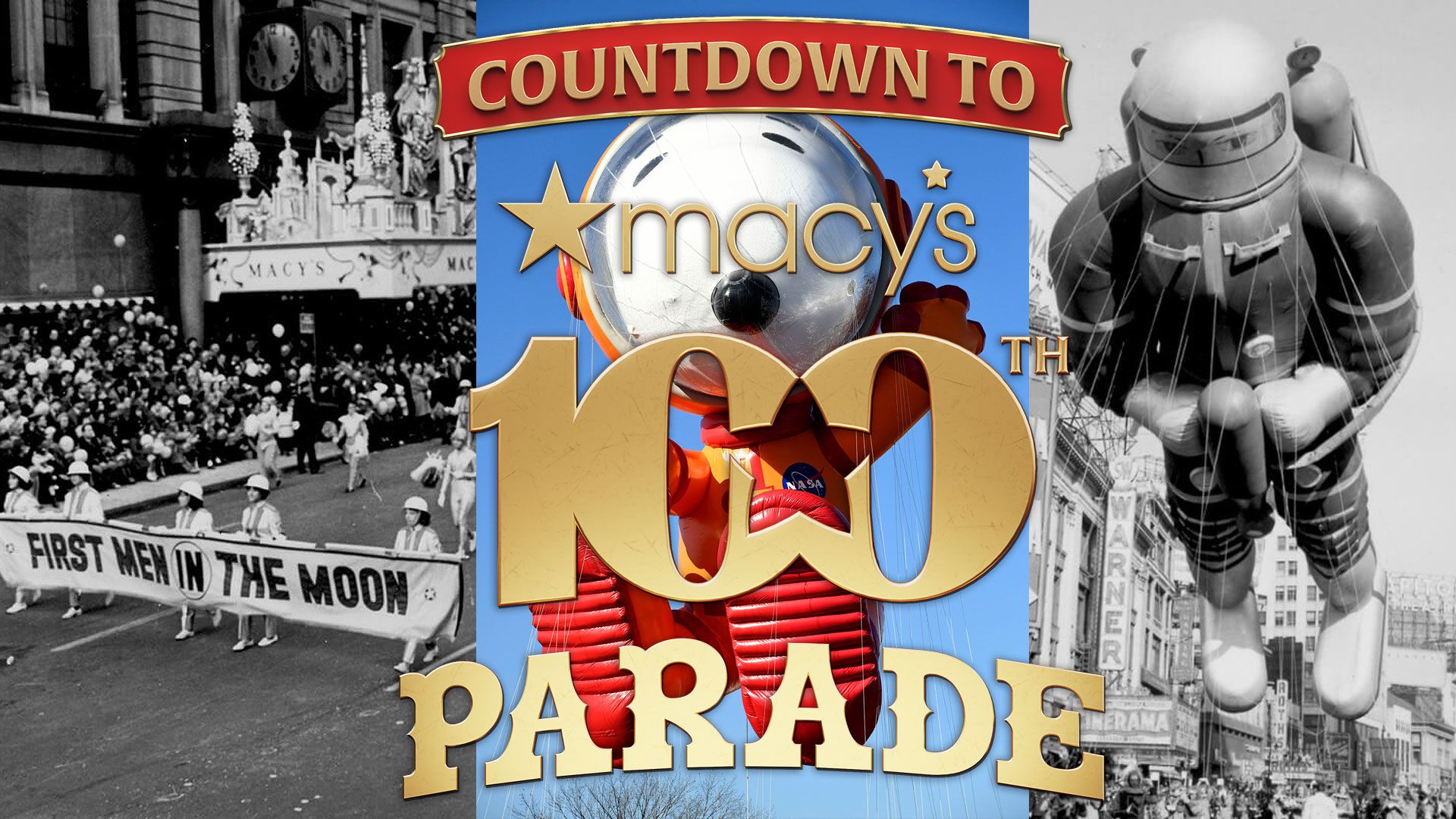
The annual tradition has often celebrated spaceflight themes.
When you purchase through links on our site, we may earn an affiliate commission. Here’s how it works.
The 100th Macy's Thanksgiving Day Parade is sure to be a blast, but it is a bit light on "space."
According to previews provided by the department store chain, the founder of the New York City holiday celebration, space fans turning up or tuning in to catch sight of an astronaut or other nod to NASA will have only a returning rocket to look forward to on Saturday (Nov. 28). (The parade has been postponed two days from Thursday, Nov. 26, due to bad weather.) Not that Macy's (or the space agency) has hinted about anything cosmic planned for the 100th parade; it's only that the event has had a long history of celebrating space exploration with its floats and balloons.
"For our 100th parade, we're creating a celebration of unprecedented scale and will deliver an unforgettable Thanksgiving for millions across the country," said Sharon Otterman, Macy's chief marketing officer, in a statement.
First held in 1924 for Macy's colleagues, their friends and families, the Thanksgiving Day Parade has been held every year with the exception of a three-year break during World War II. Spanning longer than the dawn of the Space Age, the space race and NASA's entire 68-year history, the celebration has integrated space themes into its displays, even before the first rocket flew beyond Earth's atmosphere.
The earliest space-themed feature of the parade may have been the "Space Ship," a float that made its first appearance in the 19th procession in 1945 and in various configurations — with and without astronauts and planets — appeared on and off through 1962.
Perhaps more memorable, though, and certainly much larger, was the "Spaceman" (or, more appropriately, "The Giant Spaceman").
The 70-foot-long (21-meter) helium balloon made its debut in 1952, nine years before the Soviet Union's Yuri Gagarin became the first person in space. Described by Macy's as an "artist's conception of a visitor from another planet," the humanoid figure had a black spacesuit, a silver helmet and boots, a jet propulsion backpack and a black rocket gun.
Ironically, for a figure garbed for the weightless environment of space, the Spaceman was for a long time the parade's heaviest giant balloon. At 600 pounds (272 kilograms), it was only tied by the Pink Panther in 1988 and then exceeded two years later by Bart Simpson.