// SPACE.COM — SPAZIO & SCIENZA
Japan unveils Mars moon sample-return spacecraft ahead of Oct. 19 launch (photos)
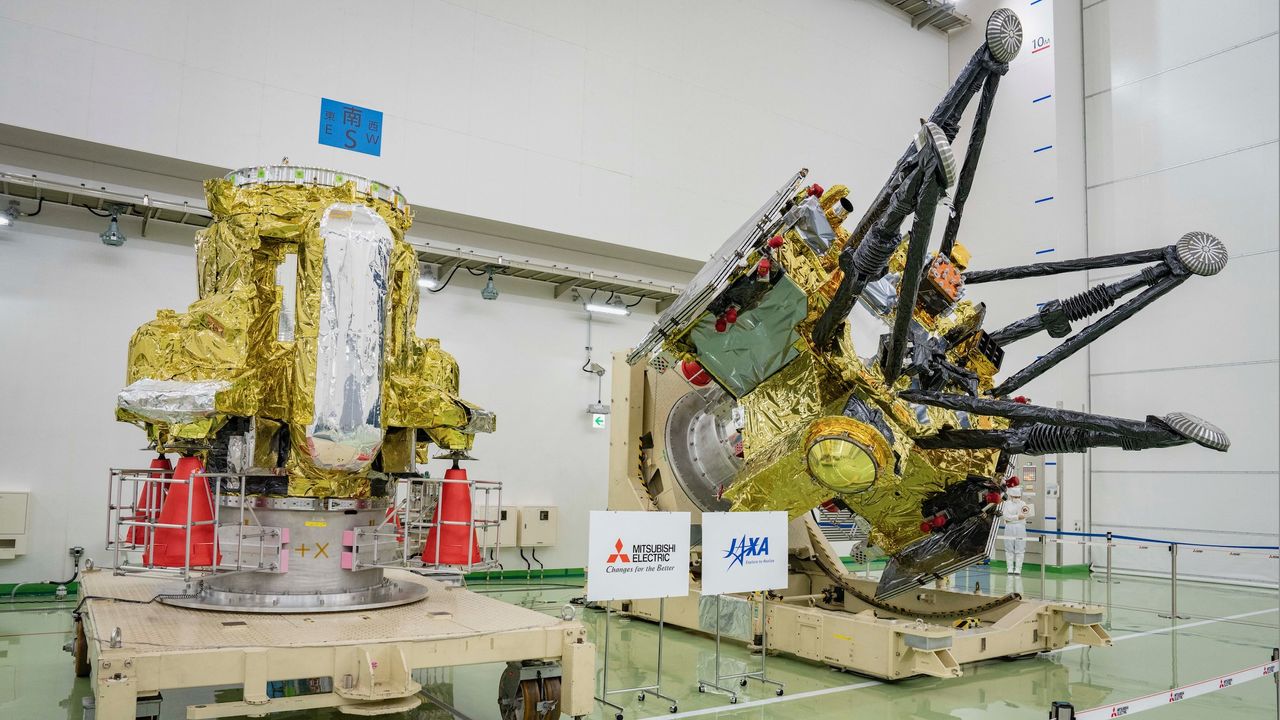
The MMX mission will grab samples of the Mars moon Phobos and haul them to Earth.
When you purchase through links on our site, we may earn an affiliate commission. Here’s how it works.
The world just got its first good looks at some hardware that will make spaceflight history.
Last Thursday (Aug. 13), Japan unveiled the spacecraft that make up its Martian Moons eXploration (MMX) mission, which aims to snag samples of the Mars moon Phobos and haul them to Earth — something that has never been done.
The big reveal came at Tanegashima Space Center, the site from which MMX will launch toward the Red Planet atop an H3 rocket. And we just got some clarity about when that liftoff will take place.
If all goes according to plan, MMX will launch on Oct. 19 at 3:41 p.m. EDT (1941 GMT; 4:41 a.m. on Oct. 20 Japan time), the Japan Aerospace Exploration Agency (JAXA) announced on Thursday (Aug. 20). That's the first day of the mission's launch window, which extends through Nov. 7.
JAXA originally intended to launch MMX in 2024 but had to stand down due to issues with the H3. Mars and Earth align properly for interplanetary launches just once every 26 months, so this was a significant delay.
MMX will spend about a year traveling to Mars. Once in orbit around the Red Planet, the mission will map and study its two small moons, Phobos and Deimos, which are just 14 miles (22 kilometers) and 7.5 miles (12 km) wide, respectively.
Part of this work will help the mission team pick a landing site on Phobos, where they'll drop a 55-pound (25 kilograms) French-German rover called Idefix. That little robot — which is named after the dog in the French comic "Asterix" — will study Phobos' surface in detail using a variety of instruments.
The MMX spacecraft itself will then spiral down toward Phobos, eventually making contact and collecting about 0.35 ounces (10 grams) of material. MMX will leave Mars orbit with these samples in 2030 and deliver them to Earth for analysis a year later.