// SPACE.COM — SPAZIO & SCIENZA
Partial lunar eclipse Aug. 27-28 live updates: 3 days to go, here's what you need to know
When you purchase through links on our site, we may earn an affiliate commission. Here’s how it works.
The countdown is on for the deep partial lunar eclipse of Aug. 27-28. Over the next week, we'll be bringing you the latest eclipse news, viewing tips as well as live updates throughout eclipse night.
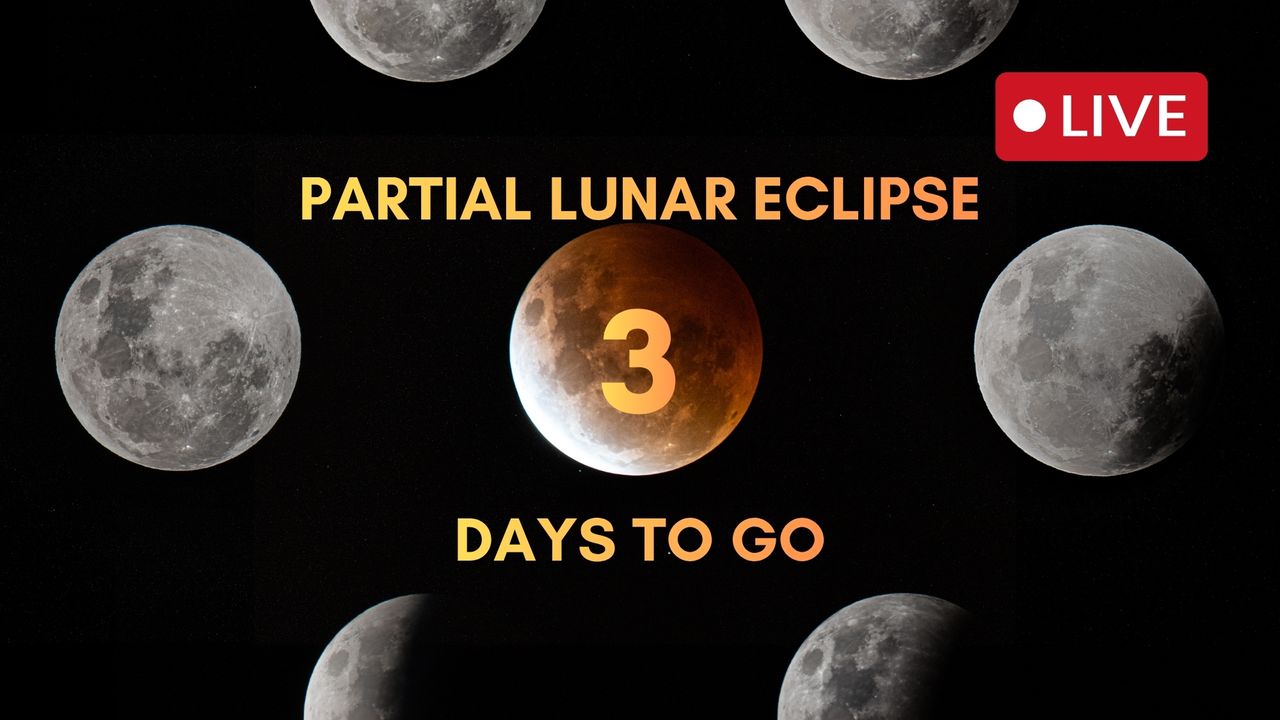
Although this isn't quite a total lunar eclipse, it's pretty close! At maximum eclipse, 96.2% of the moon will slip into Earth's dark central shadow known as the umbra, according to Time and Date. Much of the moon may take on a rusty red hue, while a thin sliver remains brightly illuminated.
It's the deepest partial lunar eclipse visible anywhere on Earth until Dec. 31, 2028, making it a must-see event worth staying up late — or setting an alarm early — for.
The deep partial lunar eclipse is just a few days away, so now is the perfect time to start planning how you're going to view the "almost blood moon".
At maximum eclipse, 96.2% of the moon's surface will be covered by Earth's dark central shadow known as the umbra. While the moon won't be completely eclipsed — so this isn't technically a "blood moon" — much of the lunar surface is expected to take on a reddish-orange hue, with just a thin sliver remaining brightly illuminated.
Check out our complete guide to the Aug. 27-28 partial lunar eclipse to make sure you're ready for the "almost blood moon".
One of the wonderful things about a lunar eclipse is that it can be witnessed by everyone who happens to be on the night side of Earth as it occurs, weather permitting.
You don't need any special equipment like eclipse glasses to enjoy the show. Simply step outside and look up to see Earth's curved inner shadow crawl across the moon in a spectacular display of orbital mechanics.
Want a closer look? No problem! It's completely safe to point a pair of binoculars or a telescope at the moon during a lunar eclipse. Doing so will give you a magnified view of the colossal craters and dark lunar seas that mark the moon's near side as they fall within the umbral shadow.